

























“Review: Alex Garland’s ‘The Bone Temple’ – A Brutal, Brilliant Sequel”

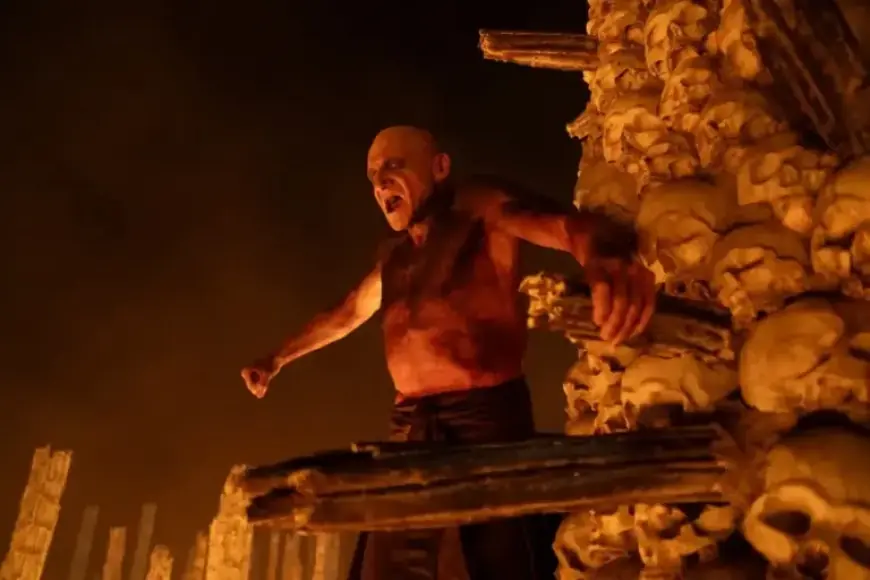
In an era where zombies have become a staple of horror cinema, Alex Garland’s sequel, “The Bone Temple,” manages to redefine the genre’s landscape. This film, part of the “28 Days Later” trilogy, pushes boundaries while exploring themes of morality, identity, and the evolving nature of humanity.
The Legacy of 28 Days Later
Released in 2002, “28 Days Later” laid the groundwork for zombie narratives over the past twenty years. The film introduced viewers to Jim, played by Cillian Murphy, awakening in a desolate UK ravaged by a rage-inducing virus. Its brutal depiction of violence in a collapsing society set a standard that many subsequent films have tried to replicate.
A New Chapter in Zombie Cinema
“The Bone Temple,” directed by Nia DaCosta and written by Alex Garland, serves as the middle installment of this evolving narrative. Following “28 Years Later,” which premiered in 2025, the story unfolds decades after the initial outbreak. It follows Spike, a twelve-year-old living on an untouched island, as he navigates a harsh new world.
The Evolution of the Infected
In this sequel, the infected have transformed into distinct beings. The introduction of Alphas like Samson, portrayed by Chi-Lewis Parry, exemplifies this shift. These Alphas display signs of strategic thinking, diverging from the traditional portrayal of mindless zombies.
The Rise of the Jimmys
Contrasting the infected is a group called the Jimmys, a gang of youths driven by bloodsport. Their leader, Sir Lord Jimmy Crystal, played by Jack O’Connell, embodies a regression in both morality and identity. The Jimmys are stripped of individual names, emphasizing their collective mindset, and pose a significant threat to Spike’s moral compass.
Spike’s Journey
In a pivotal scene, Spike commits his first murder against a Jimmy, signifying a troubling transformation. This act raises questions about morality and the implications of survival in such a brutal world. As Spike grapples with his actions, he must also confront the nature of humanity amid chaos.
Dr. Ian Kelson’s Investigation
Ralph Fiennes stars as Dr. Ian Kelson, an anthropologist preserving remnants of culture while trying to understand the infected. He develops a peculiar bond with Samson, who yearns for peace even amidst his infected state. Kelson’s probing into the minds of the infected leads to deeper existential inquiries.
Key Questions Explored
- Are the infected evolving beyond humanity?
- Is there potential for recovery from an infected state?
- How should humanity redefine its relationship with the infected?
The Broader Implication
The film challenges the audience to reconsider their understanding of good and evil in an apocalyptic setting. The brutal and brilliant narrative arc suggests that perhaps the infected may ultimately inherit the Earth, pushing for a reevaluation of who deserves to be seen as a monster.
Looking Ahead
As the trilogy continues, viewers are left anticipating the resolution of these complex themes. The final installment promises to delve even further into the intricacies of humanity and the infected. “The Bone Temple” is not just another sequel; it’s a thought-provoking exploration of what it means to survive in a fractured world.