Exploding trees in winter: why people hear “tree explosions” in extreme cold—and what the real risk is

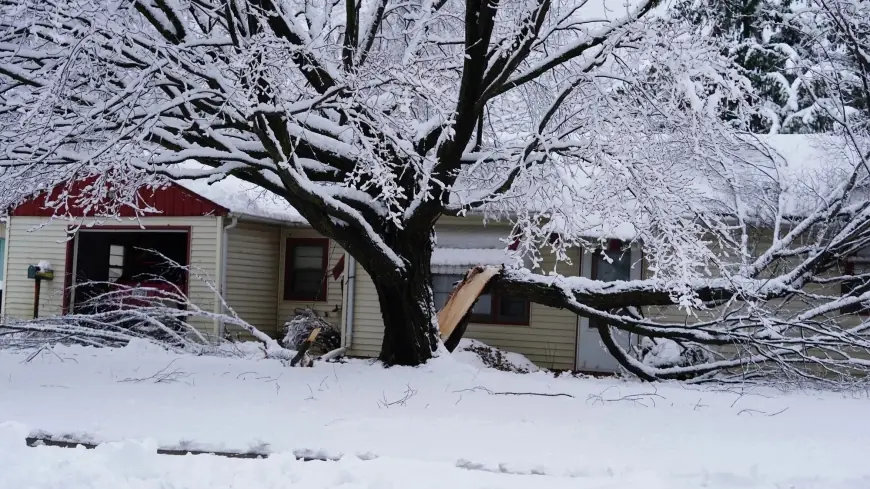
If you’ve seen the phrase “exploding trees” trending during late-January 2026’s deep freeze talk, it’s not pure fiction—but it’s also not a Hollywood-style blast. What people are usually describing is a sudden, loud trunk split or branch failure triggered by rapid temperature drops, sometimes sounding like a gunshot. The practical risk is localized: a cracking tree can shed large limbs or split sections of wood, but it does not commonly “explode” into flying debris across a wide area.
As extreme cold warnings spread across parts of the Upper Midwest, the viral framing has taken off. Forecasters and tree-care experts have been pushing back on the idea of widespread tree detonations while still stressing basic winter safety around stressed, brittle trees.
Exploding tree risk: what’s actually happening in extreme cold
Trees can crack violently in winter because cold changes how wood and water behave:
-
Wood contracts as temperatures plunge. A fast drop can tighten the outer layers of a trunk faster than the inner wood can adjust.
-
Moisture and sap can freeze and expand. Water expands as it freezes. Inside a living tree, that pressure can build in pockets and along weaknesses.
-
Stress releases suddenly. When the strain exceeds what the bark/wood can hold, it can split in a sharp, explosive-sounding snap.
Most events are better described as frost cracks: long vertical splits that can open quickly with a loud report. They’re more likely after rapid temperature swings—especially when a milder stretch is followed by a hard, fast plunge.
-
“Exploding trees” usually means a frost crack or sudden limb/trunk split, not a true blast.
-
The loud bang can happen when temperatures drop quickly after milder weather.
-
The biggest hazard is falling limbs or a trunk section giving way near people, cars, or structures.
-
Widespread “tree explosions” across a whole region are uncommon; risk is highly local and tree-specific.
-
The same cold snaps that spark the rumor also increase other winter hazards (ice, wind chills, and slick roads) that are far more widespread.
Can trees explode in extreme cold—or is it something else making the noise?
Sometimes the sound people attribute to exploding trees isn’t a tree at all.
Frost quakes (cryoseisms) can also produce booming, cracking noises during severe cold. These happen when moisture in the ground freezes rapidly, the soil contracts and cracks, and the movement creates a sharp report—occasionally with a small tremor-like sensation. In neighborhoods and wooded areas, it can be easy to misidentify the source, especially at night.
A simple rule of thumb:
-
If you find a fresh vertical split on a trunk or a large limb on the ground, a tree likely cracked or failed.
-
If there’s no visible tree damage, the noise may have been a ground-related frost event—or ice shifting on structures.
Exploding trees in winter: which trees are more vulnerable?
Not every species responds the same way, and not every yard has equal risk. Trees tend to be more vulnerable when they are:
-
Already stressed (drought damage from the previous summer, pest issues, root compaction, or poor soil conditions)
-
Older, with internal decay (hollow sections can concentrate stress)
-
High-moisture or fast-growing varieties that can be more prone to splitting
-
Exposed to strong winds that add mechanical strain to cold-brittle wood
Urban settings matter too. Trees next to roads get hit by plow spray and salt, which can weaken them over time. Trees near buildings also experience uneven temperature patterns that can worsen freeze-thaw stress.
What you should actually do during an extreme-cold “exploding tree” scare
This is the useful safety checklist that matches the real hazard profile—localized but potentially serious if you’re right under the wrong limb:
-
Avoid lingering under large branches during severe cold, especially in windy conditions.
-
Don’t park directly beneath heavy canopy if you can reasonably avoid it during the coldest nights.
-
Look for warning signs: existing cracks, peeling bark seams, dead hanging limbs, or fresh splits.
-
Skip DIY limb removal in deep freeze. Cold wood can fail unpredictably; falling injuries are a bigger risk than the crack itself.
-
After the cold snap, inspect and address damage. A frost crack can be an entry point for rot and pests once temperatures rise.
If a trunk has a new major split, treat it like structural damage: keep distance, rope off the area if needed, and get a qualified assessment.
Historical context: “exploding tree” stories surge almost every time a major Arctic plunge hits populated areas. The phenomenon is real enough to be heard and filmed, but it’s also rare enough that it becomes a compelling rumor—especially when the sound resembles fireworks or a gunshot and happens on still winter nights.
FAQ: exploding trees and extreme cold
Can trees explode in extreme cold?
They can crack suddenly with a loud bang, but a true “explosion” is uncommon. The event is typically a frost crack or limb failure.
Is exploding tree risk high during every cold spell?
No. The risk rises most during rapid temperature drops and when trees are already stressed or weakened.
How close do you have to be for it to be dangerous?
The danger zone is close to the tree—where a falling limb or splitting trunk section could hit someone or property. It’s not typically a long-range shrapnel event.
As late-January 2026’s cold pattern plays out, the main thing to watch isn’t viral phrasing—it’s the combination of rapid temperature changes, wind, and pre-existing tree health. If the cold arrives in sharp waves rather than a steady chill, isolated frost cracks and limb failures are more likely. The smartest approach is simple: keep your distance from big canopy during the harshest hours, and inspect once conditions ease—because the loud bang is dramatic, but the follow-on damage is what actually creates risk.