Hezbollah at a Crossroads: A Proxy Without a Purpose as U.S. Threat to Iran Raises Stakes

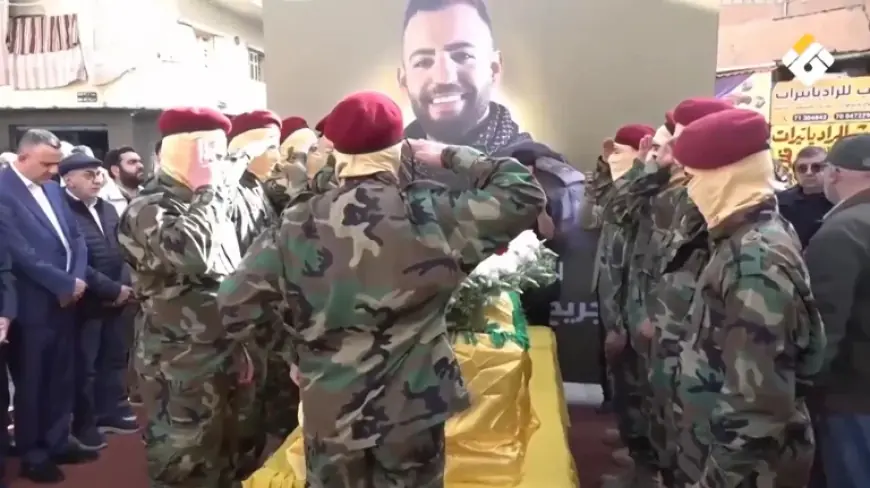
Hezbollah faces renewed strategic uncertainty as the prospect of U. S. strikes on Iran prompts questions about whether Tehran would try to activate its Lebanese proxy. That possibility matters because the group has suffered battlefield setbacks, leadership losses, and sustained pressure that sharply limit the options available to Tehran and to Hezbollah itself.
Hezbollah’s strategic weakness and immediate choices
The group began a major confrontation with Israel in 2024 that its Iranian backers thought could be managed. In practice, that conflict produced an Israeli offensive that damaged its strategic weaponry and leadership. During the ceasefire that followed, Hezbollah has endured near-daily Israeli strikes and increasing pressure to disarm from the Lebanese army while largely refraining from retaliatory attacks. These developments have eroded the group’s long-range strike capacity and reduced its strategic depth in neighboring countries.
Faced with those losses and mounting attrition—fighters are being killed on a near-daily basis by Israeli operations—Hezbollah’s choices are constrained. One clear option would be to launch operations against Israel in order to relieve pressure on Iran. But the group’s reduced capabilities, depleted leadership and geographic constraints inside Lebanon limit how effective such a response could be. A different, defensive option is to ignore orders to escalate and conserve manpower and remaining assets to survive a broader regional crisis.
What U. S. strikes on Iran could mean for Hezbollah
Broad U. S. strikes on Iran could range from attacks on strategic military assets to operations that target senior political and military leadership. Such campaigns might be intended to pressure Iran in negotiations or, in a more extreme form, to degrade regime control. Whether Tehran would respond by activating Hezbollah depends on multiple considerations that flow from the group’s present condition.
If Iran faces direct, existential pressure, one way to create leverage would be to have Hezbollah conduct operations against Israel. However, the group’s diminished medium-to-long-range strike capacity and the depletion of its command structure reduce its usefulness as a tool to shape a negotiating table or deter foreign action. The logic in this scenario points toward restraint: activating a weakened proxy could expose remaining fighters to devastating counterstrikes without reliably altering the course of a larger campaign against Iran.
Regional implications and the path ahead
The unfolding dynamic leaves Hezbollah in a defensive posture that complicates Tehran’s options. The proxy’s entrapment within Lebanon’s narrow geography and its loss of strategic reserves outside the country mean that any escalatory order carries high risk and limited upside. For Hezbollah, survival may require focusing on local consolidation rather than serving as an instrument of broader regional warfare.
Recent signals of readiness to strike Iran heighten the strategic calculus but do not resolve it. If Iranian leaders judge that using Hezbollah would meaningfully change outcomes, they may seek escalation; if they judge Hezbollah is too degraded to help, they may look elsewhere or choose other levers. In the meantime, Hezbollah’s weakened posture and the immediate pressures it faces suggest the group will remain a complicated, potentially fragile actor rather than a stable force that can be reliably deployed on short notice.
These contours frame a narrow but consequential set of scenarios: Hezbollah could be ordered to act and find itself unable to achieve decisive effects, or it could consciously refrain from escalation to preserve what remains of its forces. Either path will influence how any intensification of conflict involving Iran, Israel and external powers unfolds.