Elizabeth Smart returns to the public eye in 2026 with a survivor-led documentary and a renewed focus on prevention

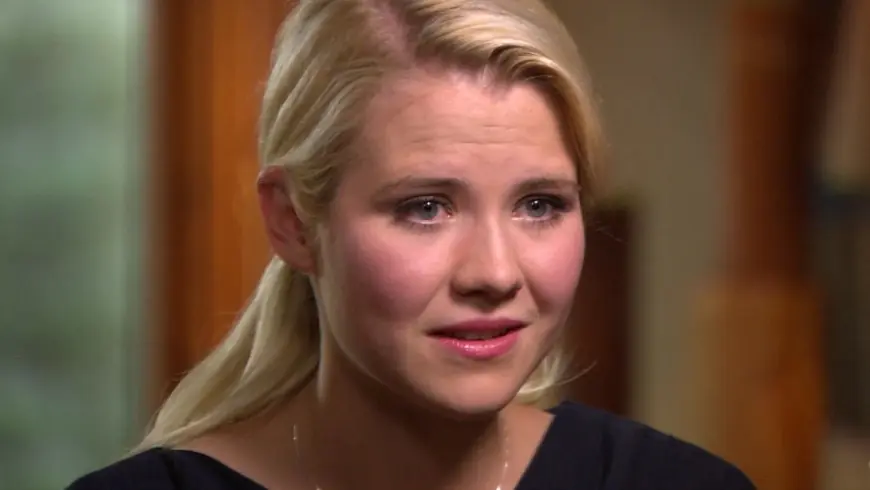
Elizabeth Smart is back in the spotlight in January 2026 with a new feature documentary, Kidnapped: Elizabeth Smart, arriving as a survivor-first account of her 2002 abduction and nine months in captivity. The film’s release is prompting fresh public discussion about how coercion works, why victims don’t always “just run,” and what families and communities can do differently in the first hours after a disappearance.
The timing matters because the documentary isn’t framed as a re-telling for shock value. It’s positioned as a reclaiming of narrative—placing emphasis on recovery, accountability, and practical prevention lessons that extend beyond one case.
Elizabeth Smart documentary 2026: what’s new and why it’s different
Kidnapped: Elizabeth Smart revisits the events that began in June 2002, when Smart was taken from her bedroom in Salt Lake City at age 14, and ended with her recovery in March 2003. This time, the storytelling leans heavily into Smart’s own perspective and includes a mix of archival material and newly assembled interviews that trace not only what happened, but how it changed her life afterward.
Rather than treating the case as a puzzle, the documentary emphasizes the lived reality of captivity: isolation, threats, psychological manipulation, and the way public attention can both help and harm. It also revisits the long legal aftermath that followed recovery, a chapter that often gets compressed or skipped in quick summaries of the case.
-
The documentary’s focus is survivor-centered, with Smart’s perspective driving the narrative.
-
The timeline spans the 2002 abduction, the 2003 recovery, and the years-long legal process that followed.
-
The film highlights coercion and control tactics, not just physical restraint.
-
It includes prevention and recovery themes, tying the story to broader survivor advocacy.
-
It arrives amid ongoing interest in true-crime storytelling, but pushes against sensational framing.
What the documentary revisits: captivity, recovery, and the long aftershock
Smart has spoken for years about how captivity isn’t only about chains or locked doors; it’s about fear, conditioning, and the risk calculations a victim is forced to make moment by moment. The documentary underscores that reality by showing how compliance can be a survival strategy, not consent.
The film also revisits the immediate aftermath: the frantic search, the strain on her family, and the weight of being a national story while still a child. Those early days are presented less as a media frenzy and more as a pressure cooker—where decisions, missteps, and misunderstandings can compound quickly.
In the present-day sections, the documentary situates Smart as an activist, author, and public advocate focused on ending sexual violence and supporting survivors. It makes a point of separating her identity from the crime: the abduction is something that happened to her, not the sum of who she is.
Elizabeth Smart today: advocacy, safety education, and survivor support
Smart’s public work has centered on prevention, survivor dignity, and challenging cultural myths that can deepen shame—especially myths that place responsibility on victims rather than perpetrators. The documentary aligns with that mission by translating a high-profile case into lessons for parents, schools, and communities.
One of the most practical impacts of a major release like this is renewed attention on warning signs: grooming behaviors, coercive control, and how predators exploit trust and vulnerability. Just as importantly, it can help viewers understand why “perfect victim” expectations are harmful—because they can silence people who don’t fit a simplified narrative of how victims “should” behave.
In that sense, the film’s real story isn’t only the crime; it’s the map of what healing can look like in public, in private, and over decades.
A short historical context: the Elizabeth Smart case became a defining early-2000s missing-child story in the United States, shaping public awareness around abductions and influencing how communities mobilize during disappearances. In the years since, survivor advocacy has increasingly pushed media away from voyeurism and toward accountability and recovery—an evolution this documentary clearly reflects.
What happens next: the conversations this release is likely to trigger
Expect the documentary to reopen three specific discussions: how law enforcement and families handle the first hours after a child vanishes, how communities can report suspicious behavior without delay, and how survivors can be supported without being turned into symbols.
The strongest signal to watch is what the release prompts beyond viewing numbers: expanded safety education efforts, more survivor-centered language in public discourse, and more attention to coercive control as a factor in why victims may not seek help immediately. If the film succeeds on its own terms, it won’t just renew interest in the case—it will shift how people interpret victim behavior and responsibility in abduction and abuse situations.
FAQ
What is Kidnapped: Elizabeth Smart about?
It recounts Elizabeth Smart’s 2002 abduction, nine months in captivity, recovery in 2003, and the long legal and personal aftermath, centered on her perspective.
Why is this release getting attention in 2026?
It’s positioned as a survivor-led retelling that emphasizes coercion, recovery, and prevention rather than sensational details.
Is Elizabeth Smart still active in advocacy work?
Yes. She remains a prominent voice on survivor support, child safety, and efforts to prevent sexual violence and exploitation.