Hobart Hurricanes vs Melbourne Stars in the Big Bash League (BBL): Rain threat, finals stakes, and the key players who can swing the Knockout

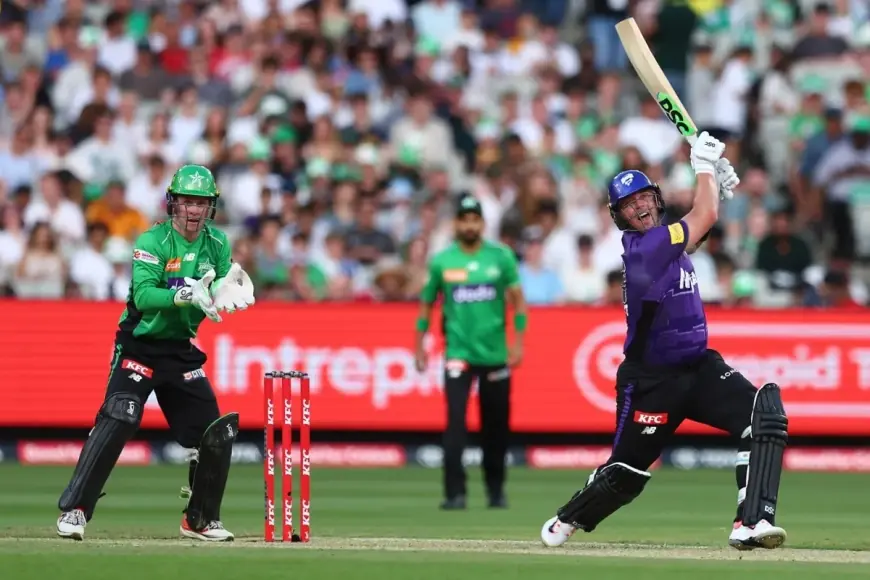
Hobart Hurricanes vs Melbourne Stars is set up as a classic Big Bash League elimination night in Hobart, with the season ending immediately for the loser. But the biggest storyline entering this Knockout is weather: steady rain has already pushed the start back, and a washout would send the Hurricanes through on their higher ladder finish. That makes every break in the clouds—and every minute before the cut-off time—matter as much as any boundary.
The match is scheduled at Ninja Stadium (Bellerive Oval), and the stakes are simple: win and move on to the Challenger in Sydney; lose and the campaign is over.
Hobart Hurricanes vs Melbourne Stars: what’s at stake in the BBL Knockout
This Knockout is the gateway to the final weekend. The winner advances to the Challenger at the SCG on Friday, January 23, 2026, with the winner of that match booking a trip to the Final on Sunday, January 25, 2026, where Perth Scorchers are already waiting after winning the Qualifier.
Weather adds a brutal twist. With no points to share in a finals match, the competition rules lean on ladder position if a result can’t be produced. That means a full washout favors Hobart, while Melbourne must get a playable match and win it.
-
Rain delays have already threatened the start in Hobart, increasing the chances of a shortened match.
-
A minimum five-overs-per-side contest is typically required to produce a result under the playing conditions.
-
If the match cannot be completed or restarted in time for a result, Hobart Hurricanes advance because they finished higher in the standings.
-
The winner moves on to face Sydney Sixers in the Challenger on January 23 at the SCG.
-
Perth Scorchers are locked into the Final on January 25, so this Knockout shapes the last remaining path to the trophy.
For viewers tracking times: 6:30pm Hobart local time is 2:30am ET and 7:30am UK time (GMT). Any rain delay shifts those, and shortened-overs scenarios can move quickly once play begins.
Team storylines: Hurricanes without Ellis, Stars chasing a first title
Hobart’s preparation has been dented by a major absence: Nathan Ellis has been ruled out with injury, removing a key pace option and a calm captaincy voice at the sharp end of an innings. In a normal 20-over game that hurts; in a shortened, high-variance match it can be even more decisive, because one over from a frontline bowler can flip the win probability instantly.
For Melbourne, the pressure sits differently. The Stars are still chasing their first Big Bash League title, and their finals reputation follows them into every knockout. They also arrive with a clear internal narrative: the season’s form lines matter less than what happens in a two-hour window when the competition is on the line.
One boost for Melbourne is confidence around the top of the order and behind the stumps. Wicketkeeper-batter Sam Harper has been one of the season’s standout performers and has been recognized as the tournament’s top individual performer, a reflection of both volume and consistency. In a rain-reduced chase, a fast start from Harper can remove the need for a deep batting card.
Key match-ups that decide Hobart Hurricanes vs Melbourne Stars
If the rain holds off and the game resembles a standard T20, this becomes a contest of Hobart’s structure versus Melbourne’s star power.
1) Stars power hitters vs Hurricanes’ death plans
Melbourne can load the late overs with experience and muscle, but Hobart’s bowlers typically live off hard lengths and changes of pace at the death. Without Ellis, the Hurricanes’ closing overs may lean more heavily on secondary options—exactly where Maxwell, Stoinis, or a finishing all-rounder can do the most damage.
2) Glenn Maxwell’s form versus finals reality
Maxwell’s season numbers have been lean, which makes him the most volatile player in the match: he can be contained early, or he can erase a target in a few overs. In knockout cricket, one explosive cameo can rewrite months of struggle.
3) The toss in a damp Hobart evening
If conditions are greasy and the ball skids, chasing can feel simpler—especially with a reduced target and clearer DLS math. But if rain is forecast in patches, captains may prefer to be the team batting second to avoid being stranded mid-innings by stoppages.
A short standalone reminder of why this matters: Big Bash finals have repeatedly been shaped by weather and playing-condition quirks, where ladder position can become a tiebreaker if a result isn’t possible. It’s a system that rewards consistency across the season—but it also creates a harsh reality for the lower-ranked side on a wet night: you can do everything right and still run out of time.
FAQ: Hobart Hurricanes vs Melbourne Stars Big Bash League
Can the Hobart Hurricanes advance without playing?
Yes. If the Knockout is washed out and no result can be produced, Hobart go through on higher ladder position.
What happens after the Knockout?
The winner plays Sydney Sixers in the Challenger on January 23 at the SCG, and that winner goes to the Final on January 25 to face Perth Scorchers.
Why is this match so sensitive to rain?
Finals don’t have room for “no result” in the same way as league matches, so delays quickly push the game toward minimum-overs thresholds and last-start deadlines.
If the weather clears in time, expect a frantic, momentum-based contest where powerplay overs and one death-overs surge decide everything. If it doesn’t, keep an eye on the clock: the closer it gets to the last viable start window, the more Hobart’s advantage grows without them needing to hit a ball. Either way, this Hobart Hurricanes vs Melbourne Stars Knockout is already being shaped by forces that have nothing to do with bat and ball—and that’s exactly why it feels so tense.