Infinix Note Edge: New Budget “Edge” Phone Goes Ultra-Slim With a Massive 6,500mAh Battery

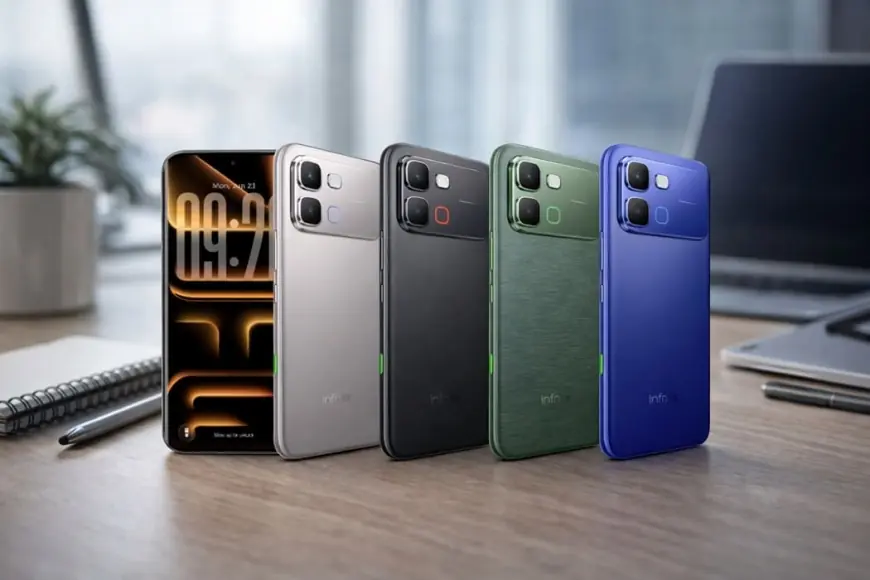
The Infinix Note Edge has officially landed as a budget-focused phone that tries to look and feel more premium than its price suggests. The big headline is the combination of an ultra-slim body and a huge 6,500mAh battery, backed by 45W fast charging and a curved AMOLED display that’s being positioned as flagship-like. Pricing starts around $200 in the U.S., making the Note Edge a direct play for buyers who want big specs without paying midrange money.
Infinix is clearly aiming at the “affordable luxury” lane: a sleek design, a very bright curved screen, and feature checkboxes like IP-rated resistance and stereo speakers, all wrapped around a battery-first promise.
Infinix Note Edge specs at a glance
-
7.2mm slim body and about 186g weight for a lighter-in-hand feel than many big-battery phones
-
6.78-inch 3D-curved AMOLED display with a 1.5K-class resolution and very high advertised peak brightness
-
MediaTek Dimensity 7100 5G chipset paired with 8GB RAM (configurations vary by market)
-
6,500mAh battery with 45W wired fast charging (Infinix claims a full charge in about 62 minutes)
-
50MP main rear camera and a 13MP front camera
-
IP65 dust and water resistance rating, dual stereo speakers tuned with a branded audio partnership
-
Android 16-based software with a long update commitment highlighted for this price tier
Where the “Edge” branding really shows: design and display
Infinix is leaning heavily into industrial design with the Note Edge. The device is built around a curved glass front and tight bezels, creating the kind of silhouette most people associate with higher-priced phones. At 7.2mm, it’s not chasing the absolute thinnest phone on the market, but it’s thin enough to stand out in the budget category—especially when you remember it’s carrying a 6,500mAh battery.
The display pitch is equally aggressive. The Note Edge uses a 3D-curved AMOLED panel at 6.78 inches and a 1.5K-style resolution, with peak brightness being marketed at up to 4,500 nits. Protection is listed as Gorilla Glass 7i, which is another “premium signal” spec in a segment where many phones still ship with less detailed glass branding.
Performance: Dimensity 7100 and the “good enough” 5G promise
At the heart of the Note Edge is the MediaTek Dimensity 7100 5G platform, a modern chipset choice aimed at smooth everyday performance, efficient power use, and mainstream 5G support. For the target buyer, this setup is less about chasing benchmark glory and more about delivering stable scrolling, responsive app switching, and enough headroom for popular games without feeling sluggish.
Infinix is also spotlighting software longevity more loudly than many budget rivals, tying the phone to Android 16-based software and highlighting multi-year updates and security support. In a price tier where people often keep phones longer to stretch value, that promise is part of the device’s “smart buy” argument.
Battery and charging: the real headline for most buyers
A 6,500mAh battery is the kind of spec that changes how you use a phone. It’s designed for the person who lives on maps, video, and social apps and doesn’t want to carry a charger everywhere. Infinix is attaching big usage claims to it—think all-day navigation or long video playback—and pairing it with 45W wired charging to reduce the “giant battery, slow refill” trade-off.
The charging number that will grab attention is the full top-up claim: around 62 minutes from empty to 100%. Real-world results will always vary with heat, background tasks, and charger behavior, but the direction is clear: the Note Edge wants to be both long-lasting and quick to recover.
Cameras, durability, and the little extras that sell a budget phone
Camera expectations should be realistic at $200-class pricing, but the Note Edge is keeping the basics clean: a 50MP main camera on the back and a 13MP camera up front. The more meaningful “quality of life” additions are the ones that make the phone feel less cheap day-to-day—IP65 resistance, dual stereo speakers, and a polished design language.
Color options are also part of the positioning. Finishes include Lunar Titanium, Stellar Blue, Shadow Black, and a Silk Green variant that’s described as having a leather-like texture—another small detail aimed at making the phone feel more expensive than it is.
In previous budget cycles, phones tended to choose two out of three: slim design, big battery, or premium-looking screen. The Note Edge is trying to claim all three at once, reflecting how competitive the sub-$300 segment has become as buyers demand flagship cues without flagship prices.
FAQ: Infinix Note Edge
Is the Infinix Note Edge a budget phone or a midrange phone?
It’s positioned as a budget phone with midrange-style design touches—curved AMOLED, slim build, and larger battery than many pricier devices.
What’s the biggest upgrade the Note Edge brings?
The combination of a 6,500mAh battery and a slim body, plus a very bright curved AMOLED panel, is the core “why this phone” story.
Will availability and pricing be the same everywhere?
Pricing and configurations can vary by region, and some markets may get different storage options or launch timing.
If early interest holds, the next signals to watch are simple: how widely the phone rolls out beyond initial markets, whether real-world battery and brightness match the marketing claims, and how aggressively competitors respond on price. If Infinix can keep supply steady and pricing sharp, the Note Edge has a clear path to becoming one of the most talked-about value phones of 2026.