Russia Snow: Kamchatka Buried Under Record Drifts as Far East Transport Disruptions Ripple Across the Region

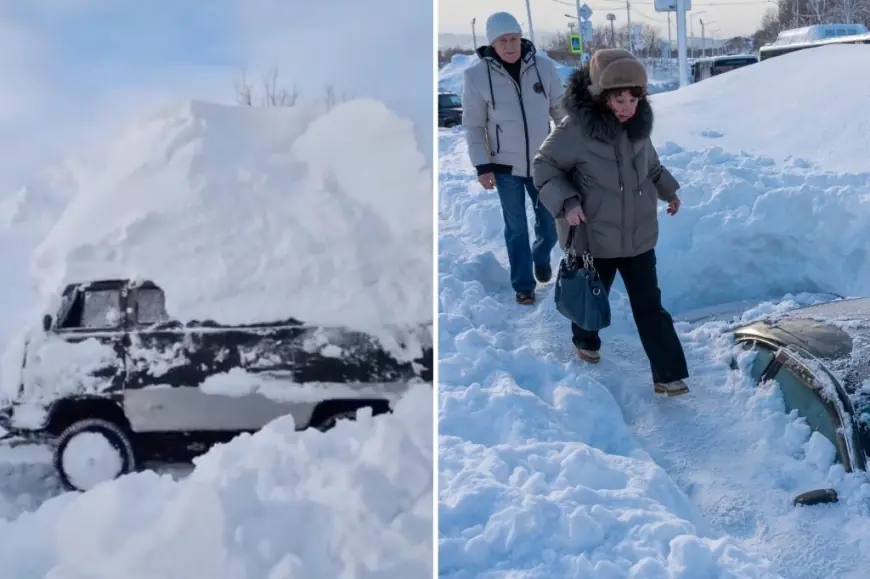
Russia snow is making global headlines after an intense winter system dumped extraordinary totals across the country’s Far East, leaving neighborhoods in Kamchatka buried under towering drifts and forcing major changes to daily life and transportation. The most extreme impacts are centered around Petropavlovsk-Kamchatsky, where residents have been digging out buildings and vehicles after back-to-back heavy snow episodes since December.
The immediate concern now is less about a single storm ending and more about the cumulative effect: blocked roads, intermittent public transport, delayed deliveries, and the risk that renewed snowfall or wind-driven drifting will undo cleanup progress quickly.
Russia snow in Kamchatka: What’s happening on the ground
Kamchatka’s latest burst of severe winter weather has produced snowfall totals being described locally as the most intense in decades, with multi-meter accumulations across parts of the peninsula since late 2025. In the regional capital area, snowbanks have risen high enough to obscure cars and cover lower-level entrances, pushing residents to carve narrow corridors through drifts just to leave home.
Public transportation has been repeatedly constrained. In some cases, standard bus service has been partially suspended and replaced with all-terrain vehicles along key routes, a sign that normal road clearance isn’t keeping pace with drifting and accumulation. The visual reality is dramatic: streets narrowed to one-lane passages, sidewalks disappearing entirely, and parked vehicles reduced to mounds that must be located before they can be freed.
-
Snow removal crews are working in cycles, but wind and continued flurries can refill cleared areas quickly.
-
Building access has become a daily challenge, especially for ground-floor entrances and small side streets.
-
The heaviest disruption risk persists where snow is deep, temperatures stay low, and thaw cycles are minimal.
-
Record-level snowfall has piled up across Kamchatka since December, creating multi-meter drifts that continue to hinder travel and daily routines.
-
Petropavlovsk-Kamchatsky has seen repeated transport interruptions, with rugged vehicles stepping in when buses can’t operate reliably.
-
Cleanup is being challenged by ongoing drifting, meaning “cleared” does not always stay cleared for long.
-
A parallel online issue has emerged: exaggerated AI-generated snow videos are circulating, complicating public understanding of what’s real versus amplified.
-
The next major risk is compounding impacts—roof loading, blocked emergency access, and supply delays—if another strong system arrives before recovery stabilizes.
Why this Russia snow event is different: It’s the stacking effect
Kamchatka is no stranger to harsh winters, but what makes this period stand out is how much snow arrived in waves. When totals accumulate over weeks, the impacts shift from “storm response” to “winter endurance.” Snow disposal sites fill up, clearing operations become slower and more expensive, and the margin for error narrows—especially if wind turns fresh snowfall into dense drifts overnight.
Another stressor is structural: repeated heavy snow can increase roof-load concerns for older buildings, outbuildings, and flat-roof structures that weren’t designed for prolonged extreme accumulation. Communities typically manage this with staged clearing and targeted roof maintenance, but timing matters. When a new surge hits before the backlog is reduced, risk grows quickly.
Far East cold and snow: Regional spillover beyond Russia
This cold-and-snow pattern has not been confined to Russia alone. The same broad wintry regime has been associated with transport disruptions across parts of East Asia, including flight interruptions and road closures in areas dealing with ice and heavy snow. Even where snowfall isn’t record-breaking, the combination of wind, blowing snow, and sharp temperature drops can create major knock-on effects—delays at airports, closures on mountain routes, and hazardous driving conditions that spread far beyond the storm core.
For travelers and supply chains, this matters because disruption clusters. One storm can create rolling delays for days: aircraft out of position, freight slowed at ports and rail nodes, and essential deliveries rerouted onto already-stressed corridors.
The misinformation side of Russia snow: AI videos muddy the picture
One unusual feature of this episode is how quickly dramatic “snow apocalypse” clips have spread online—some real, some manipulated, and some entirely AI-generated. The real situation in Kamchatka is severe enough, but digitally exaggerated footage can distort perception and lead to confusion about what’s happening where, and how extreme conditions truly are.
A practical rule of thumb: the most reliable visuals tend to show consistent landmarks, recognizable local streets, and continuous scenes that match the known geography. Short, overly cinematic clips with impossible snow behavior or inconsistent lighting are more likely to be synthetic or heavily edited.
Historical context: Kamchatka and Russia’s Far East have experienced major snow winters before, but the most disruptive seasons often share the same pattern—successive storms that prevent a full reset. In those years, communities don’t just “recover” from a storm; they manage an ongoing snowpack that reshapes transport, emergency response, and everyday movement until spring temperatures finally take control.
Looking ahead, the key signals to monitor are simple: whether another strong low-pressure system targets the peninsula, whether winds increase drifting after any fresh snow, and whether temperatures remain low enough to keep snow dense and slow to melt. If the storm track stays active, Russia snow in the Far East could remain a rolling disruption story—less about a single dramatic day, and more about the sustained grind of digging out, keeping roads open, and preventing the next round of accumulation from overwhelming recovery efforts.