“Nighttime Solar Energy May Soon Power Satellites”

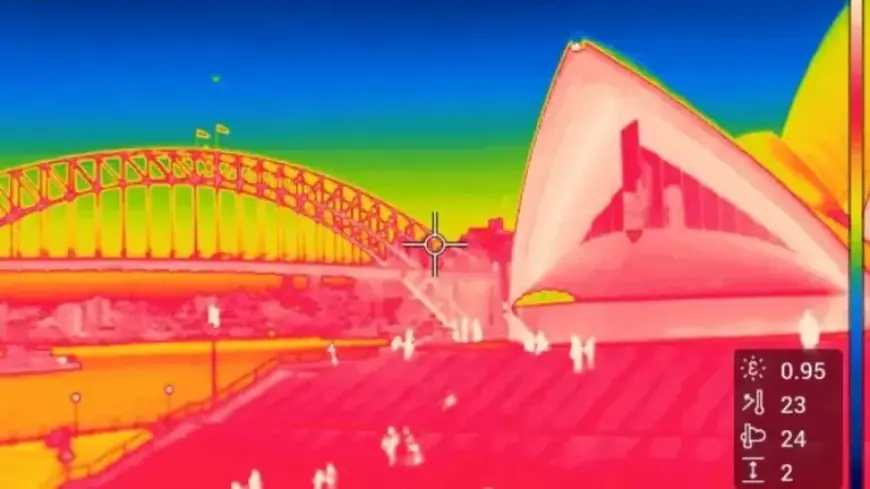
Researchers at the University of New South Wales (UNSW) in Sydney are pioneering a novel approach to solar energy. Their focus is on developing devices capable of generating electricity by emitting light rather than absorbing it, a concept described as a reverse solar panel.
Innovative Technology: Thermoradiative Diodes
Professor Ned Ekins-Daukes leads the research team within the School of Photovoltaic and Renewable Energy Engineering at UNSW. The group is working on thermoradiative diodes that can convert infrared radiation—released at night—from the Earth into electricity. Infrared radiation is not visible to the human eye but can be felt as heat.
Functionality and Efficiency
- The thermoradiative diode generates electricity based on the temperature difference between the heat source and its environment.
- Currently, the diode produces electricity at a density of only one watt per square meter.
- Research indicates it’s sufficient to power low-energy devices, such as a digital wristwatch.
The technology, although limited in its power output on Earth, shows potential for use in space, where cooler environments enhance its efficiency.
Potential Applications for Satellites
Satellites traditionally rely on solar panels, which only function when directly exposed to sunlight. Ekins-Daukes emphasizes that the thermoradiative diodes could serve as a supplementary power source during the 45 minutes of darkness experienced in low Earth orbits.
Advantages Over Traditional Systems
- Provides auxiliary power without requiring additional batteries.
- Efficient use of surface area on satellites, especially as they become smaller yet more functional.
The team is preparing for a test flight this year to evaluate the technology in a space environment.
Collaborative Efforts and Future Research
At NASA, scientists are investigating similar technologies for various space missions. Dr. Geoffrey Landis notes that thermoradiative diodes are promising but must be cost-effective to be adopted widely, especially in low orbit. Current systems using batteries may be cheaper for short durations.
Research teams, including Landis and Dr. Stephen Polly, are analyzing the feasibility of these diodes for deep space missions. This technology could replace heavy thermoelectric generators that rely on radioactive isotopes, which are costly and resource-intensive.
Next Steps in Research
- Investigating new materials to enhance the diodes’ durability at high temperatures.
- Exploring production methods to align with existing solar cell manufacturing processes.
These advancements aim to improve the performance and scalability of thermoradiative diodes for commercial use, targeted for the next five years.
In conclusion, nighttime solar energy generated through thermoradiative diodes holds significant promise for powering satellites. UNSW’s innovative efforts may soon revolutionize how satellites obtain energy in the cosmos, and further research will determine its practicality for various space applications.