






















Pete Crow Armstrong: Why Fantasy Managers Debate Him as a 2026 Bust Candidate Despite Monster Counting Stats


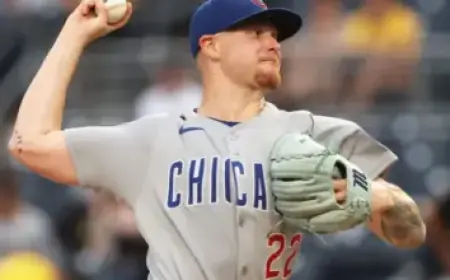
pete crow armstrong's season produced eye-popping counting numbers—35 home runs, 95 RBIs, 91 runs and 35 stolen bases—but a clear second-half unraveling has pushed him into one of the most-watched bust debates for 2026 fantasy drafts. That split between a scorching first half and a difficult finish, combined with projection models that downgrade his full-season output, creates a drafting dilemma centered on cost versus floor.
Pete Crow Armstrong’s 2025 profile and the split that matters
The 23-year-old delivered a stat line that landed him in OF1/OF2 territory when measured purely by totals. However, the season was not uniform: an elite first half was followed by a marked drop in production in the back half. The most striking stretch came in August, where over 112 plate appearances he managed just one home run and five RBIs. That sequence is a central piece of evidence used by those who classify him as a high-upside bust candidate for 2026.
Projections, expected value, and draft strategy
Projection systems referenced in recent analysis pull Pete Crow Armstrong closer to a 20 HR, 75 RBI, 75 R, 30 SB full-season profile than the 35-95-91-35 totals he posted. That reframe still represents strong fantasy value if purchased at the right price, but the core concern is draft cost: some managers will treat him as a breakout MVP candidate, while a more conservative approach recommends letting others pay a premium and pivoting to safer options.
For managers weighing Pete Crow Armstrong in early-to-mid rounds, the equation is simple in theory: compare perceived upside to the dampening effect of the second-half decline and projection regression. If his ADP (average draft position) demands near first-round capital, the projected 20/75/75/30 profile implies overpay risk. If he falls into a price range aligned with that projection, his multi-category contributions remain attractive.
Scenarios to consider and draft rules of thumb
- Upside scenario: First-half performance is sustainable and he reclaims OF1 production; cost justified for managers chasing elite upside.
- Median scenario: Projections around 20 HR, 75 RBI, 75 R, 30 SB unfold; valuable but not elite—best paired with balanced roster construction.
- Downside scenario: Second-half issues persist and counting stats regress further; high draft cost becomes a clear bust for fantasy purposes.
Given those paths, a practical rule is to avoid paying a first-round or near-first-round price when projections narrow his expected output. Let other managers bid aggressively if they prioritize upside; pivot toward players with more stable baselines if roster security is your priority.
What to watch in spring and early season play
Key indicators that would change the calculus include early-season contact and launch-angle trends, health and playing-time confirmations, and whether any early returns suggest the second-half slump was an anomaly. If early metrics align with the higher-end profile, his draft stock can justifiably rise. If not, the projection-based expectation remains the prudent baseline.
In short, pete crow armstrong remains one of 2026’s most compelling fantasy dilemmas: rare counting upside tempered by a pronounced late-season slide and projection pullback. The correct draft choice hinges on how much premium you're willing to pay for upside versus how much roster security you prioritize.