

























HOOD Stock Slips as Risk-Off Mood Hits Crypto-Linked Names, With Robinhood’s Feb. 10 Earnings Looming

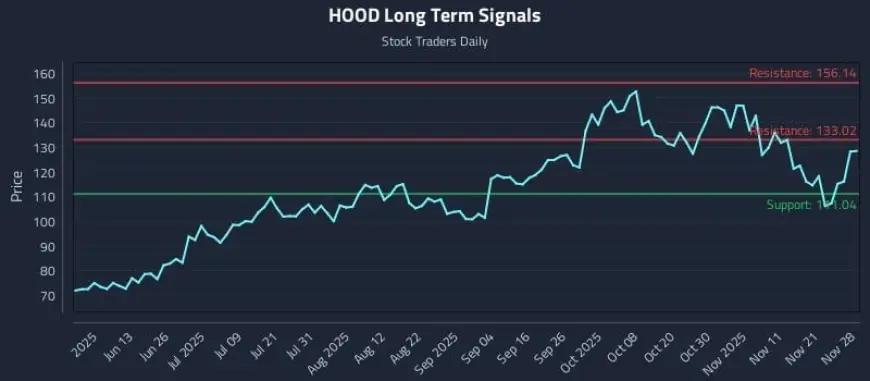
HOOD stock (Robinhood Markets) traded lower into Tuesday, January 20, 2026, as a cooler tone across markets weighed on crypto-sensitive shares. The move comes at a moment when investors are trying to separate short-term price swings tied to bitcoin from the company’s longer-term story: expanding products, rising activity from active traders, and a growing set of regulatory questions around crypto and event-style contracts.
In early trading, HOOD hovered around the $109 area, down roughly 1%–2% from the prior close. The decline fits a familiar pattern for Robinhood: when crypto prices wobble or broader markets turn defensive, HOOD often moves more sharply than the major indexes.
Why HOOD Stock Moved Today: Crypto Correlation and Macro Jitters
The clearest driver behind the day’s weakness is sentiment rather than company-specific news. Robinhood’s revenue mix has become more diversified over time, but its stock still reacts quickly to crypto price action and shifts in retail trading appetite. When bitcoin pulls back, investors typically mark down “crypto-adjacent” equities first and ask questions later.
That sensitivity is amplified by positioning. After a strong run last year, HOOD stock entered 2026 with higher expectations priced in. In that setup, even modest risk-off headlines can trigger fast profit-taking, especially in premarket trading when liquidity is thinner.
The Bigger Catalyst for HOOD Stock: Q4 Results on February 10
The next hard date on the HOOD stock calendar is Robinhood’s fourth-quarter and full-year 2025 earnings release scheduled for February 10, 2026. With that report, investors will look for confirmation on a few core questions:
-
Are net deposits and funded accounts still growing at a healthy pace?
-
Is trading activity (equities, options, and crypto) holding up after the early-January churn?
-
How durable is the company’s interest-driven revenue, especially if rate expectations shift?
-
Are newer product lines translating into measurable engagement and revenue per user?
Because HOOD stock tends to re-rate quickly around earnings, the weeks leading up to the report often see heightened options activity and sharper daily moves, even without major headlines.
Product Expansion: What the Market Wants Proof Of
Robinhood has been pushing beyond its original “simple trading app” identity into a broader, more feature-rich platform. The market generally likes the direction, but it also demands receipts: users adopting the new tools, higher retention, and incremental revenue that isn’t solely dependent on a hot crypto tape.
For HOOD stock, the near-term debate is whether the company can keep increasing engagement without relying on spikes in speculative trading. A strong earnings update that shows steady growth in customer assets, net inflows, and recurring revenue streams can matter more than a single day’s move in bitcoin.
Regulation Remains the Wild Card for HOOD Stock
Another overhang is policy. Robinhood’s leadership has continued to signal support for clearer crypto market structure rules in the U.S., but timelines for legislation and rulemaking are rarely clean. For investors, the uncertainty cuts both ways:
-
Clearer rules could expand participation and product breadth.
-
Ambiguity can keep risk premiums elevated and complicate product rollouts.
This doesn’t mean HOOD stock is “all regulation,” but it does mean headlines can hit quickly, and they can move price even when underlying business trends are unchanged.
What Investors Are Watching Next
Over the next two to three weeks, the setup for HOOD stock is likely to revolve around three dials:
-
Bitcoin and broader risk appetite: If crypto stabilizes, HOOD often finds a bid. If crypto keeps sliding, correlation trades can stay in control.
-
Earnings expectations into Feb. 10: Any shifts in consensus narrative about growth, margins, or guidance can move the stock before the report arrives.
-
Signals on product traction: Evidence that new features are driving consistent usage is what can reduce the stock’s dependence on “crypto days.”
For now, Tuesday’s dip looks like a market-mood move rather than a company-specific shock. The more important test for HOOD stock is whether Robinhood can use its February update to convince investors that growth is broad-based, recurring, and resilient even when the crypto cycle cools.