

























Microsoft Veteran Reveals Windows 95 Shift Restart Trick

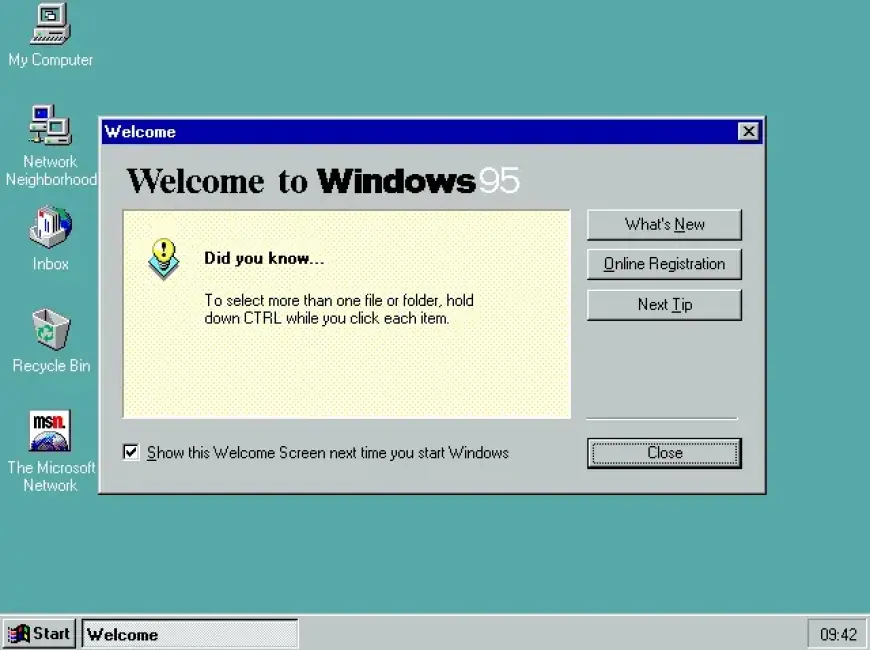
In a recent disclosure, Microsoft veteran Raymond Chen uncovered a useful trick from the Windows 95 era. This method involves holding down the Shift key during a restart. Using this trick can result in a notably faster system boot compared to a full reboot.
The Shift Restart Trick Explained
Chen elaborated on how this process works at a technical level. When Windows 95 needs to restart, it employs the EW_RESTARTWINDOWS flag with the old 16-bit ExitWindows function. This sequence begins with the shutdown of the 16-bit Windows kernel, followed by the 32-bit virtual memory manager. Ultimately, control is returned to win.com.
Understanding Real Mode
Real mode is the initial state for x86-compatible CPUs. It provides direct access to hardware but operates as a precursor to the protected mode utilized by modern operating systems. Once win.com takes the reins, it receives a signal to launch protected-mode Windows.
Memory Management during Restart
- When win.com starts, it utilizes available conventional memory.
- This memory is crucial for launching protected-mode Windows.
- If any memory is allocated in that released space, fragmentation occurs.
Chen noted that if the memory layout does not form one large contiguous block, win.com cannot execute the restart as intended. Instead, it defaults to a complete reboot, resulting in delays.
Engineering Marvels of Windows 95
Despite this potential for failure, the “Shift during Restart” trick remains a clever solution for expediting restarts. This engineering design enabled quicker access to the user interface, circumventing the typical delays associated with system reboots.
In contrast to today’s Windows systems, which often face updates that may disrupt functionality, Windows 95 offered a simple and effective restart mechanism. This nostalgic technique serves as a pleasant reminder of the past for tech enthusiasts and highlights the ongoing evolution of operating systems.