

























Asia Faces Crisis as Greenland’s Issues Escalate

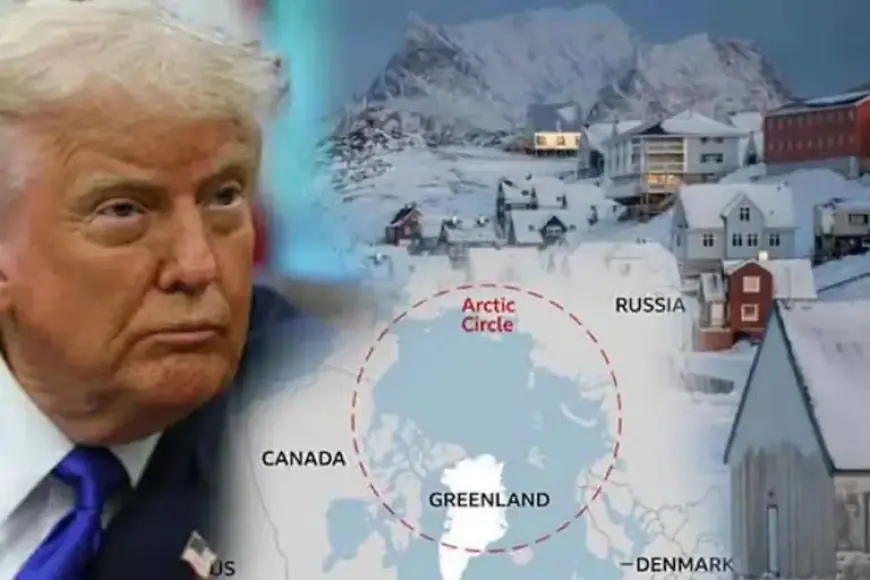
Recent developments surrounding the Greenland crisis are prompting serious attention from Asia. The situation is not merely a political event; it carries significant implications for global markets and economic relations. The interconnectedness of trade, capital, and investor confidence means that even distant regions like Asia cannot remain insulated from the fallout.
Impact on Asian Markets
Recent market movements, particularly the rise in gold prices and declines in global equities, reflect a cautious sentiment among investors. These shifts suggest that capital is responding to credible threats and potential economic repercussions associated with the Greenland situation.
Interconnected Economies
Asia’s economic model, largely reliant on trade with the U.S. and Europe, makes it particularly vulnerable. Historical patterns show that a decline in confidence within these major economies swiftly affects trade volumes and investment decisions across Asia.
- Trade frictions between Western allies directly influence demand.
- China, South Korea, and Taiwan are integral to Asian supply chains.
- Japan’s export volumes could suffer due to weakened transatlantic relations.
Countries like Vietnam, Malaysia, and Thailand, which benefit from diversified supply chains headed to Western markets, may face similar risks. As trade uncertainties escalate, multinational firms often postpone expansion decisions, leading to slower foreign investment and impacted manufacturing growth.
Currency Movements and Investment Trends
Currency markets are sensitive to these developments. Currencies like the Korean won and the Taiwanese dollar typically weaken during periods of global uncertainty. Similarly, the Chinese yuan faces pressure as export forecasts decline.
Asian equities also tend to underperform when global cooperation falters. Investors recognize the necessity of open and predictable trade to sustain growth. Any disruptions lead to adjustments in portfolio allocations, impacting capital flows across the region.
Geopolitical Considerations
The Greenland crisis extends beyond economics, pulling Asia into a complex web of strategic competition. Arctic shipping routes and resource access are becoming increasingly relevant to long-term trade strategies for Asian economies.
- China sees potential long-term benefits from Arctic shipping lanes.
- Japan and South Korea depend on stable maritime routes for energy supplies.
- Southeast Asia values predictable shipping networks for export growth.
Commodity Market Reactions
The current rise in gold prices illustrates a growing demand for security amidst geopolitical uncertainty. In regions such as India, where gold represents both cultural significance and financial stability, higher prices can temporarily support economies while ultimately constraining consumption.
The volatility in energy and industrial commodities adds another layer of complexity. Countries like Japan, South Korea, and India must navigate fluctuating energy prices, which can elevate inflation risks and limit economic flexibility.
Long-Term Economic Implications
As market expectations shift, investors increasingly view trade measures as tools for strategic objectives. The significance of this perception cannot be understated, as Asia has thrived under conditions of manageable disputes.
With investor tolerance for external shocks diminishing, the Greenland crisis serves as a stark reminder of how quickly geopolitical tensions can reshape market landscapes. If markets anticipate further escalation, Asia may experience substantial consequences in trade, capital movements, and overall economic stability.