China Seeks Approval to Launch 200,000 Satellites, Surpassing Current Global Count

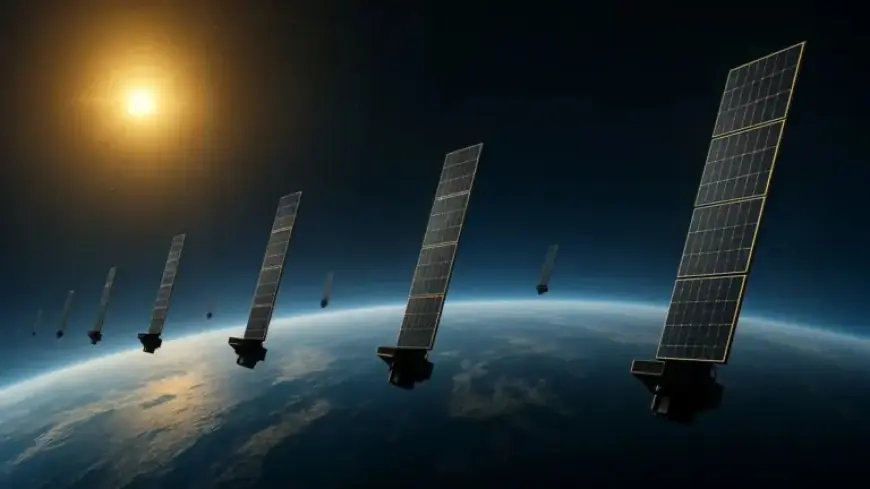
A Chinese space institute has submitted a significant application to launch approximately 200,000 satellites into orbit. This ambitious project far exceeds the current global satellite count, which amounts to around 10,000. The initiative is led by the Institute of Radio Spectrum Utilisation and Technological Innovation, aiming to deploy two distinct constellations of 96,714 satellites each.
Application to the ITU
The application has been lodged with the United Nations’ International Telecommunication Union (ITU). This body regulates the frequencies allocated to different countries to prevent signal interference. Approving an application of this magnitude will require substantial effort and coordination.
China’s Space Ambitions
This move raises questions about China’s long-term objectives in space. In 2022, the nation successfully launched 92 rockets, setting a national record. However, this still falls short compared to SpaceX, which achieved 165 launches that same year.
SpaceX’s Starlink project has placed about 10,000 satellites in orbit. In contrast, China’s proposal seeks to exceed that figure significantly, planning to launch 20 times more satellites.
Challenges Ahead
The ITU’s approval process is critical, as China is expected to meet specific milestones within 14 years. The proposed timeline includes:
- Initial launch of 1 satellite from each constellation in 7 years.
- Subsequent deployment of 10,000 satellites from each constellation within 2 years.
- Followed by 50,000 satellites from each constellation within another 3 years.
- Finally achieving the full 100,000 satellites from each within 2 additional years.
Strategic Calculations
Analysts suggest that China’s true motive might be to secure a substantial portion of the communications spectrum and orbital positions, potentially to limit the competitive landscape. Even if only a fraction of the proposed satellites are launched, the application grants China a strong foothold in space operations.
Global Satellite Landscape
In a curious twist, a small African nation, Rwanda, previously applied to launch 327,000 satellites in 2021. Despite this ambitious claim, the global satellite launch environment remains robust, with ongoing developments from various countries.
As efforts to deploy satellites increase, Earth’s orbit is becoming increasingly congested. The implications for future communications, navigation, and surveillance will be profound, as the night sky becomes populated with artificial satellites.
Conclusion
China’s ambition to launch 200,000 satellites undoubtedly reflects a growing competition in space. The unfolding scenario highlights a dynamic era in space operations, where ambitious plans may pave the way for significant advancements or serve as strategic posturing in a crowded orbit.