Sean McDermott’s Bills Exit the Playoffs in Overtime, and a Replay Dispute Becomes the Offseason’s First Flashpoint

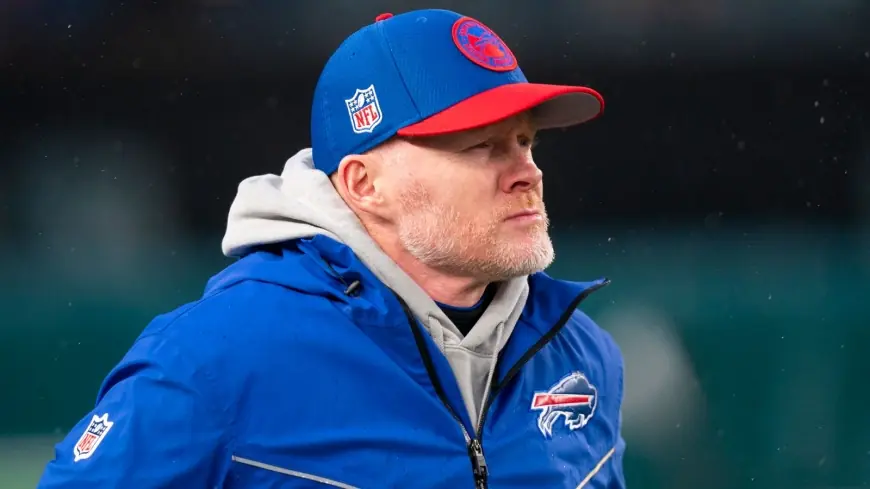
BUFFALO — Sean McDermott walked into the postseason with a roster built to chase a Super Bowl and walked out of it with another early ending, a heated replay dispute, and immediate questions about what comes next for the Buffalo Bills’ leadership.
Buffalo’s season ended with a 33–30 overtime loss to the Denver Broncos on Saturday night, a finish punctuated by a game-winning field goal after a controversial turnover sequence in overtime. By Sunday, the conversation around McDermott had split into two tracks: the coach’s forceful defense of his team after the officiating decision, and the broader reality that Buffalo remains stuck in the same place it has visited too often in recent years — close, competitive, and eliminated.
The Overtime Interception That Changed Everything
The decisive controversy centered on a deep throw in overtime that turned into an interception credited to Denver defensive back Ja’Quan McMillian. Bills wide receiver Brandin Cooks appeared to come down with the ball near the Broncos’ 20-yard line, but the play ended with McMillian emerging with possession and officials ruling it a turnover.
Because the play happened in overtime, the Bills’ sideline had limited ways to influence the pace of the decision. McDermott used a timeout in an attempt to slow the process and push for a more deliberate review of a play he believed was too important to be handled quickly.
After the game, McDermott made clear he believed the Bills were owed a slower, more transparent process — not necessarily a guaranteed reversal, but an unmistakable, “everyone sees the same thing” moment. He framed his reaction as advocacy for his locker room after three hours of playoff football came down to a call that effectively swung possession and field position.
Officials ultimately confirmed the ruling, and Denver used the opportunity to drive into field-goal range and end Buffalo’s season.
McDermott’s Postgame Tone: Not Just Frustration, but a Statement
McDermott’s postgame comments weren’t the typical coach-speak. They were emotional, pointed, and designed to be heard well beyond the interview room. The message was that Buffalo’s players deserved more clarity on a game-deciding call.
That tone carries risk. The league has a history of reviewing sharp public criticism of officiating, and strong remarks can lead to fines. Whether any discipline follows will be a separate storyline, but the moment already served its purpose: McDermott drew a hard line between “accepting a loss” and “accepting how the loss unfolded.”
A Familiar Question: What Does Buffalo Do With Another Playoff Exit?
No franchise likes being called a “contender that can’t finish,” but that’s the label the Bills are fighting again. Under McDermott, Buffalo has been consistently good enough to reach January and consistently unable to break through to February’s final stage.
In the immediate aftermath, the debate around McDermott’s job status reignited for predictable reasons:
-
Buffalo’s standard is now championship-or-bust.
-
Close playoff losses stop feeling like bad luck and start feeling like pattern.
-
The Bills are talented enough that “retooling” isn’t as simple as blaming personnel.
At the same time, McDermott’s supporters point to the stability he’s built: double-digit win seasons, a strong culture, and a team that rarely bottoms out. In today’s NFL, that consistency still matters — even when it doesn’t satisfy a fan base hungry for the last step.
Locker Room Support Builds Around McDermott and Joe Brady
On Sunday, as players cleaned out lockers and spoke publicly about the season ending, multiple Bills emphasized support for McDermott’s leadership. The tone was less “excuses” and more “we would go to battle for this staff,” reflecting a locker room that hasn’t fractured despite another painful finish.
The same support extended to offensive coordinator Joe Brady, who has become an increasingly hot name in coaching circles. Brady is expected to draw interest for head-coaching opportunities, which creates a parallel pressure point for Buffalo: the Bills don’t just have to decide how to evolve as a team — they may also have to prepare for staff turnover at a time when continuity is usually seen as a competitive advantage.
Staff Change Already on the Table: Aaron Kromer’s Intent to Retire
One staff change is already in motion. Offensive line coach Aaron Kromer has communicated his intent to retire, a notable development for an offense that leaned heavily on improved line play and a more physical identity.
In a postseason defined by a single contested play, it’s easy to miss the quieter truth: Buffalo’s offseason will be shaped by coaching and infrastructure decisions as much as by any one roster move. Replacing a respected offensive line coach, keeping key assistants, and deciding how to adjust the team’s late-game approach will all land on McDermott’s desk immediately.
What Comes Next for Sean McDermott
McDermott’s next few weeks are about control: controlling the narrative, controlling the staff plan, and controlling how the Bills respond to another ending that felt close enough to hurt.
The Bills can frame this as a one-call heartbreak. Or they can treat it as another reminder that championship margins are rarely one call wide. Either way, the head coach is now at the center of Buffalo’s defining offseason question: is this group a tweak away, or is it time for a deeper reset around how the Bills finish postseason games?