






















Florida Panthers trade of Jeff Petry to Wild reshuffles Minnesota’s blue-line strategy and playoff math

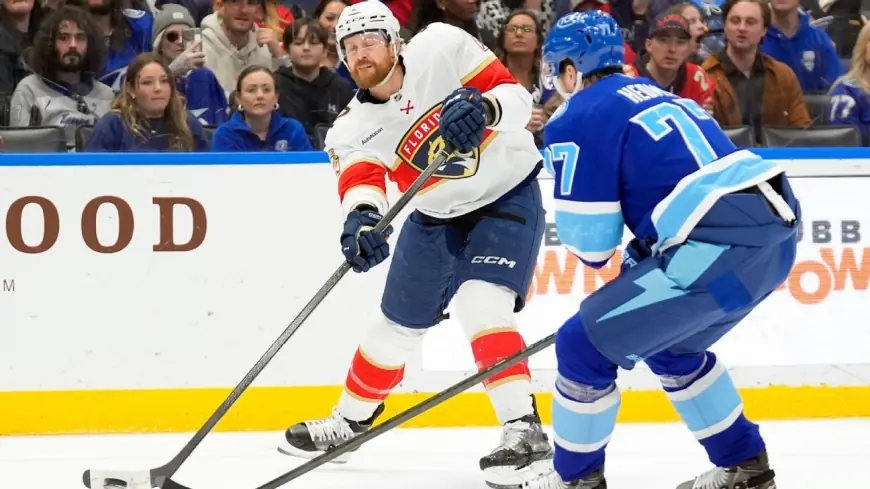
The move that sent Jeff Petry out of Florida and into Minnesota matters because it immediately changes the Wild’s deployment choices and their deadline calculus. The florida panthers’ decision to move a veteran right-shot defenseman for a conditional late pick hands the Wild short-term experience on the right side while leaving clear decisions about who plays, who is a depth piece and how remaining cap space will be used.
Florida Panthers haul turns into a roster puzzle for Minnesota — and forces decisions now
Here’s the part that matters: adding a veteran who’s expected to serve as a sixth or seventh defenseman shifts how the Wild can allocate minutes among their existing group. The trade gives Minnesota a right-shot option behind its core defenders and creates room to prioritize offensive or physical upgrades elsewhere before the deadline, since the team still carries notable cap flexibility. The arrival also affects the team’s short-term roster mechanics — the Wild are at the roster limit for now, and the incoming veteran is a pending unrestricted free agent.
- The Wild acquired Jeff Petry from the Florida Panthers in exchange for a conditional seventh-round pick in 2026; the pick can upgrade to a 2026 fifth-rounder if the Wild win two playoff rounds and Petry plays in at least half of those games.
- Petry is 38 and is a pending unrestricted free agent at season’s end; accounts differ on whether he had eight assists or eight points through 58 games this season; that detail is developing.
- Minnesota retains roughly $11. 252 million in trade-deadline cap space, leaving open the option to add another piece before the deadline’s 3 p. m. ET cutoff.
- The Wild have recently added other depth moves this week, creating a fuller roster picture as they prepare for playoff push.
Trade specifics and immediate context
Rather than a blockbuster, the exchange was a low-cost veteran pickup: Jeff Petry arrives in Minnesota for a conditional late-round pick. The terms that can convert the pick to a higher selection hinge on playoff performance and Petry’s participation in those rounds. Petry, who has logged a long NHL career and reached a notable games-played milestone earlier this season, is expected to join the Wild in time for their next road game.
The trade also interacts with the club’s broader deadline strategy. With wage flexibility available, the Wild can either pursue a more significant addition or keep assets for the offseason. The pursuit of Vincent Trocheck has cooled as the asking price remained elevated, and Minnesota has already made other moves this week to add depth at forward and on the blue line.
The florida panthers, meanwhile, arrive at this move with a season that has been hampered by injuries that affected their lineup and playoff hopes; the team’s point total sits below many Eastern Conference clubs. Moving a veteran defensive piece is one clear consequence of that difficult stretch.
What’s easy to miss is how conditional draft terms turn a late pick into a modest performance incentive: the pick increases only if Minnesota advances and Petry plays meaningful minutes in those rounds. That structure preserves short-term roster flexibility while keeping an upside tied to postseason contribution.
The real question now is how Minnesota balances playing-time distribution for its existing defenders and whether it deploys remaining cap room before the deadline. If the Wild pursue another top-six forward or a complementary defenseman, the Petry addition becomes a stopgap that preserves the team’s ability to be aggressive.
Mini timeline (verified points):
- Trade occurred on the Thursday before the trade deadline; Petro joins Minnesota immediately.
- The conditional pick is a 2026 seventh-rounder that can upgrade to a fifth if the Wild win two playoff rounds and Petry plays in at least half of those games.
- The NHL trade deadline is set for Friday at 3 p. m. ET; Minnesota retains cap space ahead of that cutoff.
Key forward- and defense-group impacts to watch include who cedes minutes to a veteran depth defenseman, whether the club uses cap room to chase a top-six forward, and whether the conditional pick converts — each would materially change the franchise’s near-term outlook.
The bigger signal here is that Minnesota is preparing for a deeper playoff run while hedging risk: a low-cost veteran addition now, with the flexibility to swing for a larger upgrade before the deadline if the right opportunity appears.
For readers tracking roster movement, expect small, targeted transactions in the final hours rather than blockbuster swaps; that pattern aligns with a club that has both immediate needs and assets to preserve for future leverage.