East Coast Braces for Cold and Snow This Weekend

The eastern United States is bracing for a significant cold snap this weekend, accompanied by potential snowfall. The influx of Arctic air began last Thursday and will persist into next week. This shift in weather highlights the season’s peak, and it is influenced by a rare atmospheric condition.
Cold Weather Overview
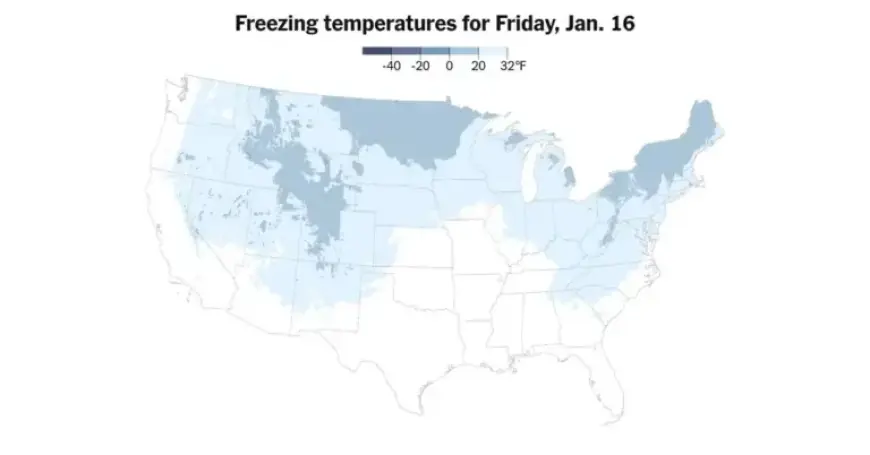
This winter’s unusual cold stretched from Atlanta to New York. Meteorologists report that, although record lows are not expected, the subfreezing temperatures will affect areas not typically accustomed to such conditions. Dominic Ramunni, a meteorologist with the National Weather Service in New York, emphasized that the upcoming cold spell is a stark shift after seasons of mild weather. “This is the dead of winter,” he remarked.
Forecast for the East Coast
Central Park in New York is projected to experience its coldest high temperature since last January. Nearby regions may see temperatures barely reaching the teens. As the cold settles, meteorologists predict various weather patterns stemming from a strong ridge of high pressure over the West Coast and Western Canada. This system forces the jet stream north before it plunges south, bringing Arctic air across the eastern states.
- Temperature Expectations: Cold air remains prevalent through most of next week.
- Precipitation: Light snow may occur in the Midwest, Northeast, and along the Appalachian Mountains.
Potential for Snow Events
A separate storm system may develop off the Southeast coast this weekend. If this low-pressure system aligns closely with the shoreline, it could result in significant snowfall for coastal cities, extending as far south as Florida. Meteorologists caution that several factors could influence the storm’s path and intensity.
- Georgia: There is a chance of frozen precipitation in northern regions.
- Interstate 95: Forecasters remain uncertain about snowfall amounts.
While New York City may see some snowfall, the impact is expected to be minimal. The variance of just a few miles in the storm’s trajectory could drastically change the predicted outcomes. By contrast, lake effect snow is anticipated around the Great Lakes through early next week, as the lakes remain unfrozen.
Challenges in Weather Forecasting
Forecasting snow in the southern states poses challenges due to the need for perfect synchronization of cold air and moisture. Ryan Willis, a National Weather Service forecaster in Atlanta, noted that these conditions do not consistently align every winter. Additionally, Arctic weather data is often less reliable due to a scarcity of observation stations, making predictive models less stable.
Implications of Snow Forecasts
For emergency managers, the potential for snow creates a need for preparedness. Although some weather models indicate minimal snow accumulation, less reliable models suggest the possibility of several inches of snow across affected regions. The stakes are high, as inaccuracies in snow measurements can lead to substantial operational discrepancies.
This weekend, the East Coast braces for both frigid temperatures and the potential for snow, invoking a mixture of anticipation and caution from meteorologists and residents alike.