NYU Develops Water-Powered Gears to Enhance Machine Durability

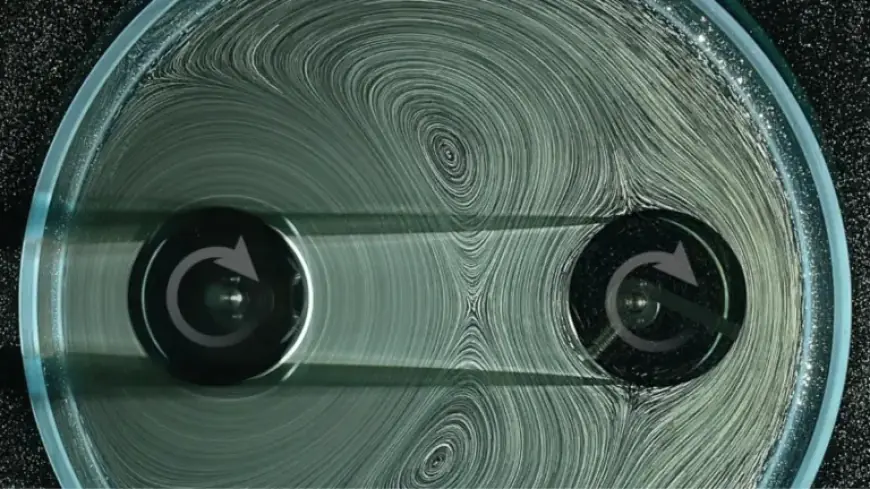
Engineers at New York University (NYU) have transformed the conventional gear design with their innovative water-powered gears. This advancement leverages fluid dynamics to enhance machine durability and offers a solution to the limitations presented by traditional mechanical gears.
Revolutionizing Gear Design
For thousands of years, gears have been fundamental to human engineering, dating back to 3000 BCE. Conventional gears, made of solid materials like metal or plastic, rely on interlocking teeth to transfer motion. This mechanical design is prone to failure if not meticulously aligned. NYU’s team has introduced a new mechanism where gears operate based on fluid dynamics rather than traditional teeth.
The Innovative Mechanism
- Fluid-based engagement: Gears function by directing fluid flows, mimicking the role of physical teeth.
- Experiments: Two submerged cylinders in a mixture of water and glycerol demonstrated this new principle.
- Two distinct behaviors: At close range, fluid acts like microscopic teeth, while at a greater distance, it behaves like a fan belt.
According to Jun Zhang, a professor at NYU, these liquid gears allow for enhanced control over rotation speed and direction. This flexibility represents a significant leap in gear technology.
Advantages Over Traditional Gears
Traditional gears face issues like jamming or breaking due to even the smallest defects. Common problems arise from misalignment or debris obstructing the gear teeth. NYU’s fluid gears circumvent these pitfalls entirely.
- No physical contact: Parts do not touch, eliminating the risk of breakage.
- Resistance to debris: If grit enters the system, the fluid simply flows around it.
- Adjustable speed and direction: Changes in fluid properties allow for instant gear ratio adjustments.
Future Applications
The potential applications for these water-powered gears are vast. They could revolutionize soft robotics by replacing rigid components with fluid-based systems. This shift may enable machines to achieve versatile movements and seamless adjustments to their gearing mechanisms.
The ongoing research at NYU promises to enhance the durability and functionality of machines across various industries through the innovative use of water-powered gears.