

























Dow Jones Futures Plunge Over 600 Points as U.S.-Iran War Shock Triggers Full Risk-Off Selloff

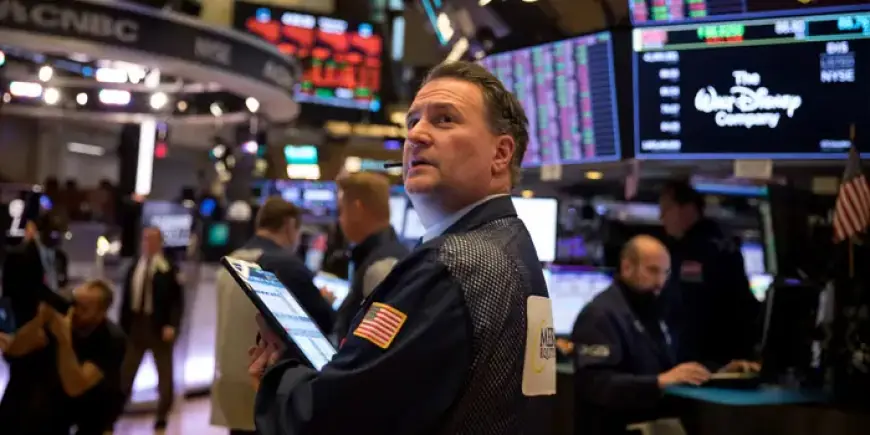
Dow Jones futures opened sharply lower Sunday evening, dropping more than 620 points as of 6:00 p.m. ET after a weekend that fundamentally reshaped the geopolitical landscape. U.S. and Israeli strikes on Iran over the weekend — killing Supreme Leader Khamenei — combined with Iranian retaliatory missile strikes across the Gulf region, sent investors rushing out of equities and into safe-haven assets with unusual speed and conviction.
Iran Conflict Sends Oil Surging and Futures Into Freefall
The immediate market mechanics unfolded exactly as crisis playbooks predict. Oil futures spiked nearly 5% on crypto exchange Hyperliquid, which permits 24-hour trading, reaching $71.70 per barrel as traders priced in a potential disruption to the Strait of Hormuz — the artery through which roughly 20% of the world's crude passes daily. Gold climbed to $5,334 per troy ounce, silver pushed above $93, and the Swiss franc gained ground, each move confirming investors were rotating into protection rather than risk.
The Dow Jones Industrial Average had already entered Sunday's futures open in a weakened position. The index fell more than 1% last Friday, weighed down by a hot inflation reading and mounting anxiety over AI disruption to corporate earnings — all before a single missile had been launched. The weekend's events turned a difficult month into a potential crisis open, with technical indicators on Dow Jones futures contracts flashing strong-sell signals across every major timeframe from hourly to daily.
Strait of Hormuz Risk Becomes the Key Variable for Monday's Open
Markets are now treating the Strait of Hormuz situation as a binary hinge. If the waterway remains operationally open despite the conflict, traders and analysts expect a partial recovery from Sunday's lows as the immediate worst-case scenario gets repriced. A confirmed closure or sustained disruption would trigger a deeper and broader correction across equities, oil-dependent industrials, and airline stocks — a sector already hammered last week by geopolitical escalation.
Three U.S. service members were confirmed killed in Kuwait by U.S. Central Command as of Sunday afternoon ET, adding another weight to risk sentiment. The Iranian rial collapsed roughly 30% against the dollar, trading at 1,749,500 per USD. OPEC+ announced it would raise daily output by 206,000 barrels in response to the crisis, a move designed to offset potential supply disruption but unlikely to fully calm energy markets while military operations remain active.
What Investors Are Watching Before Monday's 9:30 a.m. ET Bell
The setup entering Monday's open carries echoes of early pandemic trading, when futures hit limit-down stops before the cash session even began. The critical watchlist is narrow but consequential. Any indication of de-escalation from either Washington or Tehran — even a ceasefire signal — would allow futures to recover from extended lows before the 9:30 a.m. ET open. Confirmation that the Strait of Hormuz remains passable to oil tankers would be the single most stabilizing data point available.
Crypto markets offered an early read on sentiment. Bitcoin fell roughly 2% Saturday and has now shed more than a quarter of its value over two months, undermining the narrative that digital assets serve as a geopolitical hedge. Gold's 22% gain in 2026 heading into this weekend tells the more coherent flight-to-safety story. Whether Monday delivers a bounce or an accelerating decline will depend almost entirely on the next twelve hours of military and diplomatic developments — and the market has no reliable precedent for pricing a conflict of this speed or scope.