



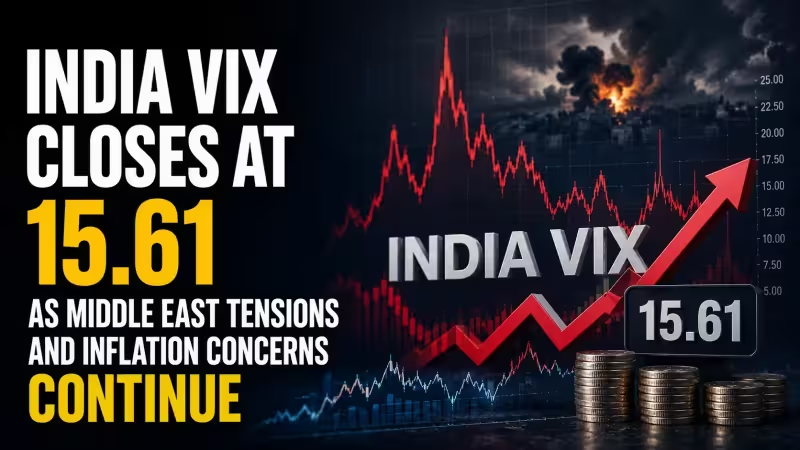
India VIX closed at 15.61 on June 11, 2026, slipping 0.02 points, or 0.13%, from the prior session’s 15.63 after a range-bound day that saw the index trade between 15.12 and 15.94 and open at 15.63.
The intraday band underscored a market that is nervous but not panicked: the vix is up 64.66% year to date and sits well inside a 52-week range that runs from 8.72 to 28.90. Technical indicators showed a neutral trend, with the classic pivot point at 15.46, resistance pegged at 16.01, 16.40 and 16.95, and support levels at 15.07, 14.52 and 14.13.

Traders pointed to a cluster of drivers keeping implied volatility elevated. Market attention remained on escalating geopolitical tensions in the Middle East and stronger-than-expected inflation prints from the United States, while Brent crude briefly approached $95 a barrel before easing below $92 later in the session. Separate market reports also show foreign portfolio investors have sold roughly $30 billion of Indian equities so far this year.

For Indian equity investors and market participants, the session’s data carried practical signals. The small down move left the index above the psychologically and technically relevant 15 mark, meaning option premiums and short-term hedging costs are likelier to stay elevated compared with the pre‑run-up environment. The intraday high of 15.94 tested the nearest resistance, while the low of 15.12 hugged support around the pivot.
That calculus reveals the story’s friction: India VIX closed marginally lower yet remained above 15 and is still described as elevated relative to its historical average. Neutral technical indicators sit against the elevated reading — a taut setup that produces choppy trading in derivatives and raises the cost of downside protection without producing a decisive directional signal for equities.
What comes next hinges on whether volatility breaks the technical thresholds traders watch. A sustained move above 16.01 would signal a fresh lift in risk pricing, while a drop below 15.07 would suggest some retracement toward calmer levels. Oil price moves, any fresh escalation in Middle East tensions and continued foreign portfolio investment flows will be the immediate catalysts that determine which path the vix takes.



