























Lyrid Meteor Shower 2026: Viewing Guide for Date, Location, and Tips

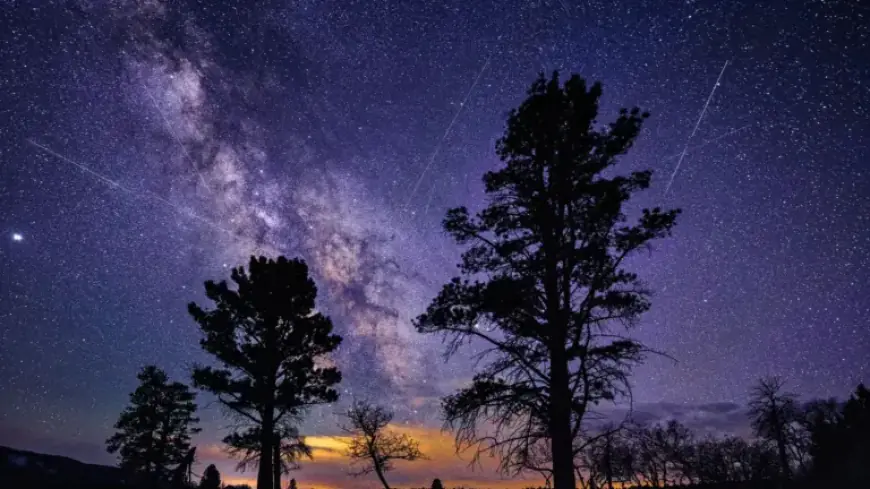
The annual Lyrid display runs from April 16 to April 25, with a strong peak in the early hours of April 22, 2026. Observers should plan for predawn viewing when the sky is darkest and the radiant reaches its highest point.
Quick facts
| Active dates | April 16–25 |
| Peak | Early hours of April 22, 2026 |
| Comet of origin | C/1861 G1 Thatcher (Comet Thatcher) |
| Comet orbital period | About 415.5 years |
| Typical ZHR | About 18 (15–20 meteors per hour) |
When to watch
Plan for predawn hours to catch the peak activity. The radiant climbs highest shortly before sunrise.
Sunrise will increasingly wash out faint meteors. The Moon sets after midnight this year. That leaves dark skies for peak viewing.
Where to look
The shower’s radiant sits in the constellation Lyra. It lies near the Hercules-Lyra border and northeast of Vega.
Avoid staring directly at the radiant. Looking a short distance away helps spot meteors with long tails.
Why the Lyrids occur
The Lyrids originate from debris shed by Comet Thatcher. The comet last passed close to the Sun in 1861.
Earth crosses that debris stream each April. Particles burn up in our atmosphere and create visible streaks.
Meteor rates and behavior
Normal activity produces roughly 15 to 20 meteors per hour under ideal dark skies. ZHR is near 18.
Occasionally the shower experiences outbursts. Rates can jump toward 100 meteors per hour during rare events.
How to observe
No special equipment is required. Simple skywatching yields the best results.
- Find a dark site away from city lights.
- Lie back on a blanket or chair for comfort.
- Allow about 30 minutes for eyes to adjust to the dark.
Photography and practical tips
Use a wide-angle lens and a sturdy tripod for long exposures. Manual focus on infinity improves sharpness.
Keep exposure times moderate to reduce star trails. Check battery life and carry spares.
Historical notes
The Lyrids rank among the oldest recorded meteor showers. Observations date back to at least 687 B.C.
Notable strong displays occurred in multiple centuries and countries, including events recorded in 1136 and 1803.
This Lyrid Meteor Shower 2026 viewing guide includes date, location and tips for a productive outing. For more skywatching stories and galleries, follow coverage at Filmogaz.com.