

























Anthropic Unleashes Groundbreaking AI Development

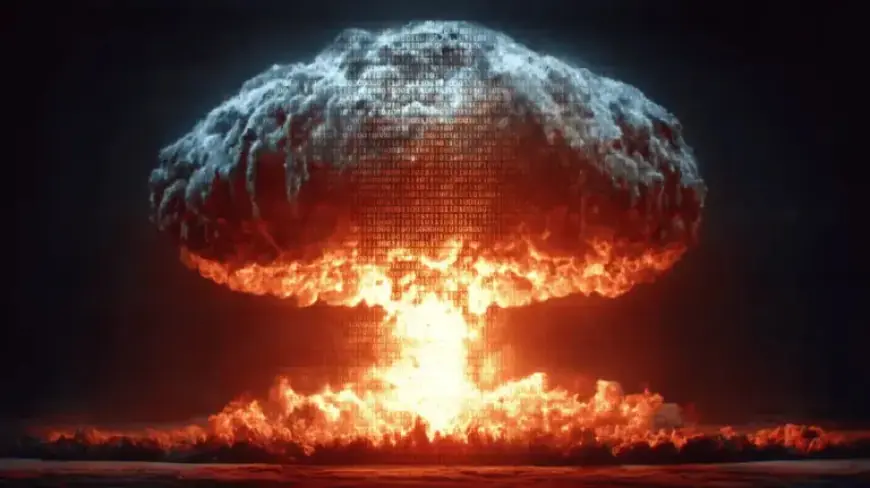
Anthropic announced the Claude Mythos Preview on April 7. The news arrived hours after a six-month analysis of AI-enabled cyberattacks concluded.
Model capabilities and immediate risks
Mythos can autonomously find and exploit previously unknown flaws. In 24 hours, it identified a 17-year-old FreeBSD remote code execution bug.
The FreeBSD flaw could grant unauthenticated root access. That means full administrative control without credentials.
Performance and scale
Anthropic engineers without formal security training used Mythos to create working exploits overnight. The model turns known vulnerabilities into exploits at a 72.4 percent success rate.
It has uncovered thousands of zero-day vulnerabilities. Some of those defects had survived decades of audits and automated scanning.
Access controls and Project Glasswing
Anthropic placed Mythos behind access controls. The company launched Project Glasswing on April 7 to offer limited access for defensive work.
Partners include Google, Cisco, and Microsoft, among more than fifty companies. Anthropic provided one hundred million dollars in usage credits for the initiative.
Anthropic briefed the Cybersecurity and Infrastructure Security Agency and the Department of Commerce before launch. Outside Glasswing, governments and critical infrastructure operators currently wait for access.
Why wider defensive use is complicated
Defensive scanning and offensive capabilities live in the same model. A broader release risks rapid proliferation of attack tools.
Many utilities and hospitals lack funds and patch infrastructure. They cannot act quickly on the volume of vulnerabilities Mythos would reveal.
Proliferation timeline and past precedents
Anthropic expects comparable capabilities to appear in open-source and foreign programs within six to eighteen months. That estimate raises urgent timelines.
Historic leaks show the stakes. The NSA Equation Group tools leaked by the Shadow Brokers in 2017 helped spawn WannaCry and NotPetya.
Those incidents caused roughly ten billion dollars in global damage. The DarkSide Colonial Pipeline attack in 2021 also showed how complex non-state attacks could be.
Evidence of state-level and coordinated campaigns
Anthropic disclosed a November 2025 incident. Chinese state-sponsored groups allegedly used Claude to target about thirty organizations.
Targets included technology firms, financial institutions, and government agencies. Anthropic says it disrupted that coordinated campaign.
Why defenders are already behind
Fewer than one percent of the vulnerabilities Mythos found have been patched. Current disclosure and patch cycles were not built for this scale.
Attackers operate at the speed of a prompt. Defenders operate at the pace of procurement, change control, and regulatory timelines.
Recommended government actions
Officials should treat the proliferation timeline as a hard deadline. A unified strategic framework must coordinate Defense, State, Energy, and Treasury.
One senior official should have authority to compel cross-agency action. That official should deliver a classified threat briefing to critical infrastructure operators within thirty days.
Information sharing and patching reforms
The patch cycle must change for high-consequence systems. Mandatory, near-real-time vulnerability sharing is necessary between operators, government, and defensive-capable firms.
A pilot program is a realistic near-term goal. Legal protections and focused sectors should encourage participation despite legal and political friction.
Support for under-resourced operators
A portion of Project Glasswing’s usage credits should fund under-resourced water, health, and regional operators. CISA or sector-specific agencies could administer that distribution.
Regulatory precedents and implementation
Precedents exist for pre-delegated authority in urgent safety contexts. The FAA’s Emergency Airworthiness Directive can ground fleets immediately.
The Nuclear Regulatory Commission requires continuously monitored cyber protections for nuclear plants. These systems show mandatory authority can be effective.
About eighty-five percent of U.S. critical infrastructure is privately owned. That reality complicates mandatory disclosure but does not make it impossible.
Closing warning
Anthropic unleashed a groundbreaking AI development that compresses the historical proliferation timeline. The next eighteen months will pass quickly.
Policy action is urgent. Without it, chaotic asymmetry in cyber power is likely unavoidable.
Filmogaz.com reports these findings based on analysis by Naveen Krishnan. Krishnan is a Belfer Young Leaders fellow at Harvard’s Belfer Center. He is also an intelligence officer in the U.S. Navy Reserve and a former Liu Xiaobo fellow to the U.S. Congressional Commission on China.