

























Australia Faces Submarine Setback Without AUKUS Deal

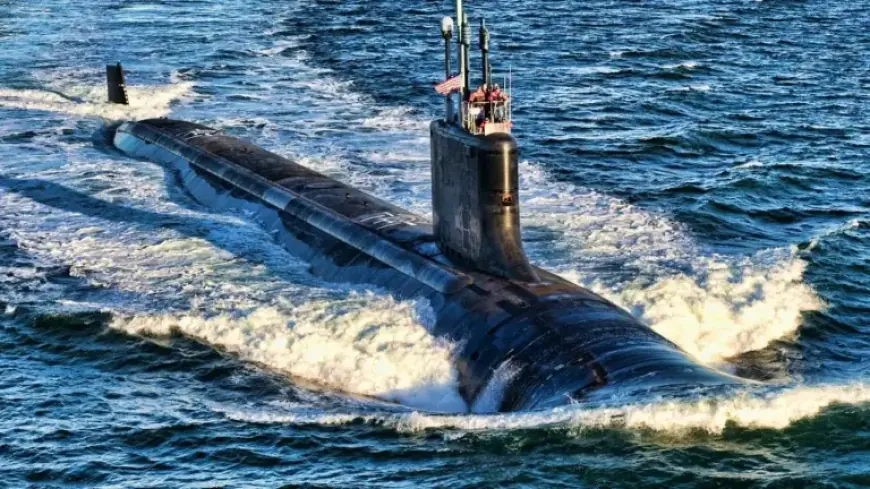
Senior Australian defence officials warned the country risks entering the 2030s without an operational submarine force. The concern rests on delays and capacity shortfalls within AUKUS partners. Australia relies on the pact for its future undersea capability.
Warnings from Canberra
On March 27, 2026, a senior Department of Defence official spoke at a Sovereignty and Security Forum in Canberra. Hugh Jeffrey, Deputy Secretary for Strategy, Policy and Industry, said AUKUS is Australia’s chosen path. He added there is no viable fallback if the partnership fails.
Former prime minister Malcolm Turnbull pressed for contingency plans. Retired Rear Admiral Peter Briggs urged reconsidering the AUKUS approach. Jeffrey argued abandoning the program risks repeating past replacement failures.
AUKUS structure and timelines
The trilateral AUKUS pact began on September 15, 2021. Leaders in Washington, London and Canberra announced a long-term defence partnership. The effort has two main pillars.
- Pillar I: delivering nuclear-powered attack submarines to Australia.
- Pillar II: cooperation on advanced technologies like AI, cyber, quantum and hypersonics.
In March 2023, leaders outlined an “optimal pathway.” It foresees 3 to 5 Virginia-class submarines arriving in the early 2030s. Those boats would be an interim measure. A new SSN-AUKUS design is to follow.
The plan expects the United Kingdom to produce the first SSN-AUKUS for its navy in the late 2030s. Australia would begin building its own version in Adelaide in the early 2040s. The lifetime cost of the program is about $368 billion AUD.
Industrial constraints in partner nations
Recent events have exposed tight capacity across all three partners. Britain dispatched HMS Anson to Australia as a statement of cooperation. The submarine was soon recalled to support operations around the Strait of Hormuz.
The Royal Navy has faced maintenance backlogs and parts shortages. Historically, Astute-class submarines were delivered at roughly one every three to four years. AUKUS assumes that pace can accelerate to about one boat every 18 months.
HMS Agamemnon, the penultimate Astute boat, took more than 12 years to complete. In December 2025, former Royal Navy official Philip Mathias warned of an unprecedented crisis in Britain’s submarine force. Officials also flagged risks in producing new reactor cores, and the UK industrial base is concentrated at the Barrow-in-Furness yard.
Meanwhile, the United States has struggled to meet a goal of two Virginia-class submarines per year. Washington has considered alternatives, such as rotating US submarines through Australian bases rather than transferring hulls permanently.
Australia’s industrial dependency
Australia lacks domestic capacity to build nuclear attack submarines. Canberra has instead invested billions to expand shipyard and production capacity in allied countries. Those investments aim to support interim transfers and future local construction.
The Collins-class fleet has received life-extension work. The boats are operating beyond their original service life. Without reliable deliveries from partners, Australia could face a capability gap.
Strategic implications
Delays and supply bottlenecks raise the risk that Australia will enter the 2030s with limited undersea deterrence. That shortfall would affect long-range maritime surveillance and regional deterrence. Allies emphasise the Indo-Pacific security context as justification for urgency.
Debate continues over whether to persist with AUKUS or seek alternatives. Defence leaders stress the diplomatic and industrial costs of abandoning the program. Others argue for contingency planning given production and schedule uncertainty.
Filmogaz.com will continue monitoring developments as partners work to meet delivery schedules and expand capacity.