
























Revamping: A ★★★★ Process in Action

Max Walker-Silverman’s latest feature arrived in theaters on 17 April 2026. The film was written and directed by Walker-Silverman.
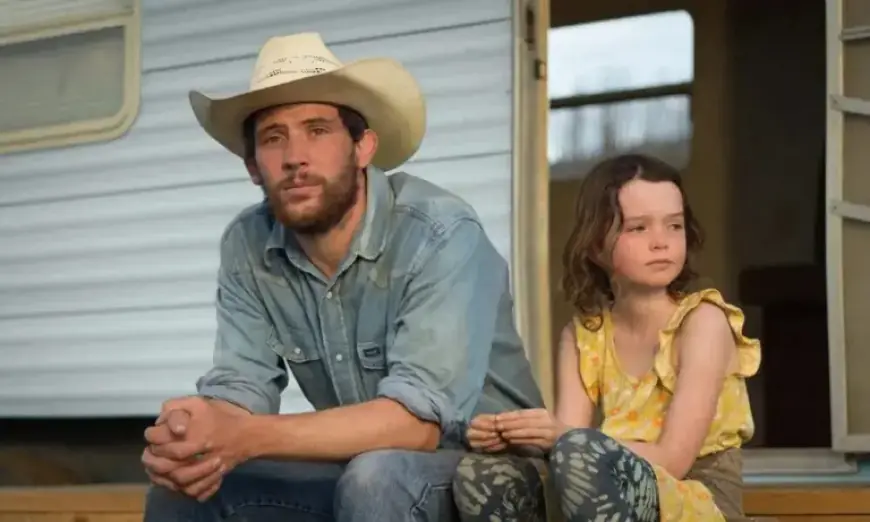
Set against the Colorado wilderness, the story follows a cowboy named Dusty. Josh O’Connor leads the cast as Dusty, with Lily LaTorre as his daughter.
Premise and setting
The plot opens after Dusty’s ranch is destroyed by wildfires. The blaze itself is not shown. The narrative concentrates on the aftermath and emotional recovery.
Callie Rose now lives with her mother, Ruby, and Ruby’s mother, Bess. Ruby is played by Meghann Fahy. Amy Madigan portrays Bess. Sam Engbring appears as Robbie, Ruby’s new partner.
Central relationship
The emotional core rests on the father-daughter bond. O’Connor and LaTorre display strong on-screen chemistry. Their scenes carry the film’s weight.
O’Connor plays a restrained man. He uses silence and small gestures to convey loss. LaTorre balances innocence with unexpected maturity.
Supporting cast and community
Several characters form a makeshift community affected by the wildfires. Kali Reis appears as Mali among this group. These figures add texture to Dusty’s environment.
Meghann Fahy and Amy Madigan contribute solid work in limited screen time. Some community members, however, feel lightly sketched. That thinness blunts part of the film’s emotional momentum.
Direction, tone, and visuals
Walker-Silverman favors quiet introspection over melodrama. The approach echoes his previous film, A Love Song (2022), also set in Colorado.
Cinematographer Alfonso Herrera Salcedo frames the landscape beautifully. The photography lends a hopeful overlay despite the story’s devastation.
Style and themes
The film explores grief, memory, and rebuilding on emotional levels. It prioritizes psychological recovery over physical reconstruction.
The result reads as a subtle revamping of familiar grief narratives. It feels like a process in action, intimate and patient.
Strengths and shortcomings
Strengths include the layered screenplay and standout central performances. The father-daughter relationship gives the piece its emotional resonance.
Weaknesses arise in the broader ensemble and the film’s closing section. The ending leans heavily on the underdeveloped community, reducing dramatic payoff.
Overall, Walker-Silverman cements his cinematic voice with this restrained, poetic work. Critics may regard it as a four-star effort, or★★★★, for its tonal precision.
Filmogaz.com will continue covering the director’s work and its reception. This film confirms Walker-Silverman’s emergence as a distinctive young filmmaker.