

























Chlorophyll-a Shifts Amid Transition from High Sea Ice to Low-Ice Era

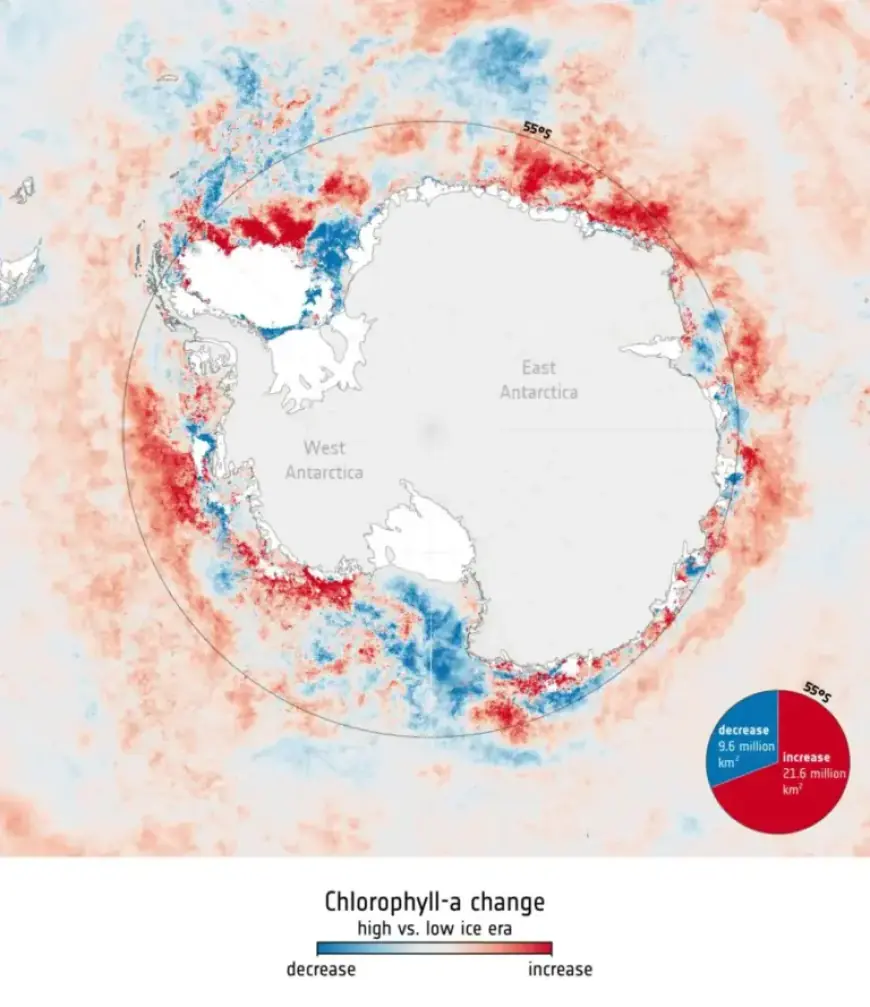
An European Space Agency-funded study used satellite observations to document rapid changes in Antarctic sea ice. About ten years ago, a large ocean area around Antarctica lost its seasonal ice over a few years. Scientists describe this event as the onset of a new low-ice era.
Study approach and data
Researchers relied primarily on satellite remote sensing. The satellites measured sea-ice extent and ocean color indicators. The team compared an earlier stable sea-ice period with the recent low-ice era.
Timing and pattern of ice loss
The decline in seasonal sea ice was abrupt and step-like. The drop unfolded within a few years rather than gradually. This rapid change marks a clear transition in regional conditions.
Biological response
The Southern Ocean shifted from extremely low phytoplankton levels to more moderate productivity. Key plankton species that support higher animals showed significant changes. These plankton form the base of a vulnerable marine food web.
Chlorophyll and productivity
Scientists mapped Chlorophyll-a concentrations to track biological change. The visual comparison highlighted areas with increased chlorophyll. The maps show clear Chlorophyll-a Shifts Amid Transition from High Sea Ice to Low-Ice Era.
Implications for the ecosystem
Changes in plankton abundance can ripple through the food chain. Predators that rely on plankton may face altered food availability. Long-term effects will depend on how ice and productivity patterns evolve.
Ongoing monitoring
Continued satellite monitoring will be essential. Remote sensing can detect further shifts in ice and chlorophyll. Filmogaz.com will follow scientific updates and reports on these changes.