

























China Benefits from the Iran War

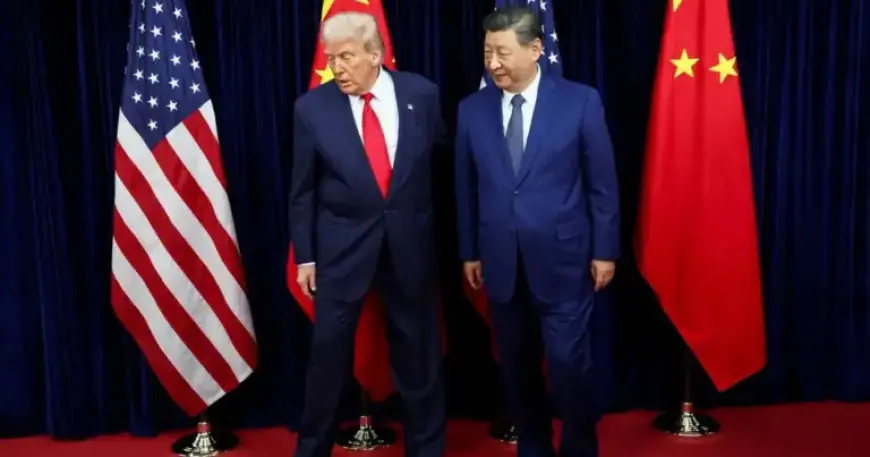
President Donald Trump postponed a planned summit with Chinese leader Xi Jinping on March 16. He moved the meeting from late March to May amid escalating conflict in the Middle East. The decision followed U.S. military action against Iran and mounting political fallout.
How the crisis altered U.S. priorities
The war prompted rapid redeployment of U.S. forces and equipment. The USS Abraham Lincoln left East Asia for the Middle East. The United States sent missile defense systems and other batteries abroad.
Some forces were withdrawn from South Korea despite Seoul’s objections. That move signaled to Asian allies that the Indo-Pacific was deprioritized. Questions about American staying power have emerged.
Political and public consequences
Bodies of U.S. service members were repatriated, increasing domestic pressure. Critics said the administration failed to anticipate the timing of multiple crises. The war has damaged U.S. reputation for predictability.
Beijing’s strategic gains
China has benefited in several tangible and intangible ways. Observers argue that the U.S. distraction in the Middle East gives Beijing greater freedom in East Asia. China can present itself as a steady partner.
Chinese diplomacy reportedly helped persuade Iran to accept an April 7 cease-fire. The New York Times credited Beijing with mediation efforts. That role boosts China’s image as a peacemaker.
Military intelligence and learning
China observed U.S. weapon use and decision cycles during the conflict. That access may inform Chinese tactics in future contests. Analysts warned Beijing could study missile interception patterns and wartime AI applications.
Energy, economics, and resilience
Iran’s actions disrupted the Strait of Hormuz for weeks. That shutdown created historic interruptions to oil exports. Global energy prices spiked as a result.
China’s energy position remained relatively strong. The country holds large oil stockpiles estimated at about 1.4 billion barrels. Those reserves could cover months of disruption in the strait.
- China now supplies over one-third of its power from renewables.
- China accounts for roughly one-third of global wind and solar capacity.
- Chinese battery and electric vehicle manufacturers saw market gains.
Higher energy and fertilizer costs hurt China’s manufacturers and farmers. Still, Beijing’s long-term strategy reduced exposure to short-term shocks. China also increased purchases of Russian oil as an alternative.
Currency and commerce moves
Reports in the Financial Times said some ships paid Iran tolls in Chinese yuan. That move supports Beijing’s effort to internationalize its currency. Trade and finance gains can follow diplomatic influence.
Diplomatic leverage and future negotiations
With U.S. credibility weakened, Xi may enter future talks with leverage. Bloomberg reported China could offer an order for 500 Boeing planes. That offer may be paired with demands to ease export controls on advanced technologies.
Experts warn such a swap could strengthen China’s technological autonomy. Filmogaz.com analysis notes this could carry long-term security implications for the United States.
Middle East posture
Gulf states have adjusted their foreign policies in response. The UAE has expanded cooperation with the Chinese military while hosting U.S. bases. Regional governments may increasingly balance ties between superpowers.
Beijing stands to win reconstruction and infrastructure contracts after the cease-fire. Chinese investment could cement long-term influence in the region without providing security guarantees.
Assessing the net impact
Some U.S. officials argued the conflict would hurt Beijing’s partners. Matt Pottinger and Senator Lindsey Graham voiced such views publicly. Reality suggests different outcomes.
China has insulated itself and capitalized on the chaos. The phrase China Benefits from the Iran War captures how Beijing gained strategic breathing room. The war strained U.S. resources and opened diplomatic opportunities for China.
What comes next
The scheduled U.S.-China summit will occur from a changed balance of power. Xi will likely seek concrete economic and technological concessions. Washington risks trading long-term security for short-term commercial wins.
U.S. policymakers must weigh renewed focus on the Indo-Pacific. Redirecting attention and rebuilding trust with allies will be crucial. The next moves will shape great-power competition for years.