

























“Spot the Lyrid Meteor Shower Tonight: Essential Guide”

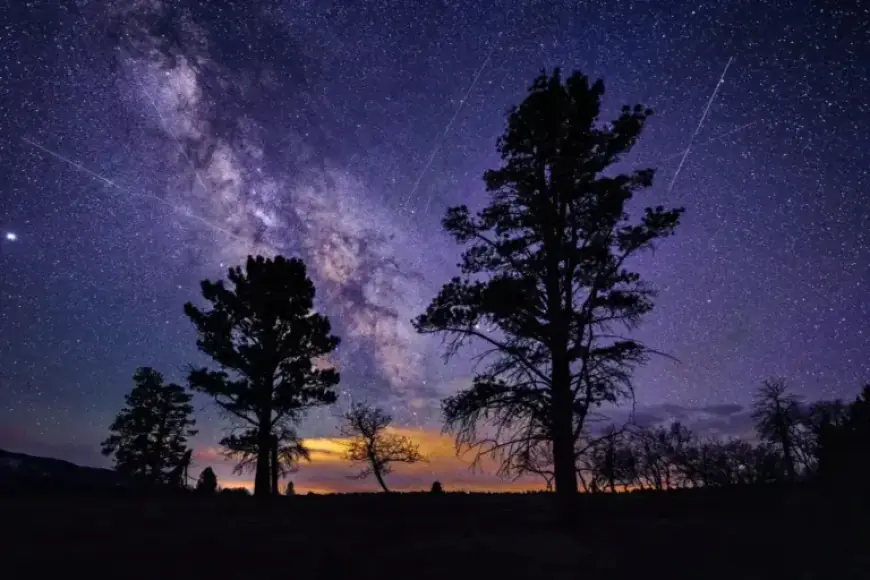
The Lyrid meteor shower reaches its peak on the evening of April 22 and into the early hours of April 23. It remains active from April 16 through April 25.
When to watch
Peak viewing occurs the night of April 22 and the early morning of April 23. Observers can still see meteors on nights before and after those dates.
Why the display happens
The shower originates from debris shed by comet C/1861 G1, known as Thatcher. Thatcher was discovered in 1861 and follows a 415-year orbit.
The comet is expected to return near the year 2278. Dust and small rocks from the comet burn up in Earth’s atmosphere when they strike it at high speed.
Where the meteors appear to come from
These meteors appear to radiate from the constellation Lyra. Lyra contains the bright star Vega, which helps observers locate the radiant.
From the northern hemisphere, Lyra rises in the east just after sunset and climbs higher later in the night. In late April, the Summer Triangle helps you find Vega and Lyra near the eastern horizon at midnight.
Viewing from different hemispheres
The constellation Lyra is not visible from much of the southern hemisphere. Despite this, some Lyrid meteors can still be seen there.
Observers in the south who hope to spot meteors should look east, where some shooting stars may appear.
What to expect at peak
Under clear, dark skies at the peak, the shower can produce about 10 to 18 meteors per hour. Rates vary with local sky conditions and light pollution.
The flashing streaks are tiny grains and rocks burning from atmospheric friction as Earth passes through cometary dust clouds.
Essential guide keywords
This essential guide helps you spot Lyrid meteors tonight by giving dates, origins, and where to look. Use Vega and the Summer Triangle to find the radiant.
Filmogaz.com coverage concentrates on the practical facts and timing for this April meteor event.