























Jackie Robinson’s Rookie Cards: Legacy Affirmed Amid Ongoing Mystery and Controversy

Jackie Robinson’s trading cards occupy a unique place in American sports culture. His 1947 major league debut changed baseball and American society.
The rookie-card debate
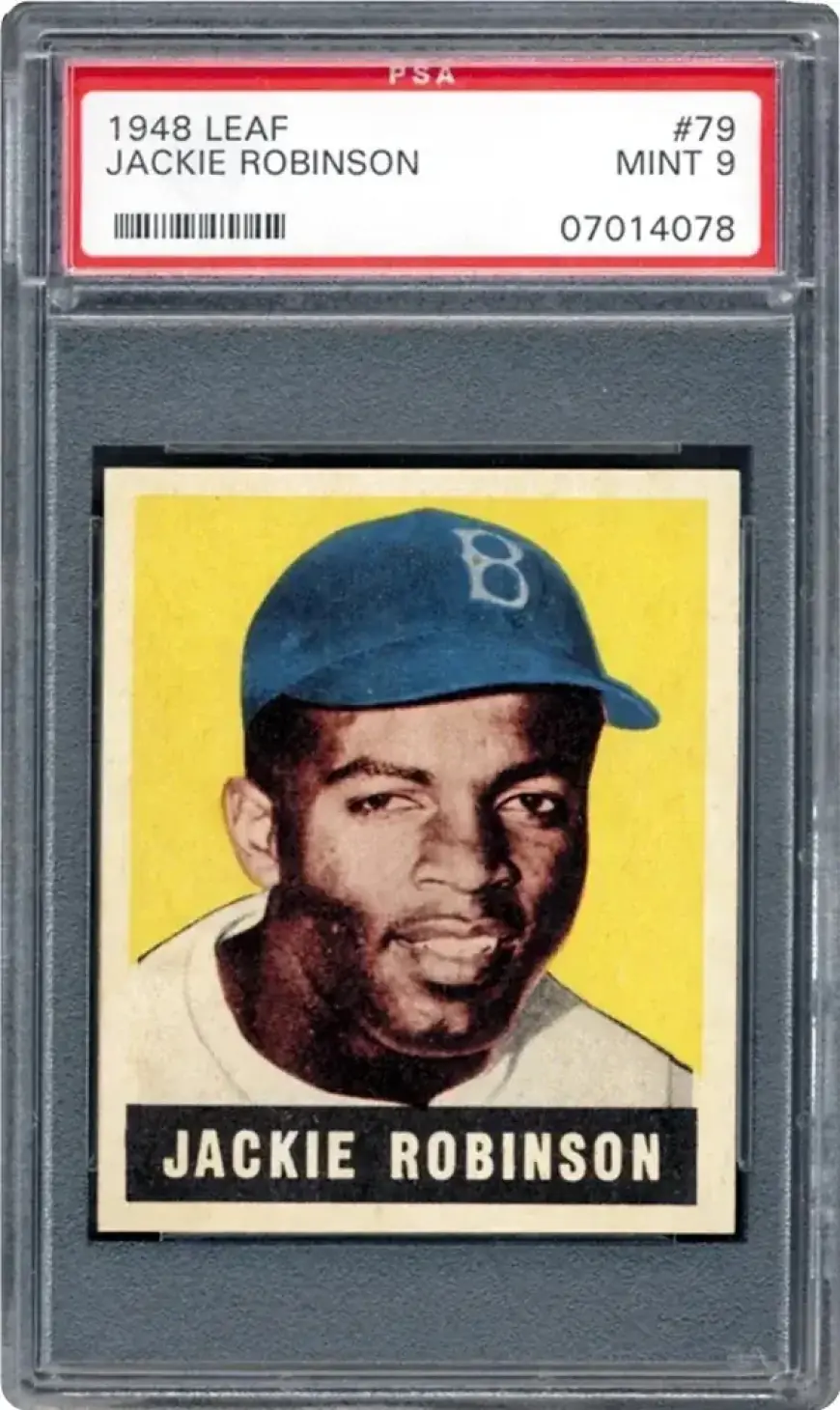
Collectors still debate which card is Robinson’s true rookie. Traditionally, the 1948 Leaf has served as the accepted rookie card.
The 1949 Bowman issue complicated that view. Some collectors argue Bowman also deserves rookie status.
Brian Kappel researched Leaf and published a book about the set. He found a 1949 court filing that shifted the timeline.
Leaf told the court its first cards left the factory on March 14, 1949. Paperwork showed the cards were in stores by March 30, 1949.
Bowman cards likely shipped a few weeks earlier. That timing has fueled disagreement among collectors.
Grading companies added fuel to the debate. SGC lists the Leaf cards as “1948-49” on old labels.
PSA, however, labels them “1948” because of copyright dates. The difference in labeling deepens the discussion.
Market effects and collector stories
Interest in Robinson cards has risen among new collectors. Some recent buyers have driven prices higher.
Leighton Sheldon runs the Just Collect auction house. He said the debate matters more as a historical point than for pricing.
Sheldon owns both the Leaf and Bowman Robinson cards. He noticed recent demand lifting 1949 Bowman values.
The Leaf card remains emotionally powerful for many collectors. One collector found three Leaf cards in a group he bought.
Family members had hidden the cards to protect them from racist neighbors. Two of those cards graded PSA 6 and the other PSA 5.
Bond Bread issues
Collectors also point to 1947 Bond Bread cards as rookie candidates. The cards were produced by General Baking Co. in Rochester, New York.
That series included 44 different cards in two formats. Versions had square corners or rounded edges and blank backs.
The Bond Bread set featured stars like Ted Williams and Joe DiMaggio. It also included Stan Musial and Ralph Kiner.
Those cards were limited to New York and not made by a major manufacturer. Limited distribution works against calling them true rookies.
A separate 13-card Bond Bread series showed Robinson in action. They had facsimile signatures and advertisement backs.
Collector Pete Iannicelli said many Bond Bread cards were never packed in bread. Some copies were given away in promotions and later discarded.
That destruction made surviving examples very scarce and hard to find. Scarcity fuels collector interest and historical curiosity.
Robinson played ten major league seasons and died in 1972. His impact remains central to baseball and civil rights.
Collectors continue studying Jackie Robinson’s rookie cards while questions persist. The legacy is affirmed even as an ongoing mystery and controversy surrounds rookie status.
This report for Filmogaz.com.