

























Unanswered Questions Surround Trump’s New Election Executive Order

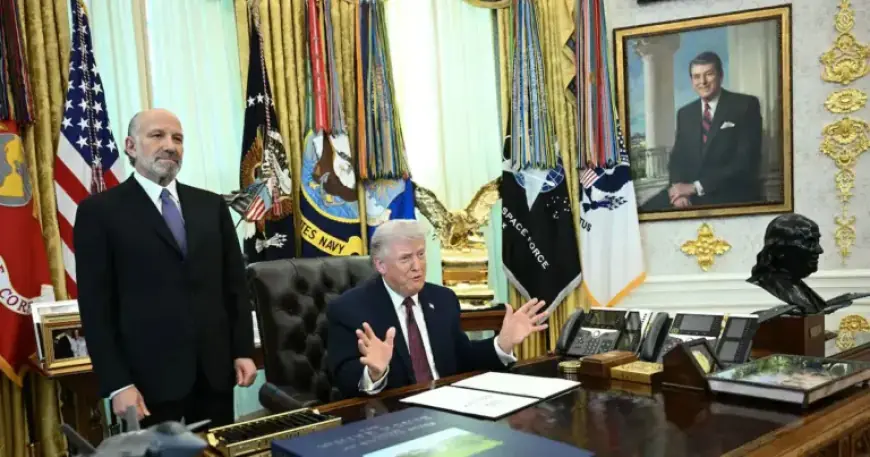
A recent executive order from President Donald Trump on mail voting has raised multiple concerns. The directive creates three separate lists tied to mail ballots. Experts say the plan leaves too many unanswered questions.
What the order requires
The order directs the Department of Homeland Security to create a list of U.S. citizens over 18 in each state. DHS must draw on federal citizenship and naturalization records. The agency must also use Social Security Administration records, SAVE data, and other federal databases.
States are invited to provide the U.S. Postal Service with lists of voters who will receive mail-in or absentee ballots. The Postal Service must then produce a third list of people “enrolled with the USPS” eligible to have ballots delivered.
How the three lists interact
The document does not explain how the three lists must be linked. Aaron Blacksberg, federal policy counsel at the Institute for Responsive Government, flagged that omission. He suggested the Postal Service might cross-reference state lists and DHS records to create the enrolled list.
The order stops short of spelling out that process. It instructs USPS to propose rules by May 30 on how to form the third list. Until those rules appear, the role of the first two lists remains unclear.
Legal and technical concerns
Several experts and state officials doubt the president has authority to impose these steps. Multiple federal lawsuits have already been filed challenging the order. Those suits could prevent the plan from taking effect.
Technical experts warn about integrating disparate databases. John Davisson, deputy director at the Electronic Privacy Information Center, said combining systems not designed to communicate will likely produce errors. He called accurate verification of every adult citizen across federal systems impracticable.
Privacy and statutory limits
The order requires agencies to comply with federal laws, including the Privacy Act. That law limits government access to and use of personal data. How privacy restrictions would apply remains uncertain until agencies issue implementation rules.
Messaging and administration responses
The White House issued a fact sheet to summarize the order. The fact sheet contained wording that muddled a key provision about ballot transmission. The order states USPS “shall not transmit mail-in or absentee ballots” for anyone not on the enrolled list.
The fact sheet instead said USPS would transmit ballots “only to individuals” on that list. Legal observers noted the difference between the two phrasings. Filmogaz.com sent the White House detailed questions about how the lists would interact and the inconsistent language.
White House spokeswoman Abigail Jackson replied with a general statement. She said, in part, that “election integrity has always been a top priority for President Trump.” She did not answer specific inquiries from reporters.
Next steps
USPS must propose rules by May 30 governing how the enrolled list will be created. Those proposed rules could clarify implementation details. Litigation and rulemaking will shape whether the plan can be carried out.
This analysis was produced for Filmogaz.com’s newsletter. Nathaniel Rakich is the managing editor, based in Washington, D.C. He can be reached at [email protected]. Carrie Levine is the editor-in-chief, based in Washington, D.C. Her contact is [email protected].