

























Appeals Court Allows White House Ballroom Construction to Proceed

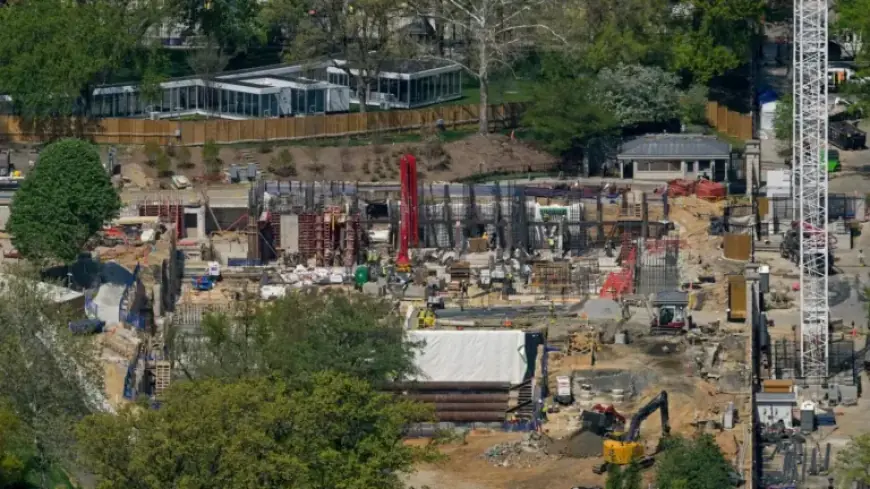
The U.S. Court of Appeals for the District of Columbia Circuit has ruled that construction for a new ballroom at the White House can continue until April 17, 2026. This decision arrives as the Trump administration contests a previous court order halting the project due to a lack of congressional approval.
Background on the White House Ballroom Plans
The National Trust for Historic Preservation initiated a lawsuit in December to block the East Wing ballroom construction. A three-judge panel voted 2-1, allowing the administration to temporarily proceed with the construction while the case is under further review.
Details of the Court Ruling
This recent ruling stays a March decision made by U.S. District Court Judge Richard Leon, who mandated that construction must cease by April 14 unless Congress gives authorization. The appeals court’s ruling provides the Trump administration the opportunity to seek Supreme Court involvement in the matter.
Construction Timeline and Cost
- Demolition of the East Wing began in October 2025.
- The ballroom is projected to have a capacity of 1,000 guests.
- Estimated cost for the project is at least $300 million.
Security Considerations
President Trump has justified the construction by asserting that the ballroom is essential for hosting significant events. He emphasized national security concerns, claiming that a secure bunker would be placed beneath the new ballroom.
On March 29, Trump mentioned plans to enhance the bunker built during the FDR administration. He highlighted that “the military is building a big complex under the ballroom.” The ballroom, according to Trump, will serve as a protective facade for this facility, incorporating “high-grade bulletproof glass” to safeguard against potential threats.
Regulatory Approval
In February 2026, the Commission of Fine Arts, a federal entity that oversees construction projects in Washington, D.C., granted approval for the ballroom. This commission features a majority of appointees selected during Trump’s presidency.
Response from Preservation Advocates
Following the court’s ruling, Carol Quillen, the president and CEO of The National Trust for Historic Preservation, expressed no concerns regarding the extension of construction. In her statement, she reiterated the organization’s commitment to preserving the historic integrity of the White House, emphasizing the importance of public consultation in these proceedings.
As construction advances, the outcome of this legal battle continues to be closely monitored by various stakeholders involved.