
























Texas Tech System Ends Gender and Orientation Programs

Texas Tech University System is implementing significant changes to academic programs concerning gender and sexual orientation. Chancellor Brandon Creighton announced on Friday an initiative to phase out these programs across the school’s five campuses. The directive mandates a freeze on admissions and prohibits students from declaring majors related to the affected fields.
Details of the Initiative
Chancellor Creighton’s memo requires the provosts to identify programs for discontinuation by June 15. Curricula focusing on gender identity and sexual orientation will face new limitations, impacting current courses and faculty hiring procedures.
Programs Affected
- Texas Tech University’s women’s and gender studies undergraduate minor
- Graduate certificate in women’s and gender studies
- Women’s and gender studies minors at Midwestern State University
- Women’s and gender studies minors at Angelo State University
While students currently enrolled in these programs can complete their degrees, new restrictions influence the academic landscape. Graduate theses and dissertations related to these topics are permitted only as a temporary measure for existing students.
Limitations on Faculty and Curriculum
The memo sets firm guidelines for faculty regarding gender identity and sexual orientation. Future hiring will focus on candidates aligning with the memo’s parameters, which define “two human sexes” as the only acceptable teaching focus.
In introductory courses, instructors cannot assign materials that prioritize these themes. However, there are exceptions for higher-level courses where such topics cannot be ignored.
Reactions from Faculty and Students
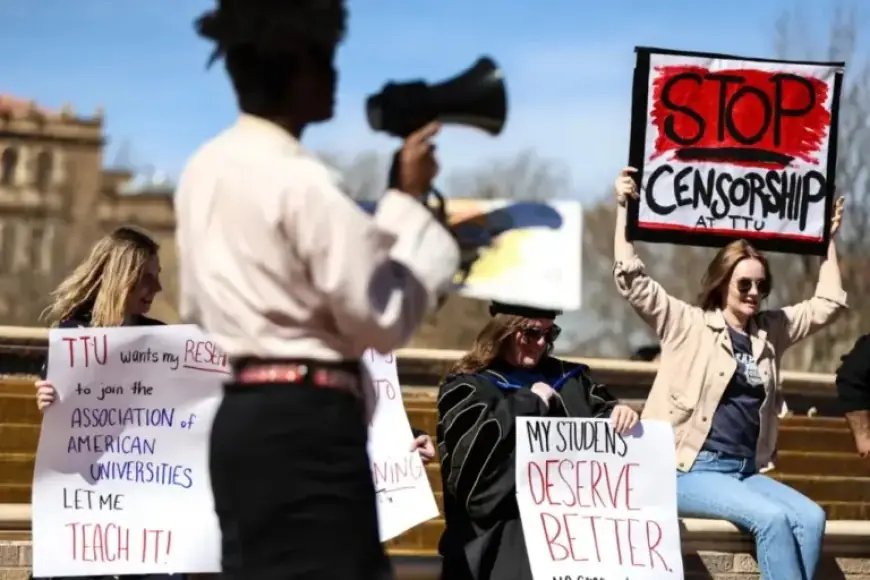
The response from faculty members has been overwhelmingly negative. Jen Shelton, an associate professor at Texas Tech for over 25 years, expressed feelings of betrayal regarding the new policies. Students, like junior Cailyn Green, voiced concerns over the diminished quality of education, claiming it compromised their ability to learn essential subjects.
Additionally, Paul Ingram, an associate professor of psychological sciences, reported student dissatisfaction, with some regretting their choice to attend Texas Tech due to these changes.
Legal and Constitutional Concerns
Legal experts, including Antonio Ingram from the NAACP Legal Defense Fund, have raised concerns that the memo seemingly targets specific viewpoints for political reasons. This could infringe upon constitutional protections against viewpoint discrimination in public universities.
Chancellor’s Justification
Chancellor Creighton defended the new policies, arguing they aim to ensure that academic programs are rigorous and yield valuable degrees. His administration emphasizes the First Amendment and maintains that Texas Tech will continue to promote open exchanges of ideas.
Creighton’s past as a Republican lawmaker involved major reforms in higher education. He previously initiated a review of course content touching on sensitive subjects like race, gender, and sexual orientation, sparking ongoing debates about academic freedom.
Moving Forward
The Texas Tech University System continues to navigate this controversial initiative, with potential implications for faculty employment and student education. These new policies will profoundly reshape the academic environment and provoke further discussions on educational standards and freedoms.