






















Federal Court Challenges Trump’s Latest Tariffs

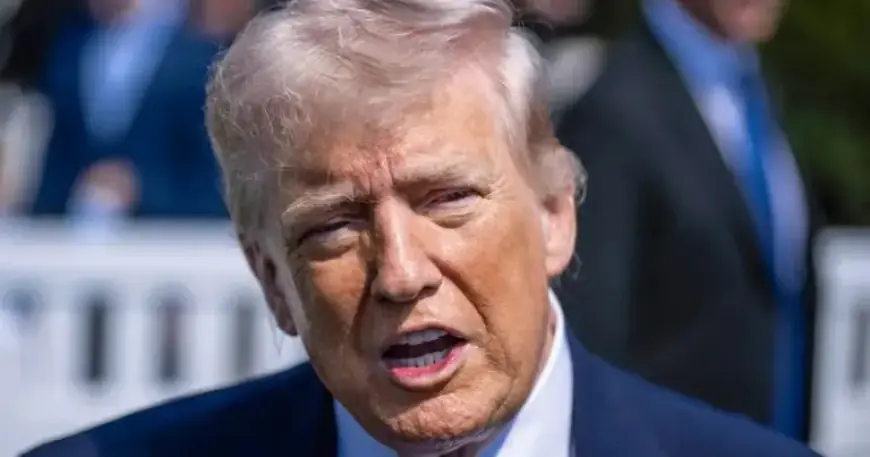
President Donald Trump’s tariffs on global imports are currently under legal scrutiny. The U.S. Court of International Trade in New York is hearing arguments to overturn his recently imposed temporary tariffs. This follows the Supreme Court’s decision in February, which rejected Trump’s previous attempts at implementing more extensive tariffs.
Trump’s Tariff Strategy and Legal Actions
Last year, Trump invoked the 1977 International Emergency Economic Powers Act (IEEPA), labeling the trade deficit as a national emergency. This allowed him to impose substantial worldwide taxes on imports to address the perceived issue. He interpreted IEEPA broadly, asserting the power to enact tariffs of any size and against any country.
However, the Supreme Court ruled on February 20 that IEEPA did not authorize the use of tariffs for national emergencies. Following this, Trump sought alternatives and turned to Section 122 of the Trade Act of 1974. This provision allows him to impose global tariffs of up to 15% for a limited duration of 150 days.
Current Status of Tariffs
- Trump quickly announced a 10% tariff under Section 122 after his Supreme Court defeat.
- He indicated plans to raise the tariffs to the maximum limit of 15%, although this has not yet occurred.
- The temporary tariffs are set to expire on July 24.
The central legal question is whether Section 122’s language applies to trade deficits. This provision was created during the financial crises of the 1960s and 1970s, when the U.S. dollar was tied to gold. Critics argue that Section 122 is no longer relevant since the dollar has since decoupled from gold standards.
Controversies and Legal Challenges
Interestingly, Trump’s own Justice Department had previously argued in court that IEEPA was necessary due to the ambiguity of Section 122 concerning trade deficits. They contended that trade deficits are fundamentally different from “fundamental international payments problems.”
Moreover, the trade court itself has previously indicated that Section 122 might be a sufficient recourse for addressing trade deficits, suggesting that Trump’s use of IEEPA was unnecessary.
As the case progresses, its implications will be significant for Trump’s economic policy and the future of U.S. trade regulations. The ongoing conflict around these tariffs illustrates a complex intersection between law and economic strategy, showcasing the challenges faced by the current administration.