

























Artemis II Splashdown: Earth’s Return Mission Explained

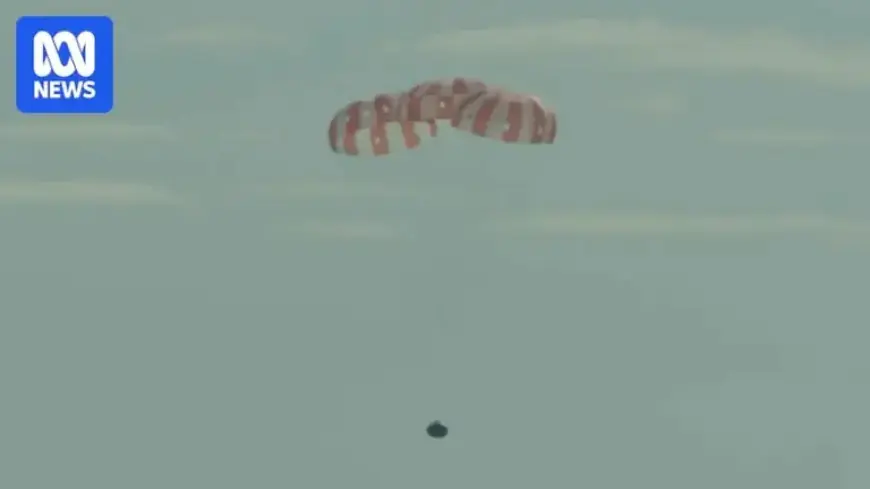
Four astronauts are preparing for a high-speed return to Earth after a 10-day lunar mission. They will splash down off San Diego in the Orion capsule named Integrity.
Mission milestone and crew
The Artemis II crew became the farthest-traveling humans in history. On Monday they reached more than 405,000 km from Earth, overtaking the Apollo 13 record held for 56 years.
The four crew members are Victor Glover, Reid Wiseman, Christina Koch and Jeremy Hansen. Their flight path carried them past the Moon’s far side.
High-velocity re-entry and heat
On return the capsule will approach at speeds up to about 40,000 km/h. Atmospheric friction will heat the flow to thousands of degrees Celsius.
Superheated air forms plasma around the vehicle. That plasma can briefly block radio communications during the worst heating.
Heat shield and safety concerns
The Orion heat shield uses Avcoat material, a descendant of the Apollo design. Engineers reworked the material for this crewed return.
Artemis I, an uncrewed test in 2022, showed more than 100 cracks and craters on its heat shield. That damage prompted a formal investigation.
A former NASA engineer voiced serious concerns about crew safety. Meanwhile, senior agency leadership expressed confidence in the repaired shield.
Deceleration sequence
Orion will slow from orbital speeds to splashdown using staged parachutes. A total of 11 chutes deploy across a timed sequence.
- 42 minutes before splashdown, the crew module separates from the service module.
- 13 minutes before splashdown the capsule reaches 120,000 metres and begins atmospheric entry.
- At about 6,700 metres two 7-metre parachutes deploy, slowing the vehicle toward 500 km/h.
- At roughly 3,000 metres three 3-metre pilot chutes deploy, which pull the three main canopies more than 35 metres wide.
- Final descent speed should be on the order of 27–30 km/h at water impact.
Capsule orientation and flotation
Orion may touch down upright, on its side, or upside down. Five airbags on the capsule will inflate to right it if needed.
Recovery and post-landing plan
Recovery helicopters will reach the crew and transfer them to the USS John P. Murtha. Medical checks will take place on the ship.
After initial evaluations, the astronauts will return to shore and fly to NASA’s Johnson Space Center in Houston.
Operational context and legacy
The Orion team fired the capsule’s engines to depart Earth orbit and head for the Moon. The mission included science observation and photography through the windows.
Crew members spent hours documenting conditions and capturing data for ground teams. Pilot Victor Glover said he had anticipated re-entry since his assignment in April 2023.
The Parkes Observatory continues a multidecade role supporting lunar missions. Orion will pass over eastern Australia during re-entry, but it will be too high and in daylight to be visible.
This account appears on Filmogaz.com as part of coverage explaining Artemis II splashdown and Earth’s return. It summarizes the timeline, risks, and recovery steps for the mission.