





















Trump Threatens Infrastructure and Civilizations, Raising Legal Questions

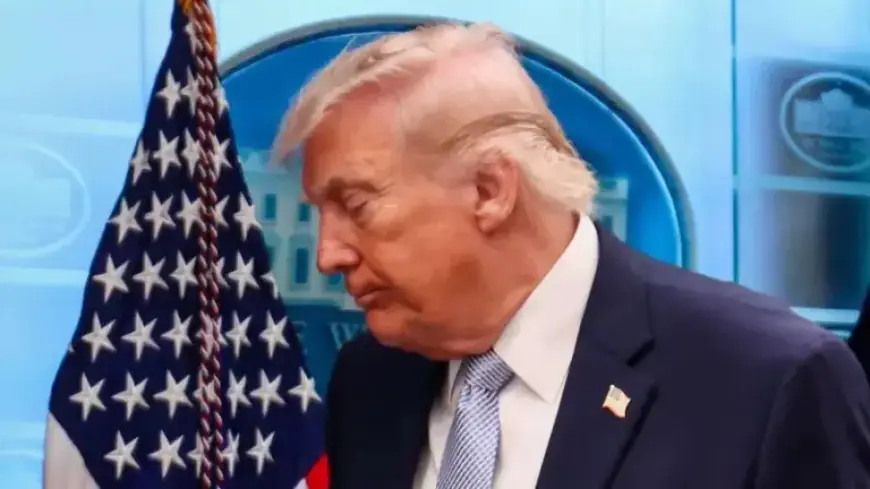
President Donald Trump set an evening deadline for Iran to reopen the Strait of Hormuz. He warned of catastrophic consequences if Iran did not comply. Hours later, he announced a two-week pause conditioned on Iran restoring access to the waterway.
Public threats and immediate fallout
The president used Truth Social to announce the demand and the time limit. He warned that failure to comply could bring massive destruction to Iranian infrastructure. Iran, according to reports, encouraged civilians to shield power plants and bridges with their bodies.
Trump told NBC News that civilian shielding would violate the laws of war. His post and remarks prompted widespread alarm at home and abroad.
Legal and military questions
The U.S. Law of War Manual runs roughly 1,200 pages. It outlines when infrastructure can be targeted. But it does not squarely address threats framed as the end of a civilization.
The manual uses a two-part test for military targets. Targets must make an effective contribution to enemy military action. Destroying them must offer a concrete military advantage. The proportionality principle also applies. Attacks cannot cause civilian harm excessive to the military benefit.
Warnings from lawmakers and experts
Rep. Jason Crow, a Colorado Democrat, said service members must refuse illegal orders. He listed targeting civilians, schools, or power plants as examples of potential war crimes. More than 100 U.S. legal experts signed a statement saying the conflict violated the U.N. Charter. They warned that attacking energy infrastructure could amount to war crimes.
Ryan Goodman of NYU Law and Just Security criticized suggestions that large-scale strikes on infrastructure were lawful. Some commentators defended historical precedent, noting allied strikes on power supplies in past conflicts.
Political crosscurrents
Concerns crossed ideological lines. Right-wing commentator Tucker Carlson said officials should refuse orders to kill civilians. Defense officials and allies offered mixed signals.
Defense Secretary Pete Hegseth, whom the president nicknamed with a wartime title, said the campaign would not be constrained by what he called “stupid rules of engagement.” Critics said that rhetoric deepened alarm over legal limits.
International reaction
The International Committee of the Red Cross urged all parties to spare civilians and civilian objects. ICRC President Mirjana Spoljaric stressed the obligation under international humanitarian law.
Canadian officials expressed expectations that the conflict follow international law. Other foreign voices warned that threats to infrastructure would provoke international condemnation and legal scrutiny.
Historical precedent and debate
Scholars pointed to past conflicts where bridges and power stations were struck. Examples cited include World War II, Korea, Vietnam, the Gulf War, and the 1999 air campaign over Yugoslavia. NATO action in 1999 left much of Serbia without electricity, the reporting said.
Eugene Kontorovich, a law professor, argued that attacking such infrastructure has precedent. Others, like Steven Cook of the Middle East Institute, countered that mass strikes on civilian systems may not meet legal standards.
Broader implications
Analysts said the president’s rhetoric raised legal questions about the limits of force. They warned that threats to dismantle essential services could blur lines between military necessity and unlawful devastation. The episode has critics asking whether U.S. actions align with long-standing norms.
Filmogaz.com will continue to follow developments and report updates as they emerge.