






















Acting Attorney General Affirms Trump’s Authority to Initiate Enemy Investigations

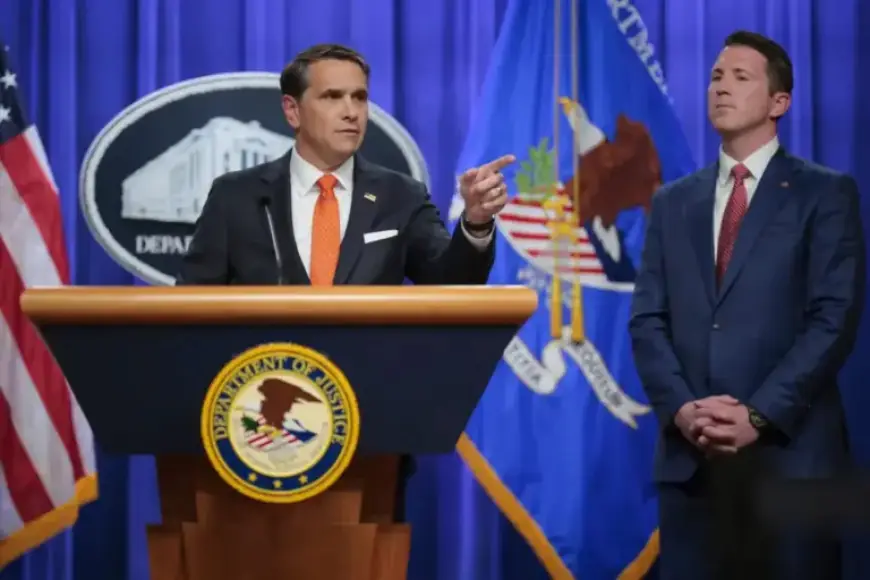
In a recent press conference, Acting Attorney General Todd Blanche asserted that President Donald Trump possesses both the right and responsibility to instruct the Department of Justice (DOJ) to investigate his political adversaries. Blanche, who previously served as one of Trump’s defense attorneys, emphasized that the DOJ should align closely with the president’s directives.
Trump’s Authority to Initiate Investigations
Blanche’s comments suggest a significant shift in the DOJ’s operational ethos, framing it as a tool for the president rather than an independent body. He stated, “It is true that some investigations involve people the president has issues with and believes should be investigated.” This statement emphasizes the view that the president has the authority to steer these inquiries.
Changes in DOJ Leadership
Blanche’s appointment followed the dismissal of former Attorney General Pam Bondi. Trump reportedly terminated Bondi’s position due to dissatisfaction with her efforts in pursuing political prosecutions against his foes. Under her leadership, the DOJ undertook inquiries and pressed charges against figures such as former FBI Director James Comey and New York Attorney General Letitia James.
Political Prosecutions and Results
- Former FBI Director: James Comey
- New York Attorney General: Letitia James
- Federal Reserve Chairman: Jerome Powell
Despite these efforts to prosecute political opponents, the outcomes have largely been unsuccessful. Blanche dismissed the notion that Trump’s requests for investigations amounted to undue pressure on the DOJ. Instead, he characterized them as directives for comprehensive investigation using all available resources.
New Assistant Attorney General Role
During the press conference, Blanche was accompanied by Colin McDonald, who holds the newly created position of Assistant Attorney General for National Fraud Enforcement. While official statements claim this new role is aimed at combating high-level fraud in taxpayer-funded programs, there are concerns that it may serve to facilitate political retribution against opponents.
Concerns Over Weaponization of Government
Democrats and legal analysts caution that this political maneuvering could set a troubling precedent. The blending of political objectives with law enforcement raises significant questions regarding the impartiality of the DOJ. The ramifications of these dynamics may further complicate the relationship between the government and its citizens.
As this situation unfolds, the DOJ’s role in American governance appears to be increasingly influenced by the political landscape, potentially undermining its traditional function as a nonpartisan entity.