























Ambassador Bridge No Longer Busiest U.S. Border Crossing

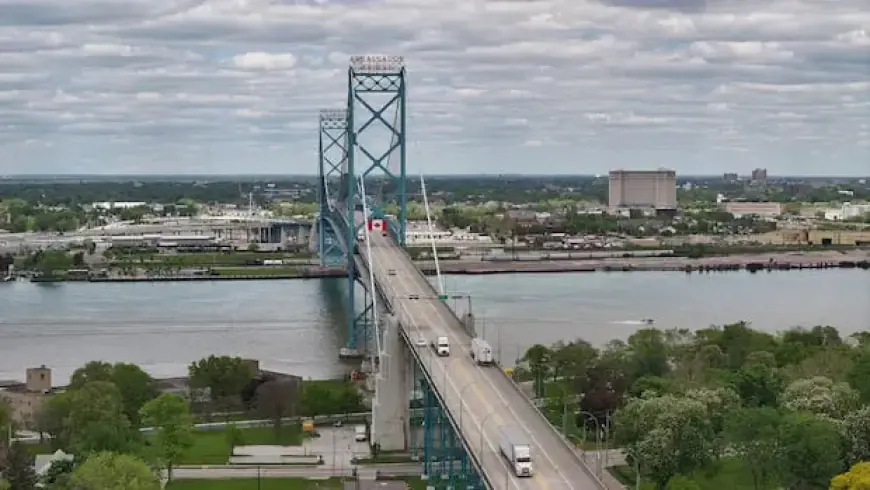
The trade landscape between Canada and the U.S. is undergoing significant changes. For the first time in decades, the Blue Water Bridge has overtaken the Ambassador Bridge as the busiest U.S. border crossing for commercial traffic. This shift highlights the impact of toll rates on commercial transportation routes.
Key Developments in Trade Corridors
The Blue Water Bridge, located in Sarnia, Ontario, has recently surpassed all other international crossings in terms of commercial traffic volume. Statistics from the Bridge and Tunnel Operators Association confirm that in 2025, the Blue Water Bridge experienced approximately 2.1 million commercial truck trips. In contrast, the Ambassador Bridge recorded around 1.9 million trips during the same period.
2026 Trends
The trend of increased traffic at the Blue Water Bridge has continued into 2026. Data from the early months indicate that the Blue Water Bridge facilitated 531,732 commercial truck trips, while the Ambassador Bridge saw 496,796 trips.
Impact of Toll Rates
One primary factor contributing to this shift is the difference in toll rates for commercial trucks. The Ambassador Bridge charges up to $27 per axle, significantly higher than the Blue Water Bridge’s $7 per axle. This toll disparity is redirecting supply chains toward Sarnia, impacting trade dynamics across North America.
Statements from Industry Leaders
- Stephen Laskowski, President and CEO of the Canadian Trucking Alliance, remarked on the “price sensitivity” influencing market choices.
- Laskowski also noted the Ambassador Bridge was historically the most trafficked crossing between Michigan and Ontario.
Challenges with the Gordie Howe International Bridge
The Gordie Howe International Bridge is intended to alleviate congestion in the Windsor-Detroit corridor but has faced repeated delays and budget overruns. Originally budgeted at $5.4 billion, costs have escalated to approximately $6.1 billion, and the opening has been postponed twice.
Economic Implications
Delays in opening the Gordie Howe Bridge could potentially cost up to $7 million per week, according to recent analyses. This project has become a focal point for discussions on public-private partnerships and their complexities in managing large infrastructure undertakings.
Experts, including Matti Siemiatycki from the University of Toronto, have criticized the traditional reliance on the private-public partnership model. He argues it often leads to contentious situations where risk is not effectively managed or shared.
Conclusion
The transition of the busiest border crossing from the Ambassador Bridge to the Blue Water Bridge emphasizes the critical influence of economic factors like tolls on trade routes. As the Gordie Howe Bridge project faces ongoing challenges, the reshaping of trade corridors in North America is a significant development for businesses and policymakers alike.