

























Big Software Battles for Survival: Inside the Struggle

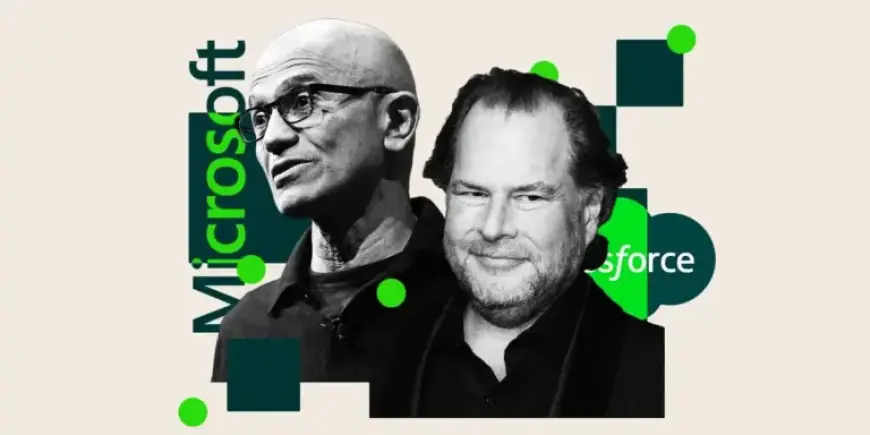
The software industry is in the midst of a profound transformation driven by the rise of artificial intelligence (AI). Executives from major companies, including Salesforce and Workday, are grappling with the implications of these advancements.
Current Landscape of Big Software
As companies rapidly adapt to AI, some traditional software firms face a significant challenge. Stock performance reflects this turmoil: Microsoft’s shares have decreased by over 21% this year, while Salesforce’s and Workday’s have fallen by 26% and 36% respectively. The Asana platform has seen an alarming drop of 51%. The software industry benchmark index, IGV, is down nearly 22% year-to-date.
AI’s Potential Impact
The central question driving discussions across Silicon Valley and Wall Street is whether AI-assisted coding may diminish the need for established software providers. Major players are compelled to demonstrate their value in a changing landscape.
- Microsoft is promoting a vision where businesses continue to utilize their platforms but with AI managing tasks in the background.
- Salesforce is developing features like “Agentforce” to enable clients to create their AI agents.
- Asana CEO Dan Rogers believes that demand for project management tools will increase as organizations incorporate more AI solutions.
Shifting Strategies in the Software Market
Executives are engaged in discussions about AI’s potential threat. Microsoft’s Jared Spataro suggests that AI will not eliminate traditional software but will transform its use. Instead of switching between multiple applications, users could delegate tasks to AI agents, streamlining their workflows.
Salesforce’s integration of tools like Slackbot aims to simplify user interactions by enabling direct communication with AI agents. This evolution is critical as software solutions strive to maintain their market relevance.
Changing Pricing Models
The traditional “seat-based pricing” model is under scrutiny. As companies lean more towards AI solutions, the need for as many software licenses may diminish. The market is trending towards charging based on usage and outcomes rather than per-user fees.
- Market intelligence firm IDC predicts that pure seat-based pricing may become obsolete by 2028.
- Microsoft has recently introduced its E7 tier, priced at $99 per seat monthly, but is exploring alternative pricing strategies.
Concerns and Considerations
While AI offers opportunities, concerns about security and complexity abound. Enterprises must weigh the risks of integrating AI solutions with their existing infrastructure. Analysts emphasize that many organizations still prefer established vendors for reliability and security, especially given the sensitive data involved.
The Future of Big Software
As the industry navigates these changes, leaders like Workday’s CEO Aneel Bhusri emphasize that internal complexities and risks make SaaS valuable. Despite the rise of AI-driven coding, many businesses require trusted software providers to manage regulatory compliance and intricate processes.
In conclusion, while AI presents challenges to traditional software firms, it also offers new avenues for innovation. The key will be for these companies to adapt, showing how AI can enhance, rather than replace, the capabilities of established software.