
























Atheist’s Pascha: Twice Risen Journey Unveiled

I do not believe in God, yet I mark Pascha with growing affection. In our house Jesus rises twice each year. He comes first in a Catholic celebration and then again at the Orthodox Anastasi at midnight.
Family and identity
My father was a committed communist and an adamant atheist. His name, Anastasios, literally means resurrection, and his name day falls on Easter Sunday.
My mother held an agnostic, 1960s “love is all” view of Jesus. My grandmother reproached my father as “Atheos,” a label for one without God.
Ceremony and timing
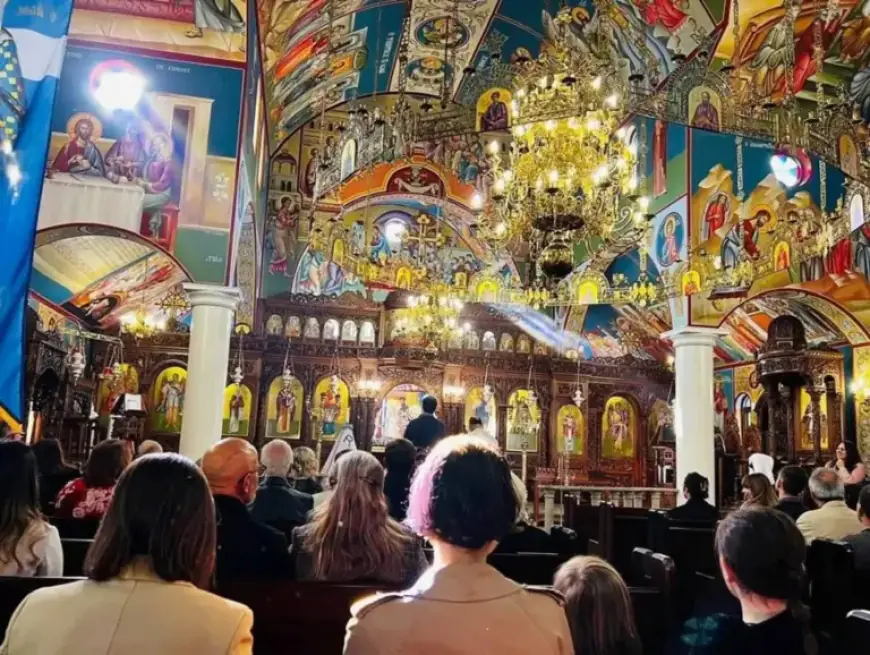
We attend the Anastasi at The Annunciation of Our Lady in East Melbourne. We arrive just before midnight, usually at 11.45pm, with large candles called lambathes wrapped in foil.
The congregation sings the Byzantine chant “Christos Anesti,” and attendees receive the holy light. The ritual recreates an ancient liturgical rhythm that feels outside ordinary time.
What happens after the service
After church we break the fast with family and friends. Avgolemono soup, tsoureki, koulouria and wine follow the midnight service.
Fasting and food traditions
My childhood memory centers on forty days of fasting. The rules included no meat, no dairy, and limited fish.
On Megali Pempti we dye eggs red. My sister bakes koulouria and we later compete to crack each other’s eggs.
- Avgolemono: egg and lemon soup
- Magiritsa: traditional offal soup some families serve
- Tsoureki: sweet braided bread flavored with mahlab
- Halva and koulouria: sweets served after the service
Migration, memory and loss
Sephardic Jews fleeing Spain in 1492 brought many Easter foods into Greece. They helped make Thessaloniki the Balkans’ largest Sephardic community.
When the Nazis invaded Greece, up to 90 percent of Thessaloniki’s Jews were murdered in death camps. That loss shadows modern observance.
War, courage and the church
My parents lived through Nazi occupation and the Greek Civil War. Their questions about God came from witnessing mass violence.
Archbishop Damaskinos helped save thousands of Greek Jews by providing Christian documentation. SS-Oberführer Jürgen Stroop once threatened the archbishop with execution.
Public life and private rituals
In Melbourne, smoke from backyard charcoal spits signals Pascha across suburbs. Neighbors sometimes complain about the noise and traffic.
I celebrate openly so my son understands our Hellenic and Orthodox roots. For us, faith functions as identity and as a link to a deep past.
Personal anecdotes
At age 13, my uncle Harry brought home a lamb we named Lamby. The animal later became part of an Easter spit, a painful memory.
My son, Anastasios, never met my father. He nonetheless embodies that family continuity and the sense of resurrection in a personal way.
Why an atheist observes
Ethnicity, history and family explain part of the practice. Ritual also slices through everyday life and restores a larger sense of time.
This Atheist’s Pascha is a twice risen cultural experience. The journey unveiled by ritual gives meaning beyond literal belief.