
























$2 Billion Crude Oil Pipeline Project Announced

A major development in the North American energy sector is underway with Bridger Pipeline’s announcement of a new $2 billion crude oil pipeline project. This ambitious initiative aims to transport Canadian crude oil from the U.S.-Canada border to Guernsey, Wyoming, with an impressive capacity to deliver over 1 million barrels of oil per day.
Project Overview
The pipeline is set to span nearly 650 miles (1,050 km), primarily traversing eastern Montana before entering Wyoming. Initially, the pipeline is expected to operate at a capacity of approximately 550,000 barrels per day.
Cost and Capacity
- Estimated Project Cost: $1.96 billion for the segment within Montana (435.2 miles).
- Initial Capacity: 550,000 barrels per day.
- Ultimate Capacity: Up to 1.13 million barrels per day.
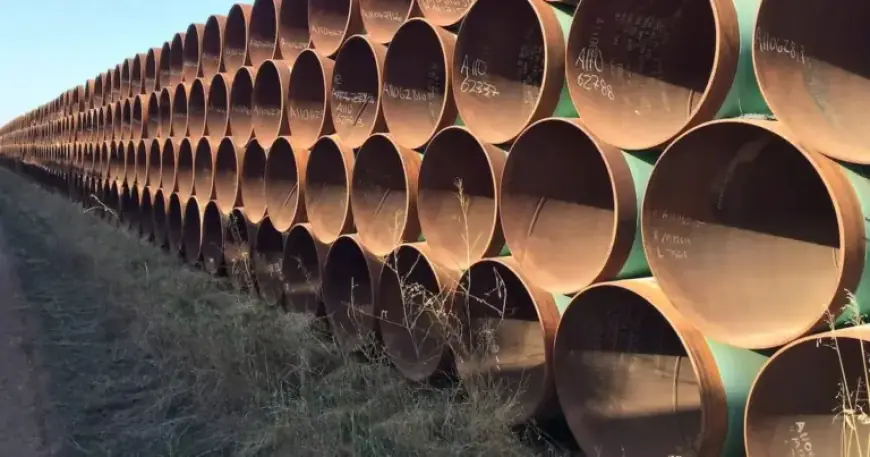
Bridger Pipeline aims to use existing corridors where feasible to minimize environmental disruption. The proposed 36-inch pipeline will facilitate not only the transport of Canadian crude oil but also potential connections to the Bakken shale oil field, enhancing accessibility to Bridger’s gathering network in North Dakota.
Future Expansion Potential
Matthew Lewis, founder of Plainview Energy Analytics, highlighted that this project could lead to substantial increases in transport capacity, possibly exceeding 800,000 barrels per day with adjustments for light crude oil batching. Such flexibility may also provide Bakken shippers with new competitive options for shipping oil to refineries.
Strategic Importance
Bridger Pipeline’s efforts could complement Canadian initiatives, particularly for the South Bow company, which is attempting to reactivate sections of the canceled Keystone XL pipeline. Should this become a reality, and if additional infrastructure connections are established, Canada could potentially increase its crude exports to the U.S. by more than 12%.
Infrastructure Considerations
While Guernsey serves as a link in the supply chain, it is not a terminal for crude oil, which means further infrastructure developments will be necessary to connect the pipeline to major refining hubs. Key destinations for the crude oil include:
- Cushing, Oklahoma
- Patoka, Illinois
- U.S. Gulf Coast
The success of this pipeline project hinges on regulatory approvals and infrastructure development, marking a significant step forward in accommodating North America’s growing energy demands.