

























Artemis II Crew Prepares for Day 6 Lunar Flyby

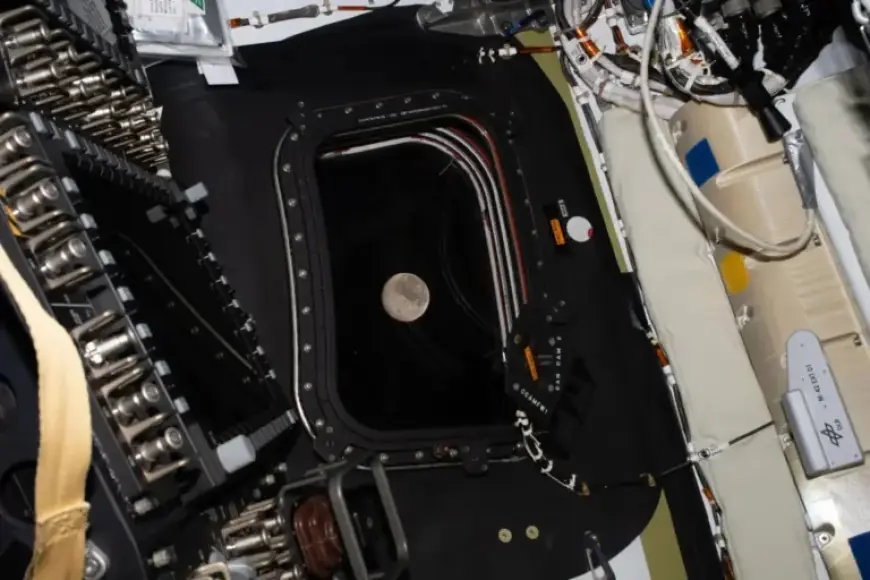
The Artemis II crew woke early and began final preparations for a lunar flyby. The team includes NASA astronauts Reid Wiseman, Victor Glover, and Christina Koch, plus Canadian Space Agency astronaut Jeremy Hansen.
They awoke about 18,830 miles from the Moon. Their wake-up music included “Good Morning” by Mandisa and TobyMac.
Historic messages and milestones
The crew received a recorded greeting from Apollo veteran Jim Lovell. He recorded the message before his passing in 2025.
The mission will mark the first human lunar swing-by since Apollo 17 in 1972. At about 1:56 p.m. EDT, Artemis II will surpass Apollo 13’s April 1970 distance record.
Distance records
- Maximum distance expected at 7:07 p.m. EDT: about 252,760 miles from Earth.
- Apollo 13’s farthest distance: 248,655 miles from Earth in April 1970.
- Closest approach to the Moon near 7:02 p.m.: roughly 4,070 miles above the surface.
Flyby timeline (Eastern Time)
- 1:30 p.m.: Science officer briefs crew at NASA Johnson Space Center.
- 1:56 p.m.: Artemis II expected to break the farthest-human-distance record.
- 2:45 p.m.: Lunar observations begin.
- 6:44 p.m.: Orion passes behind the Moon; planned communications blackout begins.
- 6:45 p.m.: “Earthset” — Earth slips behind the Moon from Orion’s view.
- 7:02 p.m.: Closest approach at about 4,070 miles above the lunar surface.
- 7:07 p.m.: Mission reaches maximum distance from Earth.
- 7:25 p.m.: “Earthrise” as Earth returns to view; mission control re-establishes contact.
- 8:35–9:32 p.m.: Crew experiences a solar eclipse from space.
- 9:20 p.m.: Lunar observations conclude for the day.
- Next day, April 7, 1:25 p.m.: Orion exits the Moon’s sphere of influence at 41,072 miles.
Science, views, and communications
The roughly seven-hour flyby will let astronauts study lunar geology up close. They will conduct detailed observations while Orion is near the Moon.
Cameras on Orion’s solar arrays will send live views of the lunar surface. Image quality may change due to distance, system limits, and communications bandwidth.
When Orion passes behind the Moon, a planned 40-minute blackout will occur. During the eclipse from 8:35 to 9:32 p.m., the crew will study the Sun’s corona.
Live coverage and resources
Live coverage begins at 1 p.m. EDT across multiple platforms. Streaming partners include NASA+, Amazon Prime, Apple TV, Hulu, Netflix, HBO Max, and Roku.
NASA’s 24/7 YouTube channel will also carry continuous coverage. For images and mission media, see the Artemis II multimedia resource page on Filmogaz.com.
The mission’s social updates appear under @NASAArtemis on major platforms. Filmogaz.com will provide updates and curated imagery throughout the event.
Artemis II Crew Prepares for Day 6 Lunar Flyby as they move through these planned milestones. This report was filed April 6, 2026, at 10:55 a.m. EDT.