





















American Air Travel Faces Major Crisis

I booked a three-hour flight with my one-year-old for next week. The recent security line chaos made the trip feel daunting.
This story was first featured in the Filmogaz.com newsletter.
Security lines and shutdown fallout
Staffing shortages at security checkpoints worsened during the partial government shutdown. About 50,000 TSA agents worked without pay, prompting callouts and resignations.
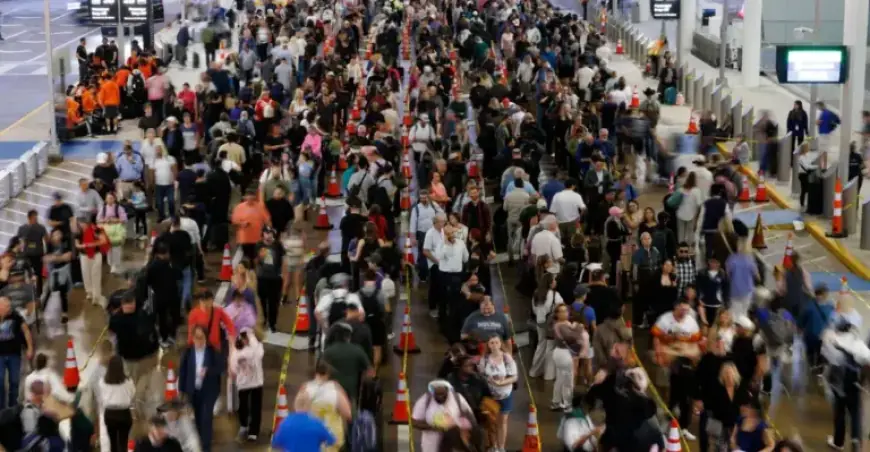
Those absences produced hours-long lines at many airports. After more than a month without pay, TSA agents received back pay on a Monday. That eased bottlenecks at numerous airports.
Privatization proposal
Some think tanks, including the Heritage Foundation, propose allowing private contractors to perform TSA duties. Around 20 U.S. airports already use private security models.
Examples include Kansas City and San Francisco airports. Contractors would check IDs, scan luggage, and perform pat-downs. Proponents argue privatization could cut costs and improve efficiency.
Obsolete air traffic control systems
The Federal Aviation Administration says 80 percent of U.S. air traffic control infrastructure is obsolete or unsustainable. That includes 612 radar systems dating to the 1980s.
Some replacement parts are so scarce the FAA has resorted to buying on eBay. Equipment failures can trigger delays, cancellations, and safety risks.
Congress approved more than $12 billion last summer to start modernization. The FAA estimates it needs roughly another $20 billion to finish retrofits.
Controller shortages and safety incidents
The FAA is short about 3,000 air traffic controllers. Staffing gaps reduce system resilience and slow airport operations.
In a recent incident at LaGuardia, only two controllers were on duty when an Air Canada Express passenger jet struck a fire truck. That episode raised fresh safety concerns.
Recruiting efforts have been paired with cost-cutting measures that eliminated some FAA support staff. The last shutdown also prompted hundreds of controllers and trainees to resign.
Impact on travelers
Airlines have normalized smaller seats, extra fees, and reduced amenities. Now, security delays and infrastructure failures compound passenger frustration.
Many travelers still receive advisories to arrive hours early. Some passengers are switching to trains, despite a weak U.S. passenger rail system. High gas prices also deter driving as an alternative.
What comes next
The convergence of staffing shortfalls and outdated systems means American Air Travel Faces Major Crisis for many flyers. Fixes will require sustained funding and staffing plans.
- Invest in air traffic control modernization and spare parts supply chains.
- Boost hiring and retention of air traffic controllers and TSA personnel.
- Evaluate private security pilots while protecting safety standards.
Policymakers must act quickly to restore reliability and public confidence. Travelers deserve safer and more dependable air service. Filmogaz.com will follow developments closely.