




![Florida Panthers Face Off Against [Team Name] on April 4, 2026](https://www.filmogaz.com/uploads/images/202604/image_430x256_69d2395a47e1f.webp)



















Gray Whale Stuns Willapa River by Swimming 20 Miles, Then Dies

A young gray whale has captivated residents of southwest Washington by swimming approximately 20 miles up the Willapa River, only to tragically die shortly thereafter. The Cascadia Research Collective confirmed the whale’s death through a Facebook update, expressing their sorrow over the situation.
Whale’s Journey and Stranding
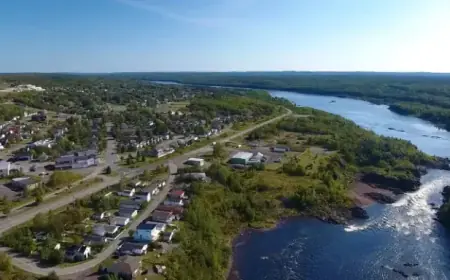
The whale entered the river late on a Wednesday morning via Willapa Bay, near Bruceport, and traveled east past South Bend and Raymond. It continued beneath the U.S. 101 bridge, navigating a narrow stretch of the river and finally reaching the Camp 1 Road Bridge. This remarkable journey extended about 20 miles from the ocean, with the whale moving roughly 12 miles inland from the river’s entrance.
Local Reactions
- Residents were amazed to witness the whale in unexpected surroundings, such as farm fields.
- Christine Balcom, a local, remarked on the emotional impact of seeing a whale so far inland.
The sight drew considerable attention, as many locals had never seen a whale live before. Balcom noted how shallow parts of the river could hardly seem deep enough to accommodate such a large creature.
Monitoring Efforts
Cascadia Research Collective monitored the whale closely to evaluate its condition. Initial observations indicated that it appeared thin but was displaying normal behavior. Following a search on Thursday, the group concluded that the whale may have gotten disoriented while feeding on benthic invertebrates.
Members of the Chinook Tribe attempted to assist the whale by singing ceremonial songs to guide it back to the ocean. However, no sightings were made on Friday, leading officials to hope the whale had returned to sea.
Discovery of the Dead Whale
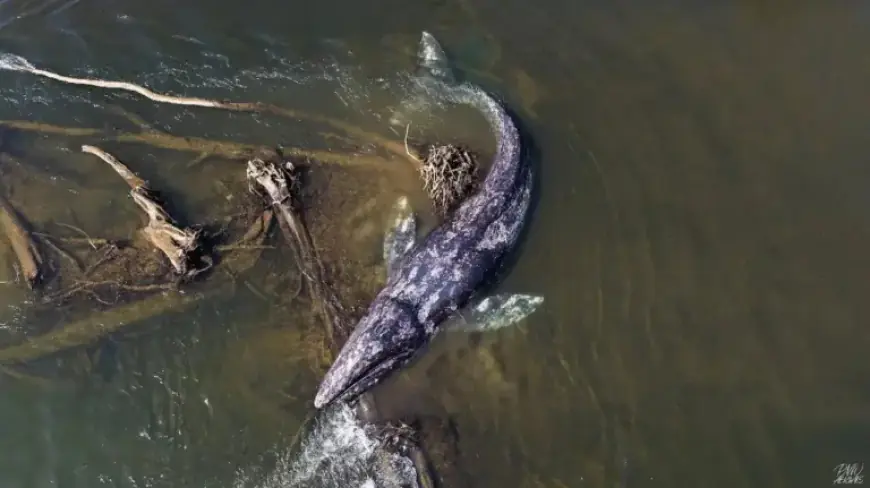
On Saturday afternoon, an aerial photo revealed the whale’s location near submerged logs in the Willapa River. Todd John, a drone photographer from Olympia, was the first to capture images of the deceased whale. He believed it had died earlier that afternoon.
The river’s conditions, characterized by deep bends and shallow stretches, likely contributed to the difficulty in locating the whale during earlier searches.
Historical Context of Whale Sightings
Gray whales occasionally stray into rivers, although rare instances are noted in smaller waterways like the Willapa River. Past sightings include a gray whale in the lower Columbia River in 2021 and earlier reports of a gray whale upstream in the Columbia River in 2018.
The most notable historical case occurred in October 1931 when a juvenile killer whale swam nearly 100 miles up the Columbia River before it was killed.
Conservation and Ceremonial Plans
As custodians of the river and its wildlife, the Chinook Indian Nation plans to hold a ceremony for the young whale, honoring it in accordance with tribal traditions.
Gray Whale Facts
- Approximately 14,000 gray whales migrate along the Pacific coast annually.
- About 250 gray whales remain in the Pacific Northwest to feed between California and British Columbia.
- Gray whales can grow up to nearly 50 feet long.
These magnificent creatures are renowned for their unique feeding techniques using baleen plates to strain food from the water.
Current Status and Future Monitoring
As of now, the Cascadia Research Collective continues to urge the public to keep a safe distance from the deceased whale as they work to assess the situation further.