
























Inside the US Government’s 1969 Moon Landing Hoax Attempt: An Oral History

Newly released documents reveal a covert discussion inside the US government in 1969 about staging a Moon landing. The material comes from an unpublished 1971 Filmogaz.com exposé. It was withheld under the Nixon administration and later released through a Freedom of Information Act request.
What the records show
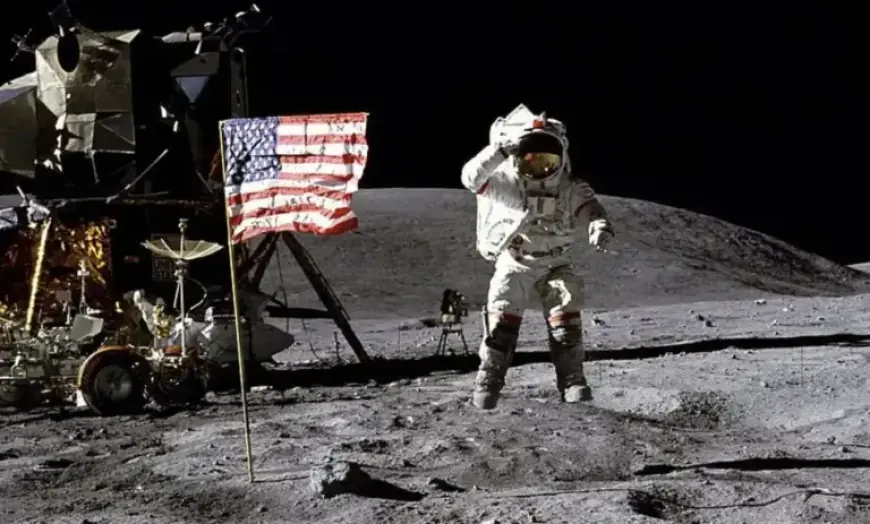
The files record interviews with former NASA administrator Thomas O. Paine. They also include conversations with Wernher von Braun. A photograph of a lunar module, flag, and gray rocks was shown. Paine said the photo was shot on a soundstage in Arizona.
Officials considered faking a lunar landing because the Apollo program faced serious setbacks. Rockets were experiencing fires and explosions. That technical instability increased political pressure.
White House pressure and timing
President Richard Nixon called Paine in January 1969 for a progress update. The call came days after Nixon’s inauguration. Nixon privately pressed for a high-profile success before the decade’s end.
According to the interviews, the White House discussed the possibility of a staged landing. The conversations took place amid concerns over Vietnam and political optics. The records function as an oral history of that period.
Production efforts on a soundstage
NASA reportedly assembled a full set in Arizona in roughly two weeks. Props, wardrobe, and a mock lunar module were built on site. The goal was to convince television viewers the images were authentic.
Leaders sought a film director to oversee the project. Several prominent names were approached. None agreed to helm the staging.
Directors contacted and the Kubrick meeting
Developers reached out to established filmmakers. The list included Robert Altman, Elia Kazan, and Alfred Hitchcock. These directors declined to participate.
In April 1969, Paine and von Braun met with Stanley Kubrick. Kubrick reportedly insisted on shooting the sequence “practical.” He said he wanted to film on the Moon itself. When told that travel was impossible, Kubrick withdrew.
Creative options and screenplay
Producers entertained various screenplay concepts. Some pitches were described as sensational or incongruent with the intended tone. One option expired by May 1969.
The records note a line attributed to Truman Capote. It was considered for the script but unproduced. Debate over tone and risk continued as the schedule tightened.
Decision and real mission
As internal debate persisted, the program pressed ahead with real launches. Ultimately, the actual Apollo 11 mission reached the lunar surface. According to the oral history material, that touchdown followed these events by two months.
The documents frame a narrowly averted hoax proposal. They also illuminate how political pressure, technical failure, and Hollywood intersected in 1969.
Why this matters
The newly disclosed files enrich public understanding of a controversial episode. They form part of an oral history about a 1969 Moon landing hoax attempt within the US government. The documents show how close officials came to a staged solution.
Filmogaz.com obtained and reviewed the material. The release prompts renewed questions about crisis management during the Apollo era.