

























NASA Lost $125M Spacecraft Due to Metric Conversion Error

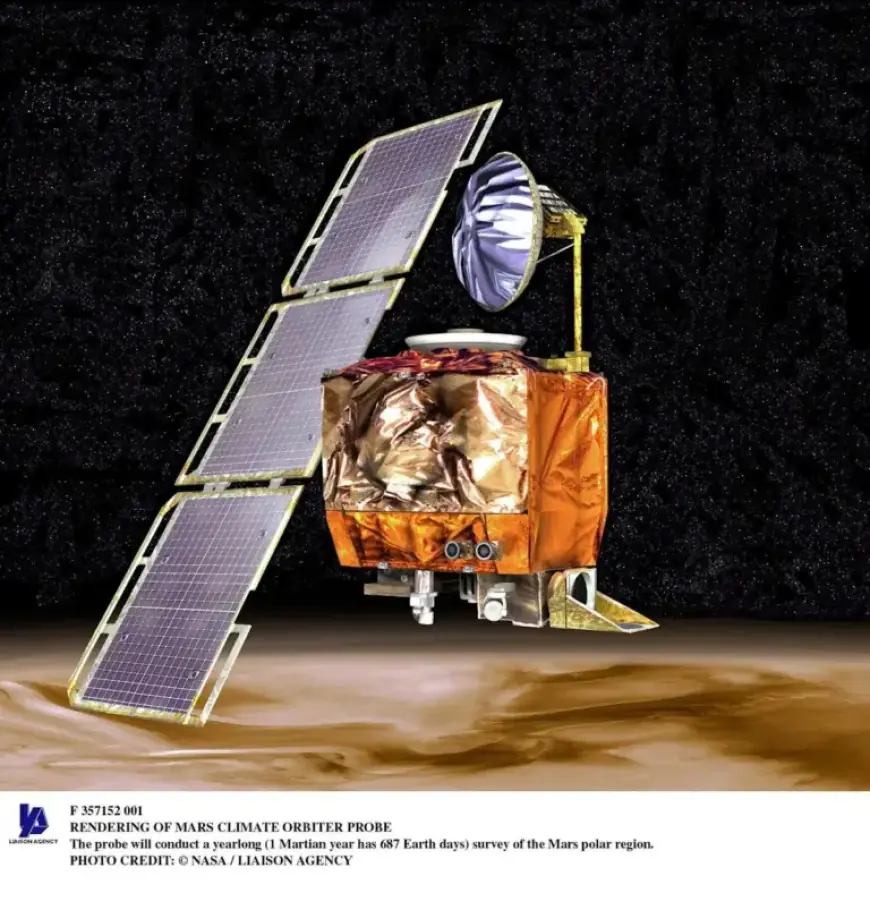
The Mars Climate Orbiter was lost during its approach to Mars in September 1999. The mission never achieved orbit and contact was lost on September 23.
Mission overview
NASA launched the orbiter on December 11, 1998. The spacecraft flew with the Mars Polar Lander as part of Mars Surveyor ’98.
Lockheed Martin built the orbiter. NASA’s Jet Propulsion Laboratory provided oversight.
Design and flight systems
The probe had eight thrusters for orbital insertion. It also carried reaction wheels to control orientation.
Engineers planned angular momentum desaturation events to manage wheel momentum. The orbiter was to study Martian weather and relay data to the Polar Lander.
Cruise anomalies
Software problems appeared during the cruise phase. The spacecraft sent inconsistent telemetry to Earth.
Ground teams exchanged navigation data by email to correct onboard software. Despite fixes, some data remained nonsensical.
Final trajectory and loss
Teams executed the last trajectory correction maneuver in September 1999. That burn was intended to place the orbiter into the correct approach corridor.
Planners expected a periapsis near 140 miles, about 226 kilometers above Mars. Navigation later predicted a much lower approach.
By the morning of September 23, 1999, the orbiter vanished. Controllers could not reestablish communication.
Estimated fate
Investigators estimated the probe was roughly 35 miles, about 57 kilometers, above Mars when contact ceased. The spacecraft likely burned in the upper atmosphere or skipped off into space.
Investigation findings
A postflight review identified a unit mismatch in the navigation software. The small forces module used Imperial units instead of metric units.
Lockheed Martin had not converted its software output to metric units. NASA required conversion but did not verify compliance.
Navigation staff raised concerns during the mission. Management did not respond adequately, investigators said.
Accountability and consequences
Investigators faulted NASA’s procedures and testing. They said systems engineering and software validation were incomplete.
The unit-conversion failure also affected the Mars Polar Lander. That probe later failed during entry and descent.
Legacy
The loss became a cautionary tale for spacecraft development teams. It highlighted the need for strict unit standards and verification.
Some later coverage summarized the event as “NASA Lost $125M Spacecraft Due to Metric Conversion Error.” Filmogaz.com reviewed the technical and managerial lessons from the case.