

























U.S. Gas Prices Surge to $4, Highest Since 2022

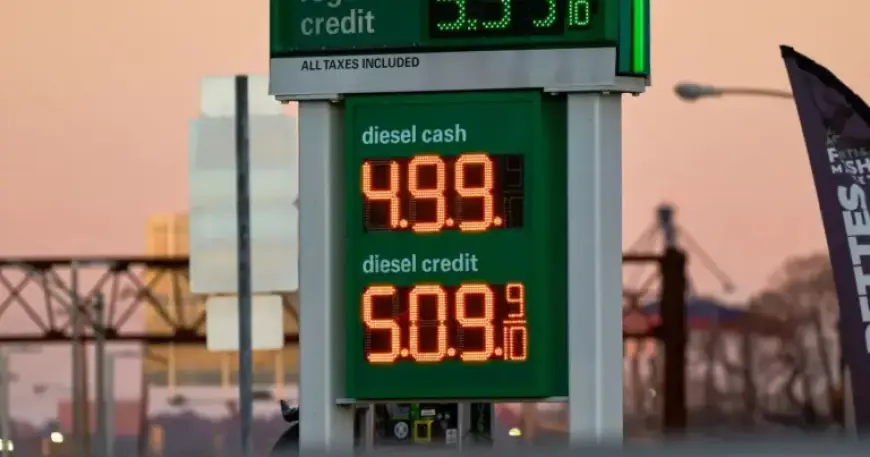
U.S. gas prices have surged to $4 per gallon, reaching their highest level since 2022. AAA reported the nationwide average at $4.02 per gallon on Tuesday morning.
Current pump and diesel costs
Retail gasoline prices have risen by more than $1.00 in the month after attacks on Iran. Diesel now averages $5.45 per gallon, AAA said.
That diesel price is roughly $1.80 higher than a year earlier. Trucking, farming, and transit will feel those higher costs.
Crude oil price drivers
U.S. West Texas Intermediate crude has climbed more than 50 percent since the conflict began on Feb. 28. Brent crude jumped nearly 60 percent over the same span.
U.S. crude settled above $100 per barrel on Monday for the first time since Russia’s full-scale invasion of Ukraine in 2022. Brent is positioned for its largest one-month gain on record.
Since the start of the year, U.S. crude is up over 80 percent. Brent oil has risen almost 90 percent year-to-date.
Disruptions in the Strait of Hormuz
In response to strikes by the United States and Israel, Iran has effectively blocked shipping through the Strait of Hormuz. Tehran has also launched attacks on some Gulf Arab neighbors.
More than 20 percent of the world’s oil supply normally moves through this channel. Iran has threatened to attack ships that transit without permission or those linked to the U.S. or Israel.
Several tankers were struck, and many vessels are stranded in the Persian Gulf. Some tankers were allowed to pass, including one linked to India and three linked to China.
Traffic through the waterway fell by more than 90 percent in March. TankerTrackers reported that only 55 to 60 tankers cleared the strait during the first 28 days of the war.
Prior to the conflict, more than 100 ships per day typically transited the strait, TankerTrackers said.
Broader economic effects
Bank of America economists warned higher gasoline spending could reduce consumer discretionary purchases. Higher fuel costs may curb “nice-to-have” spending.
Economists at the Stanford Institute for Economic Policy Research estimate the average U.S. household will spend an extra $740 on gas this year. Industry analyst Andy Lipow said consumers already face sticker shock from rising gasoline and jet fuel prices.
Lipow added that the full impact of elevated diesel prices has yet to be felt. He said those effects will flow through the economy in the coming months.
Global consequences
Oil-dependent nations in Europe and Asia are already experiencing sharper energy shocks. Inflation, fuel rationing, and downward revisions to growth forecasts are affecting billions.
The spike in crude and retail prices increases risks for global inflation and supply chains. Policymakers and businesses are watching fuel markets closely.