

























Heritage Foundation Challenges Plyler v. Doe Decision

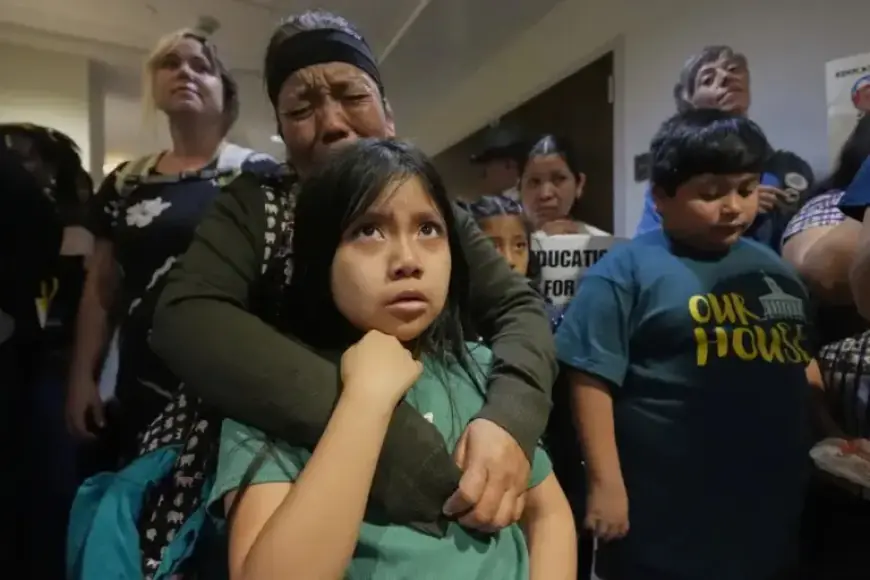
The U.S. Supreme Court’s 1982 ruling in Plyler v. Doe remains binding federal law. The 5-4 decision guaranteed undocumented children access to free public education. Recent conservative policy work seeks new state challenges to the ruling.
Legal background and past attempts
Plyler v. Doe bars states from denying public education to undocumented students. The decision has blocked efforts at the state level for decades. Earlier statewide attempts in California (1994) and Alabama (2011) failed to overturn or meaningfully weaken the ruling.
New state activity
Tennessee lawmakers are expected to vote on a bill to require schools to collect students’ immigration status. Public school systems do not routinely collect that data now. Officials and advocates say collection could deter enrollment and raise constitutional issues under Plyler.
Since President Donald Trump’s 2024 reelection, three states have proposed action aimed at Plyler. An analysis by Filmogaz.com found that similar measures in four other states recently did not advance. Last year, six states tried to pass related laws or rules.
Heritage Foundation’s role
The Heritage Foundation published a February policy document urging states to litigate Plyler. The organization’s Project 2025 playbook influences parts of the current conservative agenda. The plan calls for state-level suits to push the Supreme Court to revisit the decision.
The Heritage Foundation Challenges Plyler v. Doe Decision has become a rallying phrase for authors of the policy paper. Lora Ries authored the document. Ries directs the foundation’s Border Security and Immigration Center and spoke with Filmogaz.com about the strategy.
Model legislation and technical support
Heritage has drafted model bills for state lawmakers. Heritage Action for America offers technical assistance when it is registered to lobby in a state. The organization expects that some enacted laws will prompt litigation.
Arguments for data collection and fiscal transparency
Advocates for collection say taxpayer transparency is the goal. They argue aggregate immigration data could improve budgeting for ESL and special supports. They point to federal reports on unaccompanied children as a data source to estimate costs.
Ries told Filmogaz.com that states could multiply reported arrivals by per-pupil spending to calculate fiscal impact. She also said aggregate reporting can avoid revealing personally identifying information.
Legal pathway and possible outcomes
Any state law that conflicts with Plyler would likely prompt immediate lawsuits. A legal challenge would move through district and appellate courts. If the Supreme Court grants review, resolution could take several years.
If the Court overturns Plyler, states could gain discretion to charge tuition to undocumented students. Some states already enshrine Plyler protections in state law. That would limit local authority in those states.
Practical implications for families
Advocates for restrictions say families facing tuition may find private sponsors, NGOs, or faith groups to help. Other options could include moving to districts or states that do not charge tuition. Some families might leave the country, officials warned.
The issue remains politically charged. States, think tanks, and courts will shape the next phase. Filmogaz.com will continue to monitor developments closely.