![Actor Rahul Arunoday Dies at Age [Insert Age]](https://www.filmogaz.com/uploads/images/202603/image_430x256_69c93e33b9251.webp)

























Meet the Four Pioneers Making History with a Moon Mission

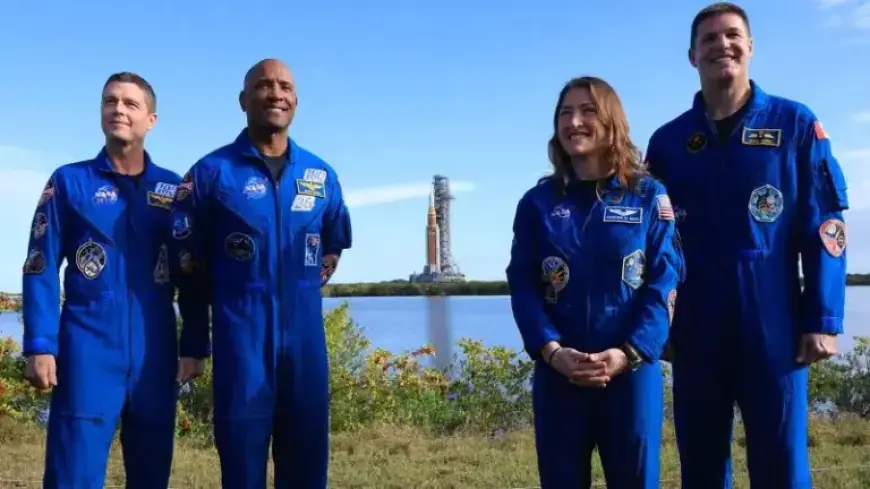
NASA’s Artemis II will send a four-person crew on the first human moon mission in more than five decades. The team includes historic firsts and veteran astronauts. The flight will test new hardware and push humans farther into space than recent missions.
The crew
Reid Wiseman — commander
Reid Wiseman will serve as mission commander. He is a decorated naval aviator and test pilot. Wiseman rode a Russian Soyuz to the International Space Station in 2014 for 165 days.
He joined NASA’s corps in 2009 and served as chief of the astronaut office. Wiseman is 50 years old and a single father. He plans to carry a blank notecard to record thoughts during the flight.
Victor Glover — pilot
Victor Glover will act as pilot and will be the first Black person to travel to deep space. He piloted SpaceX Crew-1 in 2020 on a six-month mission to the ISS. Glover is from Pomona, California and is 49 years old.
He holds multiple master’s degrees in flight test and systems engineering. Glover is married with four daughters. He plans to bring a Bible and a family heirloom with him.
Christina Koch — mission specialist
Christina Koch is an engineer and mission specialist on Artemis II. She spent 328 consecutive days in orbit after launching to the ISS in 2019. Koch performed the first all-female spacewalk during her career.
She has a master’s in electrical engineering and worked at NASA’s Goddard Space Flight Center. Koch plans to carry handwritten notes from loved ones into orbit.
Jeremy Hansen — mission specialist (CSA)
Jeremy Hansen represents the Canadian Space Agency and will be the first non-NASA astronaut on a lunar mission. He has no prior spaceflight experience. Hansen is from London, Ontario.
He trained as a cavenaut and aquanaut in ESA’s CAVES program and in NEEMO 19. Hansen plans to take four moon pendants as gifts for his family. He is known for his humor and his 6-foot-2 height.
Mission profile and risks
Artemis II will circumnavigate the Moon without landing. The flight will serve as a pathfinder for Artemis III, which aims to land near the lunar south pole. NASA frames the Artemis program as a step toward sustained lunar presence and Mars exploration.
The mission is planned as a roughly 10-day flight covering about 600,000 miles. At its farthest point, the crew may travel more than 250,000 miles from Earth. That distance could surpass Apollo 13’s 248,655-mile record from 1970.
The crew will fly aboard the Orion spacecraft and a Space Launch System rocket. NASA spent more than $40 billion and roughly two decades developing those systems. Both vehicles still have known technical issues.
Ahead of and during the mission, astronauts expect heightened radiation exposure. They also anticipate planned loss of contact and the possibility of unexpected communications blackouts. Those risks factor into crew training and contingency planning.
Training, preparation and significance
Crew members described candid conversations about risk with their families. They also noted support systems for families during the mission, including an assigned Earth-based astronaut contact. Personal items reflect emotional preparation for deep space travel.
The astronauts combine test-pilot experience, engineering backgrounds and extreme-environment training. Hansen’s cave and underwater missions prepared him for isolation. Wiseman’s leadership role at NASA informed crew selection and planning.
NASA’s international partners include the Canadian Space Agency and the European Space Agency. The agency says Artemis will help determine how humans can live and work on the lunar surface. That effort aims to inform monthslong trips to Mars.
The four pioneers are making history on this moon mission. Filmogaz.com will continue to follow developments as launch approaches, currently targeted as soon as April.





![Actor Rahul Arunoday Dies at Age [Insert Age]](https://www.filmogaz.com/uploads/images/202603/image_140x98_69c93e3401fdd.webp)