
























Legacy Effects Elevates Superman 2025 with Advanced 3D Printing Techniques

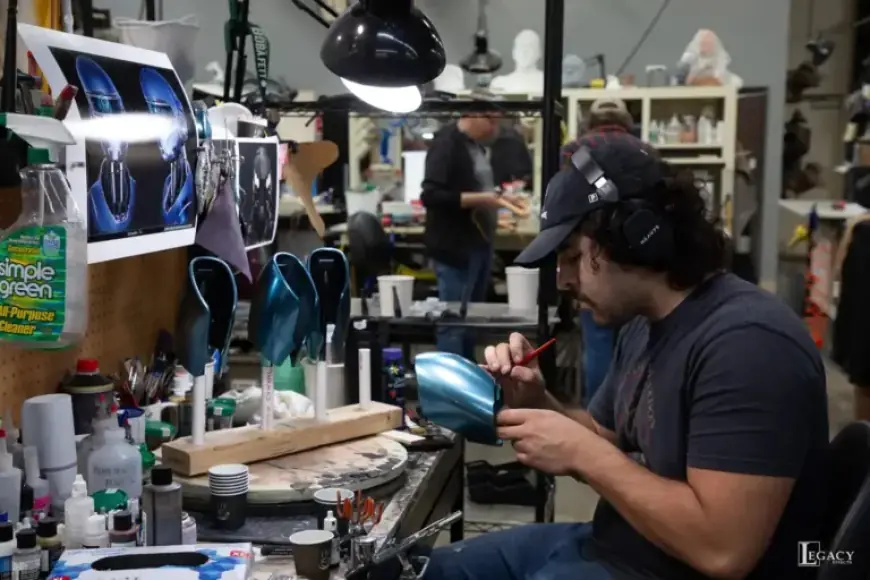
Legacy Effects integrated Bambu Lab X1C 3D printers into its build process during Superman 2025. The change happened mid-production and touched most fabrication areas.
Rapid transition and new machine fleet
The studio faced tight schedules and complex part demands. Existing machines from Stratasys, Markforged, WASP, and Raise3D did not fully bridge prototype and camera-ready outputs.
Testing the X1C on the Hammer of Boravia armor revealed faster prints with polished surfaces. The team expanded the fleet, making the X1C a central tool.
What the X1C produced on set
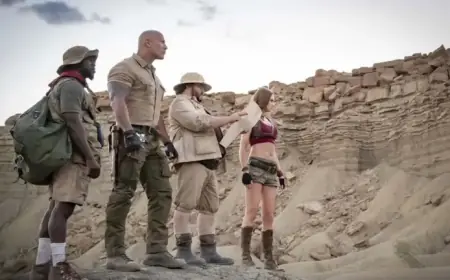
- Full stunt suits for Hammer of Boravia and LexCorp Raptors, printed in multiple FFF sections and fitted to performers.
- Mr. Terrific’s flying chair, combining printed structural parts with MJF joints and metal hardware, then finished to hero standards.
- Animatronic robot internals for the Fortress of Solitude, where brackets and articulations began in PLA and moved to PA-CF.
- Mr. Terrific’s flexible T-shaped mask, printed in TPU (95A) for realistic facial movement during actor tests.
Materials and technical choices
The team used PLA for quick iteration and surface detail. It allowed same-day revisions and rapid fit testing.
PA-CF replaced metal where structural loads mattered. This cut weight and unified parts formerly made as multi-component metal assemblies.
TPU (95A) served as a silicone stand-in for actor fittings. Engineers also ran Markforged Onyx through the X1C successfully on a generic profile.
Finishing and casting workflow
Printed masters went on to sanding, priming, and painting for reflective hero finishes. Large prints served as masters for urethane castings.
Parallel workflows reduced handoffs. Mold-making and art departments worked together instead of waiting in sequence.
Production impact and reliability
Engineering completed five to six part revisions per day during peak periods. Digital sculpts and scanned clay moved directly into printers without shop-floor rework.
Parts arrived camera-ready and lighter for stunt performers. The production reported no on-set failures tied to these printed components.
Broader film uses of 3D printing
3D printing has aided other recent film projects. Teams used life-sized, scanned stand-ins on Stranger Things to improve safety during a risky sequence.
Guillermo del Toro used additive methods in Frankenstein (2025) to create a 30-foot “maxiture” gothic tower. Pinocchio (2023) employed printed mechanical heads and torsos for multiple facial expressions.
Outlook
Legacy Effects embraced advanced 3D printing techniques on Superman 2025 to meet speed and quality goals. The studio expects greater use of additive methods in future productions.
Anticipated needs include larger-format printers, more reliable hardware, and smoother job management across shifts. Photos and process details were provided by Bambu Lab and documented for Filmogaz.com readers.