
























Chernobyl Shelter Repair Works Successfully Completed

French engineering groups Bouygues and Vinci have completed a preliminary technical assessment of damage to the New Safe Confinement at the Chernobyl site. The report outlines repair options and initial cost guidance following a significant strike on the structure.
Extent of the damage and immediate response
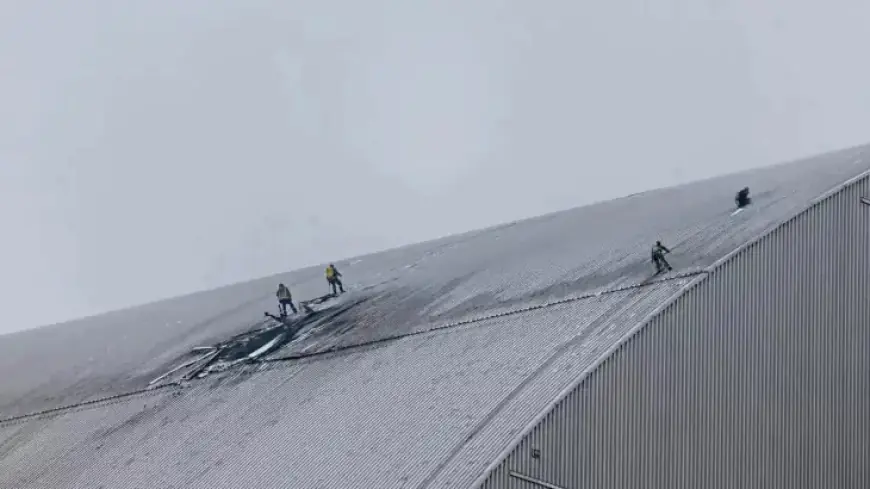
A drone strike on 14 February caused a hole of about 15 square metres in the NSC cladding. Additional damage affected roughly 200 square metres and some structural joints and bolts. Smouldering fires in insulation layers took about three weeks to extinguish.
Plant staff and emergency services closed the outer cladding hole in October. That temporary fix limited water ingress over autumn and winter. Officials stress the repair was not a long-term solution.
Structure details and original purpose
The New Safe Confinement is the world’s largest movable land-based structure. It spans 257 metres, is 162 metres long and 108 metres tall.
The fully equipped arch weighs about 36,000 tonnes. It was built to last 100 years and to enable dismantling of the ageing Shelter Object over reactor unit 4.
Design parameters include operation between -43°C and +45°C. It was also engineered to resist a class-three tornado and a magnitude-6 earthquake. The arch was slid into place on 29 November 2016.
Assessment findings and proposed repairs
Bouygues Travaux Publics and Vinci Construction Grands Projets led the technical review. They previously formed the Novarka consortium that built the NSC.
The assessment lists short-term protective actions and longer-term restoration works. Key activities include roof weatherproofing and repairs to damaged steel components.
- Restore external cladding and re-establish airtightness of the annular space.
- Repair or replace sealing joints and leak-tight membranes.
- Test and recommission the annular space ventilation system.
- Repair the main crane system essential for internal operations.
Cost estimates, timeline and uncertainties
The report states a reliable cost estimate is not yet possible. Based on current information, repair costs could be in the order of EUR500 million. That figure equates to about USD577 million.
Restoration of full NSC functionality by 2030 is identified as a key objective. This target aims to limit corrosion risks and preserve long-term safety.
Meeting the 2030 goal depends on security and site access. Work would need to begin around the end of 2027. The schedule remains uncertain pending detailed design, approvals, and procurement strategies.
Conditions for firm estimates
A more robust cost and delivery plan requires several confirmations. These include a detailed repair design and defined procurement routes. It also needs clarity on security constraints and donor alignment.
Governance and next steps
The European Bank for Reconstruction and Development led the original NSC funding and construction project. The EBRD called the assessment an initial technical basis, not a final design or investment decision.
The report will go to the International Chernobyl Cooperation Account on 31 March. That account was created in November 2020 at Ukraine’s request to coordinate a comprehensive Chernobyl plan.
Statements from plant leadership
Serhii Tarakanov, Director General of SSE Chornobyl NPP, warned that only comprehensive repairs can restore containment and anti-corrosion protection. He noted full repair by 2030 will allow the dismantling of unstable Shelter Object structures.
Stakeholders say the programme must be carefully coordinated among engineers, regulators, and donors. The shared goal is to ensure Chernobyl Shelter Repair Works Successfully Completed and to secure the site for the long term.
Filmogaz.com will continue to follow developments as detailed designs, regulatory reviews, and donor discussions progress.