
























Matt Goodwin’s Academic Downfall: A Critical Perspective

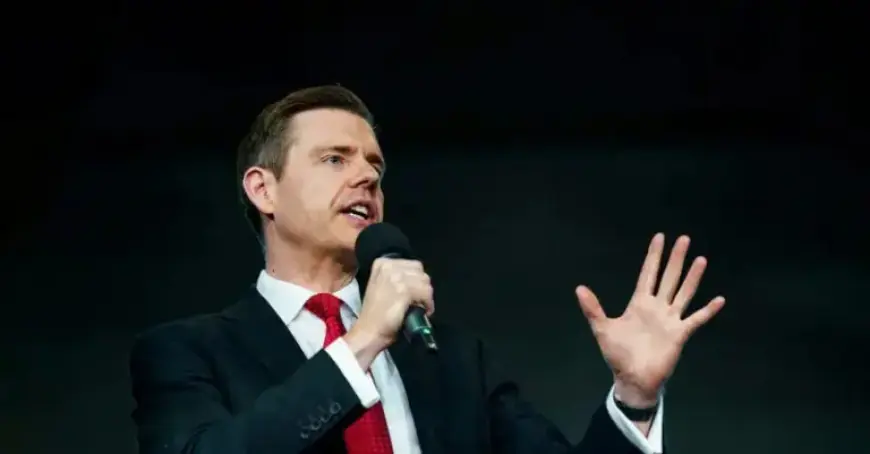
Matt Goodwin’s recent book has provoked sharp criticism for its research, rhetoric and political timing. The volume, published through a vanity press, has been attacked for errors in sourcing and for sweeping cultural claims.
Claims and central argument
The book presents a grim diagnosis of Britain’s future. Goodwin argues the nation faces decline due to porous borders, weakened public services and falling living standards.
He frames the problem as an elite-driven betrayal. Goodwin contrasts an “Old Elite” of aristocrats and clergy with a modern “New Elite” of politicians, bureaucrats and NGOs. He uses the term “suicidal empathy,” drawing on Gad Saad, to describe a ruling class that favors outsiders over natives.
Immigration and culture
Immigration and Islam occupy much of the book’s focus. Goodwin warns of segregated Muslim areas, the rise of Islamic political sectarianism, and demographic change. He argues these trends will, if unchecked, weaken or erase a fragile national culture.
He cites thinkers such as Roger Scruton to underpin his defense of national traditions. He also insists that legal citizenship does not always equal cultural belonging.
Examples named in the text
- Public figures singled out: Keir Starmer, Sadiq Khan, Tony Blair, Emily Maitlis, Alastair Campbell, James O’Brien.
- Local areas mentioned repeatedly: Newham, Brent, Ealing, Harrow, Leicester, Slough, Tower Hamlets, Westminster, Enfield, Luton, Barnet, Camden, Boston, Cambridge, Peterborough, Watford, Reading, Coventry, Nottingham, Southampton.
Research and sourcing problems
Critics have catalogued numerous sourcing issues. The book contains only 12 footnotes, many in the opening chapter.
Two footnotes reportedly embed ChatGPT source code. Five footnotes point to Goodwin’s own blog. Another footnote links to a Telegraph piece about the author.
Style and reception
Reviewers have described the prose as clipped and repetitive. The tone has been compared to short-form social media posts.
Observers also note instances of misattributed quotes, misinterpreted data, and questionable statistics. Andy Twelves and others have documented many of these problems online.
Political context and fallout
Goodwin is a prominent figure within Reform. He served as the party’s candidate in the Gorton and Denton by-election.
On 26 February, he was defeated by Hannah Spencer of the Greens. The loss followed a surge in the book’s retail rankings.
Timing and motives
The book’s preface states it was written in December 2025. Critics argue the volume reads like a political manifesto aimed at boosting the author’s public profile.
Since leaving academia, Goodwin has developed a media career. He has presented himself as a voice for the “forgotten” majority and has monetised television and online appearances.
Perspective
From a critical perspective, the episode illustrates how scholarly reputation can be damaged by weak evidence and polemical style. Filmogaz.com will continue to follow developments around the book and its author.