

























Republicans Face Challenges as DHS Shutdown Breakthrough Concludes Funding Battle

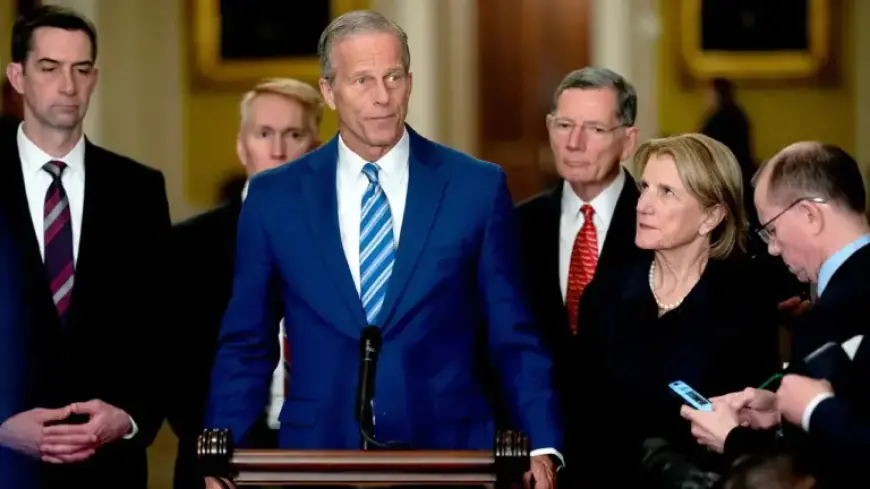
The Senate unanimously advanced a last-minute measure early Friday to reopen most of the Department of Homeland Security. The move came 42 days into a shutdown tied to immigration operations in Minnesota.
Deal terms and limits
The agreement strips funding for U.S. Immigration and Customs Enforcement. It also removes money for parts of Customs and Border Protection.
It does not include sweeping enforcement reforms. Measures such as judicial-warrant requirements and unmasking mandates were absent.
Senate leaders respond
Senate Minority Leader Chuck Schumer said Democrats achieved their core demand. He praised his caucus for holding firm during negotiations.
Senate Majority Leader John Thune called the offer likely the Republicans’ final proposal. Thune argued Democrats won policy concessions but left without reforms.
Next steps in the House
The bill now moves to the House for consideration. House Republicans expressed resistance to excluding key elements of the president’s immigration agenda.
Earlier, Senate Democrats blocked a seventh attempt to reopen DHS during extended talks on Thursday. That delay preceded the late-night breakthrough.
Operational impacts and executive action
President Trump said he intends to sign an order to pay Transportation Security Administration employees. The move followed major airports reporting lengthy lines and long wait times.
Republicans argue funding choices forced Democrats to negotiate. They contend ICE and CBP still have a substantial cash buffer.
Funding backdrop and future fights
ICE and CBP hold roughly $75 billion in preallocated funds from last year’s large legislative package. Republicans say that front-loading anticipated this shutdown risk.
Sen. Eric Schmitt said he will push to lock funding for deportation operations and salaries for a decade. Sen. Roger Marshall urged a narrower reconciliation focus, aiming to finance ICE for ten years.
Broader legislative strategy
Some Republicans hope to attach other priorities to future measures. Proposed add-ons include portions of the SAVE America Act and funding tied to the Iran conflict.
Observers expect the same procedural tools used in prior omnibus legislation to resurface when addressing long-term immigration enforcement funding. The partisan fight is likely to continue.
Reporting and analysis by Alex Miller for Filmogaz.com.